


Shin Splints Treatment, The Complete Guide
FULL VERSION
registered to jua••a••0••5@gmail.com
- Your Account Page
- Customer Introduction & Help
- Book Introduction
- BOOKMARK ?
This is a link to your last-viewed section (your bookmark).
Your bookmark is moved automatically as you read, and this link is updated every time it changes. Whenever you re-load the page, you are prompted to go to the bookmarked position. The bookmark prompt feature is currently .
- Recent updates
Shin Splints Treatment, The Complete Guide
An extremely detailed guide to all types of shin splints for both patients and professionals, including thorough reviews of every possible treatment option, and all about the nature of the beast

Shin splints is a common and often chronic running injury, yet poorly understood by most health care professionals.
Shin splints is an extremely common repetitive strain injury in runners and running athletes. It can be impressively stubborn, because there are several possible overlapping types/causes, some more subtle and less “mechanical” than most people ever suspect. Shin splints treatment depends on what type you have.
“Many people are afraid of running because 30 to 70 percent (depending on how you measure it) of runners get injured every year.”1 As many as a third of those injuries involve shin pain,23 and at least 3% of generally active people.4
“Shin splints” is a curiously old-fashioned term — like “lumbago” or “consumption.” Why does only shin pain get called “splints”?5 Because shin splints means painful shins — sort of6 — it’s a bit silly to offer it up as a diagnosis:
“Doctor, I have shin pain.”
“Ah, you have shin splints!”
“I just said that.”
Without a more specific diagnosis, shin splints should probably just be called “anterior lower leg pain” or “tibial pain syndrome” — unexplained pain around the tibia, the big shin bone.
Shin splints treatment is 90% about "rest" (load management), but what counts for chronic cases is that last 10%. So how do you help shin splints? What works, what doesn’t, and — most importantly — why? This tutorial reviews all of the treatment options, but you cannot treat what you do not understand, so we begin with the nature of the beast (etiology).
1.1
The major types of shin splints: compartment syndrome, medial tibial stress syndrome, and stress fracture

Which shin splints is the “real” one? The term has multiple personality disorder: it might refer to nearly any of several problems that cause shin pain, depending on what you read or who you talk to. This extremely detailed tutorial aims to help readers, both professionals and patients, with all the different shin pain problems that get stuck with the same label. All of these things (at least) are the “real” shin splints:
People often mistakenly believe that the real shin splints is limited to just one of these. For instance, medial tibial stress syndrome — irritation and degeneration of the shin bone, and/or the soft tissue around it — is probably what most professionals think shin splints is these days, and it probably is the most common type of shin pain. But it is definitely not the only kind.
The confusion about the naming of shin pain probably can be traced to the truly deep and cosmic mysteries that surround shin pain. Many cases defy easy classification. Either they seem to possess the symptoms of several different problems, or they actually are more than one problem.7 Many scientific studies of shin pain have created more questions than they answered. Diagnosis and treatment can be difficult, and some cases are almost freakishly severe.
This tutorial thoroughly explores every common type of shin pain: the kinds of tissue failure involved, surprising scientific controversies and mysteries, plus the most neglected and underestimated factors in shin pain, crucial to understanding many difficult cases.
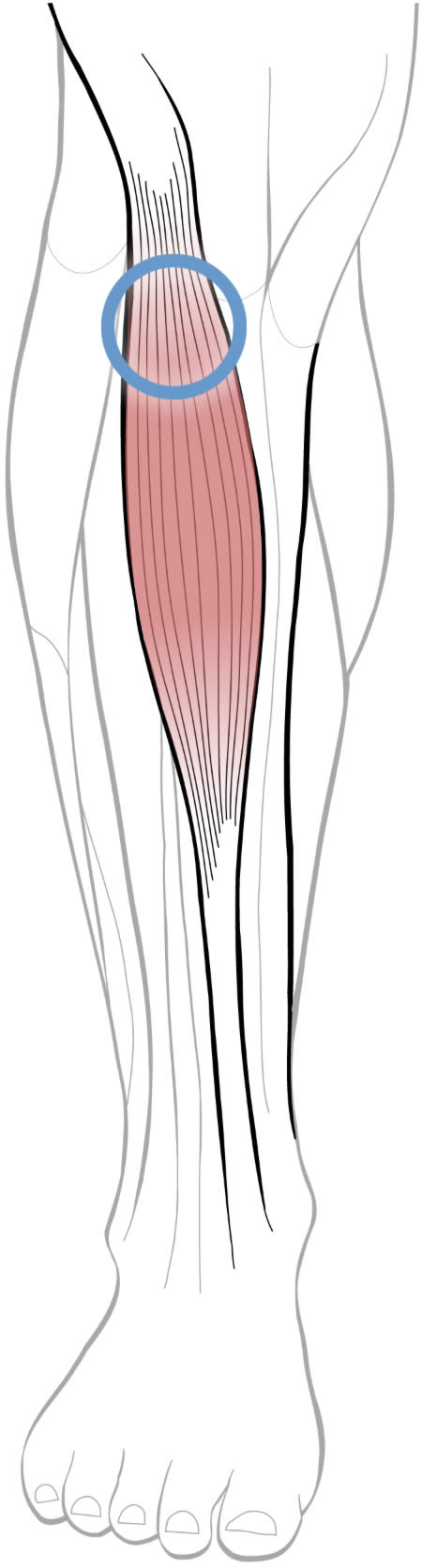
The tibialis anterior muscle of the shin usually contains significant myofascial trigger points (muscle knots) — an under-diagnosed and under-treated factor in many cases of shin pain.
1.2
Shin pain is routinely misunderstood and mistreated
Sports medicine in general is amazingly primitive considering how much potential funding it has. You’d think anything affecting elite athletes with huge audiences would be getting more attention! The situation is improving, but only recently and it still has a long way to go.8
And there are certainly no “shinologists.” Feet have entire professions devoted to them, but not shins! For most professionals, shin pain is just one of a list of hundreds of common pain problems they deal with, and they are more or less completely unaware of the finer points of the subject, particularly recent scientific research. A typical orthopedics text devotes only a paragraph to shin pain; most web pages are brief and crappy, barely scratching the surface of the topic.9 And so, in many cases the only thing professionals know is quarter-century old conventional wisdom. Such large gaps in professional knowledge make it tough for patients to find competent help for more severe and stubborn cases of shin pain. There are several issues that doctors and therapists are particularly uninformed about, and often fail to consider:
- Unfortunately, many pros do not appreciate how dangerous acute compartment syndromes are, and often fail to recognize them and give appropriate warnings to patients.
- Tissue fatigue is a critical concept, and yet the majority of professionals have rarely or never thought of it in this way, especially thinking only in terms of relatively simplistic biomechanical stresses rather than the more subtle and complicated biological vulnerabilities and the weirdness of chronic pain that are more important.10
- Progressive rehab is a sound principle — the heart of all injury recovery — but it is often rushed, and the importance of initial resting seriously underestimated and poorly handled. Often the only problem with a rehab plan is that it was started too aggressively.
- Muscle pain is probably a significant factor in many cases of shin pain, but this is almost always missed or underestimated — health care has a huge blind spot for muscle, and often just ignores the role of muscle in injuries.11
1.3
Danger! Please do not try to run through shin splints! Acute compartment syndrome can be extremely dangerous!
Until you feel confident that you know which type of shin pain you have, you should assume the worst and avoid aggravating the condition. Why?
Compartment syndrome — high-pressure swelling, fluid that’s trapped in a limb — is one kind of tissue failure that mostly afflicts lower legs.12 It’s extremely dangerous when acute. Compartment syndrome involves a vicious cycle which is not necessarily self-limiting (as many other injuries are). Once it starts, it may spiral out of control and literally kill the affected muscles, causing permanent deformity and disability at the very least, and even risk lethal infection. Triple yikes! This is absolutely serious, and unlike most other athletic injuries.
Although the pain is usually severe enough to stop people from running, some athletes may be foolhardy enough to try to keep going — if this is you, please stop! Rapidly worsening shin or calf pain absolutely must be treated like a medical emergency, and not just a cramp on your style. You are in danger of destroying your athletic career!
Ken Hildebrand of Alberta, Canada, knows just how serious compartment syndrome can be. On January 8, 2008, Mr. Hildebrand was pinned under an all-terrain vehicle in the Rocky Mountains. He survived for 96 hours by eating rotting animal carcasses, drinking melted snow, fending off coyotes with a whistle, and thinking of his grandchildren.
But compartment syndrome was his worst problem!
My leg swelled up about four times the size of normal. And in order for blood to get through they have to slice the muscle so that it can drain and then they slowly let it repair itself. The leg is good now, I’m going to be able to keep the leg, but the foot is still iffy.
Ken Hildebrand on “As It Happens,” CBC Radio One, January 23, 2008
In Mr. Hildreband’s case, compartment syndrome was the consequence of trauma, and he suffered a particularly severe case of compartment syndrome, with extreme swelling. However, equally dangerous consequences are possible in runners who try to “run through the pain.” So don’t!
Reassuring concluding note: chronic compartment syndromes, by contrast, are relatively safe — frustrating and uncomfortable, but much less dangerous. Shin or calf pain that has been around for a while and isn’t rapidly worsening is pretty unlikely to be a serious problem.

Acute compartment syndrome is no joke
To treat acute compartment syndrome, the muscle compartment is sliced open to relieve the pressure. Tissue bulges like a hot sausage spilling out of its casing. The result is a massive surgical wound that takes months to heal and leaves substantial scarring.
Part 2
Etiology
What causes shin splints?
Here are three main ways of thinking about the “cause” of shin pain (or any injury):
- the stress and risk factors that lead to injury — “I ran on hard pavement too much, and excessively pronated the whole time”
- what specific tissue fails and in what way — “my shin bone got a stress fracture in it”
- systemic vulnerability and chronic pain — “I was still hurting long after the bone should have healed”
In typical sports medicine and physical therapy, the first of these perspectives gets about 70% of the attention when it only deserves something more like 30%, and virtually all of the attention it does get is directed at alleged biomechanical problems rather than the part that actually matters: loading, loading, loading! The overall volume of loading is more important than minor variations in how you are loading. Anything will wear out if you use it hard enough and long enough, and reasons for wearing out slightly faster are not the “cause” of the problem.
The second is often neglected because no one can actually be sure of what tissue is specifically the problem. Or, even when a blatant tissue issue can be identified, it’s often not the real issue, something that commonly occurs even in healthy people. This is a vital principle for troubleshooting all kinds of stubborn injuries — plenty more about this as we go.
So what is the “real issue” in broad strokes? The third perspective is the elephant in the room, which gets about 5% of the attention but deserves more like 80%. This is where you find the difference between patients who recover just fine (or never get injured in the first place), and the patients who do poorly and end up still desperately trying to get back to running two years later.
| “splints” | just an old-timey word for “pain” |
|---|---|
| tibia | big shin bone (the sharp leading edge of the shin is the tibia) |
| fibula | little shin bone |
| tibialis anterior | the main shin muscle |
| syndrome | a pattern of unexplained symptoms |
| compartment syndrome | swelling in the “sausage wrapping” around a muscle or group of muscles |
| chronic shin splints | >3 months, increasingly “illogical”13 |
2.1
The main risk factor for shin splints: overload!
Fun fact: runners with “perfectionist tendencies” are 17 times more likely to get injured, which seems rather odd and suspiciously psychological. Stress fractures aren’t psychosomatic … right? It’s not that kind of stress! “Still, for anyone who’s been around runners,” says sports science journalist Alex Hutchinson, “it’s not hard to believe that there are some personality traits that are associated with injury risk.”14 Indeed.
Perfectionists probably push themselves harder. Perfectionism is probably a good proxy for stereotypical athletic ambition: intense, driven, a bit reckless, likely to ignore warning signs. In other words, show me a perfectionist, and I’ll show you someone who is likelier to get hurt.
There’s really only one major risk factor for any overuse injury that is known with any confidence:
- excessive loading
We know that there’s such a thing as doing too much, too soon. Especially if the load is greater and/or the body is a bit more fragile: about 10% of novice runners will get hurt, mostly the heavier, the older, and the ones who have been hurt before.15 Experience is a factor too: the more of a beginner you are, the more likely you are to hurt yourself.16 These are the obvious, general risk factors for running injuries — which includes shins splints, and that has been confirmed by studies of shins splints specifically (more on that shortly).
Once you leave the obvious behind, it gets messy and uncertain fast. We know that overuse injuries are definitely not just about loading.
Most importantly, not all loading is simple or even physical: biological and psychological stresses also contribute.17 Shin splints is routinely defined as an overload, overuse, or exercise-induced problem, and this is correct — but it’s also not the whole story. Not every case involves tissue overloading, but most probably do. And not every case only involves tissue overload.
There are deep mysteries about why shin splints happen to some people and not others, and exactly which tissues it is actually affecting and how. Tissue fatigue has clinical implications that are often underestimated (and which make up a good part of this tutorial). Despite their willingness to define shin splints as mainly a tissue fatigue problem, few professionals are willing to actually study it or treat it that way. If overload is the primary problem, then load management — carefully titrated resting and return to activity — is probably the highest priority in recovery. But rest tends to be marginalized and underestimated as a treatment option, in favour of a wide array of “fancier” theories and therapies, mostly aimed at “correcting” alleged non-obvious sources of biomechanical stress …
2.2
Introducing several other possible causes of shin splints
There is considerable scientific controversy and confusion about the other risk factors and stresses that might cause or contribute to shin splints.
Do your biomechanical quirks put you at risk? Can clues like running technique and flat feet predict who gets injured? And if a risk factor is known, does that mean it “causes” the injury? Everyone sure acts like it: fixing those risk factors is a major focus of rehab. Almost everyone who has ever sought professional help for a stubborn pain in their body has been told that they are deformed and fragile, that the root cause is some kind of “mechanical” glitch — not in such insensitive words, exactly, but that’s the take-home message. Physical therapists, massage therapists, and chiropractors in particular tend to blame pain on our “structural” problems. In the case of shin splits, the usual structural suspects are:
- excessive pronation
- varus hindfoot
- a high Q-angle, AKA genu valgum, AKA knock-kneed18
- excessive femoral anteversion
- external tibial torsion
- high vertical loading rate
Those are some the things that therapists most like to blame.19 There is certainly such a thing as a structural or biomechanical problem, but there are also some serious concerns about trying to blame injuries on factors like these. Concerns like this…
Only one of those is actually on the list of risk factors for shin splints that has been flagged by research. Just one. We don’t have a lot of amazing data on risk factors for shin splints,2021 but what we have barely overlaps with that list of usual suspects.
And even confirmed risk factors don’t necessarily confirm a cause. (Much more about to come.)
And the most significant risk factors are probably the general ones, not the specific ones. The data does unanimously confirm that heavier and previously injured runners are more likely to get shin splints — along with most other running injuries. And there’s one other vexing general risk factor, maybe:
- Being a woman? As with most athletic injuries, there is a strong theme in the scientific literature that women might get hurt more often than men, usually because they are presumed to be more structurally and/or physiologically vulnerable in some way. This sexism is more plausible in some cases than others, but mostly it’s just an obnoxious vestige of the more overt chauvinism of the past, when everyone just assumed that women were too “delicate” for manly activities. More on this later on in the tutorial.
So, what specific biomechanical risk factors for shin splints have been pseudo-identified by the research? And what are the problems with even those?
Here are the candidates, roughly in order of significance/interest, mostly derived from Hamstra-Wright 2015 and Reinking 2017, the only two big recent scientific reviews on this topic as of early 2022, both of them pooling and crunching data from about twenty studies over the last twenty years or so. The exception is the first, which is from a fascinating 2018 study.
- peak braking force,22 which is how hard your feet push backward horizontally on impact (as opposed to “vertical” impact forces, e.g. “average vertical loading rate” … which is the most technical of the usual suspects, but was not identified by either Hamstra-Wright et al or Reinking et al)
- navicular drop (which is just a proxy for pronation)
- hip external rotation (and only while in flexion, as reported by Reinking et al)
- greater ROM ankle plantarflexion (the toe-pointing direction of ankle movement)
I will devote sections to peak braking force and pronation. Hip and ankle ROM are not really worthy of much attention, particularly because they are probably not modifiable in any case. Seriously, if you can toe-point too far, what are you going to do with that information?
Despite the fact that one or two of these risk factors may be real (almost certainly not all of them), I want to very strongly caution patients and professionals from taking them too seriously. There are many, many concerns about trying to explain injury with factors like this:
- Structural explanations for injury and poor recovery have generally been undermined by the science for the last 30 years, often impressively.
- Risk factors look a lot like causes, but they aren’t: they are a correlation, and correlation is not causation. Many of these factors are just as likely to be a symptom themselves as the cause of anything — “defence not defect,” as physical therapist Barrett Dorko put it.23 That is, the biomechanical abnormality may well be a defensive reaction or adaptation to having chronic pain — a symptom itself, rather than the cause of the pain. While this concern isn’t always applicable, it comes up a lot. But the risk factor could also just be a symptom of the same thing that predisposes us to shin splints!24
- Risk factors like these are usually quite hard to diagnose, and professionals can rarely agree on them (and, as already noted, are often uninformed about what risk factors to even consider). You are likely to get three different structural diagnoses from three different experts. Obvious biomechanical issues are relatively rare. If it’s not obvious, then it’s hard to be sure whether or not you have an “excessive forefoot pronation”… and also a lot less likely that it matters.
- These kinds of problems are also often impossible to do much about in any case.
Like a dog chasing cars, most therapists aren’t sure what to do with a biomechanical problem when they “catch” one. How do you therapize abnormal bone shapes? Good luck with that.25 - An excessive focus on crookedness — “structuralism” — tends to distract both patients and professionals from better diagnostic and therapeutic options.
For these reasons and many more, this tutorial will not be going into detail speculating about all the possible biomechanical factors (some, but not all). In my opinion, such factors may contribute a little, but they are mostly less significant and difficult or impossible to treat directly than other factors.
Structuralism is a sub-topic for shin splints patients, but it’s a huge theme in the world of pain and injury science. If you’d like to dive deeper into it, you can: Your Back Is Not Out of Alignment: Debunking the obsession with alignment, posture, and other biomechanical bogeymen as major causes of pain.
So what’s the alternative to this structuralism?
To understand injuries and pain problems and to recover from them more effectively, both patients and professionals need to stop trying to think of the body as a machine that breaks down, and start thinking more in terms of squishy, messy physiology, especially neurology and biochemistry… and even messier psychological and lifestyle factors that contribute substantially to “load” in the broadest sense. For instance, the sensitivity of tissue is regulated by countless messy factors, and may be just as important if not much more important than how damaged they are.
For the most part, the tissue stress caused by the use and overuse of a body part is a much more important factor than the exacerbations of minor inefficiencies due to asymmetries and the details of your gait. In other words, most people who overload their shins enough to get shin splints are probably going to get them at that load level no matter what — if being a pronator makes it happen 3% sooner, and there’s nothing much you can do about it anyway, is that clinically important?
Therefore, “load management” is probably the most important alternative to trying to “fix” crooked anatomy. Which also includes many subtle sources of vulnerability to loading: all the various ways in which we can get run-down biologically and more likely to get injured, or re-injured.
That all said, I will still be discussing pronation and peak braking force in more detail. But first, let’s cover some more diagnostic basics.
2.3
The 4 main kinds of tissue failure that cause shin splints (and 3 not-so-main ones)
So far I’ve discussed risk factors as “causes” of shin pain — the things that might cause tissue to fail. But which tissues fail? And how do they fail? When tissue actually fails, that’s what actually causes the pain. But one of the interesting things about shin splints is how so many similar symptoms can be caused by such different kinds of tissue failure. Of course, other body parts have a variety of ways they can hurt — shoulders have many ways to cause trouble, for instance — but in the shins there is an unusual combination of similar symptoms (ow, my shins!) with quite different tissue failure.
These are the types of tissue failure in shin splints, the immediate (proximate)26 causes of shin pain. Each will be discussed in more detail below — this is just an introduction to them. First, “the big four”:
- myofascial trigger points (muscle “knots”)
- medial tibial stress syndrome (and variations)
- stress fracture (only one!)
- compartment syndrome
And there’s also some less common and/or less shin-like issues:
- assorted tendinitises of the lower leg
- popliteal artery entrapment syndrome (“It’s a trap!”)
- some nerve entrapments (“It’s another kind of trap!”), esp radiculopathy/sciatica (irritation of nerve roots in the lower back)
- bone cysts (probably not your problem, unless you are 10 years old, see more below)
Any of these conditions can coexist, and I suppose it’s even possible that some extremely unlucky patient might have them all. The first item is not just capable of coexisting with the others, it’s inevitable: trigger points are present to some degree in almost all kinds of shin pain. For instance, if you had a case of compartment syndrome, it would be weird if you didn’t also develop some trigger points.
All of these are quite different, and will require separate discussion and different care, but fortunately there is also some overlap which is going to make this a bit easier — for instance, a well-designed resting strategy is an important treatment option (and almost universally botched) for nearly all of them. Although there may be several different types of tissue failure, lots of stress on the tissue is probably the only major risk factor that they all share.
2.4
A more detailed looked at the four most common types of shin pain
I will explore the nature of shin pain in considerable detail. I’ve already listed the main causes of shin pain above, but I haven’t explained them yet. In this section I will say a little more about each of them, and then I will get into even more detail in the sections after that.
So here’s the next layer of detail, starting again with “the big four”:
- Myofascial trigger points (MTPs), a.k.a. muscle knots, are basically just “abnormal sore spots.” How they actually work is a mystery, the science is sketchy, and trigger point therapy is badly overhyped… but no one disputes that people get sore spots. They seem to crop up around other pain problems. They may be the actual source of some pain, and/or just a complication. They also have a tendency to mimic other kinds of pain problems: for instance, it might feel like a stress fracture, but it could actually be a trigger point. Their clinical significance is generally underestimated, even by massage therapists. I believe they are a factor in most shin splints cases. Trigger points are a huge, messy topic.
- Medial tibial stress syndrome is an irritation of the connective tissue around the bottom half or third of the shin bone, the tibia. Its exact nature is the subject of a surprising amount of scientific controversy — is it a bone or soft-tissue injury, or a bit of both? No one knows for sure. Regardless of which tissues are involved, they are quite difficult to calm down once they are irritated in the first place, as with most other overuse injuries.
- Stress fractures are the most familiar type of shin splints, and so easy to understand that little needs to be said to clarify their nature: the bone has begun to crack under excessive load. They usually consist of a hairline fracture of the tibia or fibula, usually in the upper half of the shin.
- Compartment syndrome is caused by a “design flaw” in the human shins: the wrapping around the muscles on the front of the shin (think of a sausage wrapping) is a bit small for the stresses/traumas that its contents must occasionally endure. There’s no room for swelling! Pressure inside the compartment can rise sharply and interferes with normal circulation and movement of tissue fluids, which irritates the muscles even more, starting a potentially dangerous vicious cycle. Since it is common for runners to suffer irritation of the shin muscles, they often get this kind of shin splints. Another muscle compartment in the back of the calf may also routinely suffer the same problem, and can also cause shin pain.27
All of these major types of shin pain have something in common: they are all related to tissue fatigue. Other causes of shin pain tend to be more pathological in nature — the result of some underlying dysfunction or vulnerability — rather than being caused by repetitive strain, and will be discussed more later in the context of diagnosis.
2.5
No pressure! Not compartment syndrome, but “biomechanical overload” syndrome
I’ve introduced compartment syndromes in the conventional way: sometimes, when irritated, muscles in the lower leg don’t have room to swell, causing them to choke off their own blood supply when overused.
But nothing is simple in musculoskeletal medicine. There are problems with common assumptions made about compartment syndrome. Namely, that there’s pressure involved! In 2014, Franklyn-Miller et al argued persuasively in the British Journal of Sports Medicine that pressure does not seem likely to be the actual problem.28 Um, wut? Isn’t pressure the defining characteristic of this condition?!
To date, no conclusive evidence exists to demonstrate cellular hypoxic damage or decreased capillary perfusion.… no evidence of a direct association between this rise in compartment pressure and the pain and reduced muscle function
In fact, it’s not even clear that we can measure pressure in the muscle compartment. There are some problems with a classic paper on the topic,29 and “there is clear evidence that intracompartmental pressure measurement should no longer be considered a valid diagnostic tool for compartment syndrome.”
Ruh roh! So, if not pressure, then what?
A muscle overuse syndrome. Maybe caused by poor running form (exaggerated heel strike). Franklyn-Miller et al:
Muscle overuse syndromes are not new. They are well described in the literature, significantly in musicians and office workers (occupational overuse syndrome) and there is a clear synergy with the predisposing factors in repetitive exercise: increasing frequency and the intensity or load of work and practice; and, altered limb biomechanics alongside limited rehabilitative intervention. We believe that in patients with exertional leg pain related to the myofascial compartments we are simply observing a phenomenon seen commonly in other patient groups; that of muscle overload. As the aetiology in these patients is biomechanical we have described their condition as a ‘biomechanical overload syndrome’ (BOS).
If they are right, then compartment syndrome isn’t one of the main causes of shin splints — instead, what looks like compartment syndrome is probably just a blend of the other causes: some combination of tissue stress injury to bone, muscle, and connective tissue.
The idea of a muscle overload syndrome has a lot of overlap with “trigger points” in particular. Trigger points are a specific, speculative way of talking about what happens when muscles are chronically irritated (by overuse, and maybe also by underuse). And so Franklyn-Miller et al’s paper provides some support for a major focus of this tutorial, and some of its treatment recommendations.
2.6
Trigger points complicate nearly every case of shin splints, and sometimes they are the whole problem
This might be the most valuable chapter of the tutorial, the best bang for your buck: the most evidence-based and clinically useful perspective on shin pain that your doctor probably won’t even bring up. I suspect it’s relevant to many cases, and leads directly to therapeutic options that can be surprisingly cheap and effective, with minimal fuss and risk. Pretty good stuff!
That said, it’s hardly The Answer: it’s just an easy, safe option to pursue. It’s not too good to be true, it’s just ordinary good — a reasonable theory about a tough problem, not a miracle cure.
The reason that the idea of trigger points is so important to shin splints: no matter what kind of shin pain you have, trigger points are probably involved to some degree. And they may also be the most treatable aspect of shin pain.
Muscle knots, formally known as myofascial trigger points (TrPs), are a factor in many of the world’s aches and pains. The case for this is made in detail in the trigger points tutorial. For much more information — all the information you could possibly want, really — see the PainSci trigger points guide, The Complete Guide to Trigger Points & Myofascial Pain. Just a few key points of trigger point science are emphasized here.
Most simply, a trigger point is an acutely sensitive spot with no obvious explanation — no injury, no disease, no venomous snake clinging to your leg. It’s just sore. These spots come and go in most people like pimples, and some people seem to be far more prone to them than others, probably because the dazzling complexity of biochemistry involves countless obscure variables and vulnerabilities. But they do seem to crop up more in and around overloaded and injured tissue and other pain problems. They are both a cause of trouble and complication of other troubles.
But we don’t actually know what a trigger point is.
The only widely known hypothesis remains unvalidated: a trigger point is a tiny spasm, a small patch of contracting muscle tissue that is exhausted and metabolically “toxic” or “sick.”30 Such a nasty patch of dysfunctional muscle tissue can cause symptoms ranging from mild stiffness to severe pain and a variety of odd side effects. Even though the existence and importance of trigger points is well known to medical specialists and researchers, most doctors and therapists know almost nothing about them, so misdiagnosis and ineffective treatment are epidemic. And so is aggressive, overconfident over-treatment from professionals who think they know far more about trigger points than anyone actually can know.
This hypothesis, and the whole topic of trigger point therapy, is controversial.31 There’s lot of hype and bullshit about trigger points, and way too many professionals now believe in them like religion, exaggerating their importance and cashing in on it. Although skepticism is warranted, my position is that the kerfuffle over the nature of trigger points is a legitimate, ongoing scientific controversy — not a closed topic. I believe that humble, conservative trigger point therapy is justified, but it must be presented as “experimental.”32
Trigger points and shin splints
Your shin is meaty. There’s a prominent bony ridge, of course, but there’s also quite a large muscle covering the lateral surface — the tibialis anterior muscle. It lifts the foot, and is a powerful arch supporting muscle as well — its tendon wraps under the arch like a stirrup.
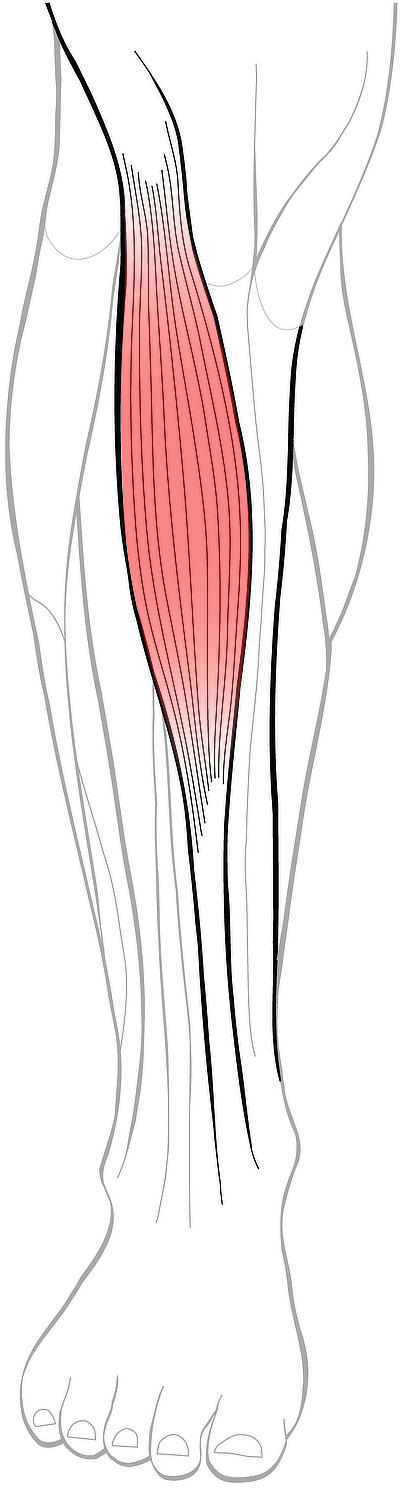
The tibialis anterior muscle commonly develops a major trigger point. According to the conventional wisdom, it’s essentially a localized spasm, a small patch of contracted tissue that becomes metabolically swampy and painful. Regardless of the physiology of it, the tibialis anterior sensitive spot always forms in about the same location, in the top third of the muscle. This spot is “perfect spot #3.”
This trigger point probably precipitates compartment syndromes — it is probably often the first thing to go wrong in the compartment, and then aggravates pretty much everything that goes wrong in the compartment after that.33
What is more certain is that tibialis anterior trigger points complicate shin splints that are primarily caused by something else, and that they can be the entire cause of shin pain. Many people with shin pain may have only trigger point pain. And people with one of the injuries listed above will probably also have an acute trigger point that tends to make the situation worse. It is not unusual for such trigger points to result in chronic misdiagnosis.
Why is the tibialis anterior so dang “triggery”?
Trigger points are probably common in the tibialis anterior muscle because it is routinely subject to strong stresses, especially eccentric contraction.34 For instance, the tibialis anterior muscle will often suffer severe delayed-onset muscle soreness (DOMS) after hiking down a mountain, or running down a long hill.
When you are going down a hill, the toes have a long way to “fall.” The tibialis anterior contracts to resist and control the lowering of the forefoot, preventing your it from slapping down hard. Similarly, when you are running on a hard surface and heel strike is sharp, the tibialis anterior must work extremely hard to prevent foot slapping. All of this probably predisposes the muscle to exhaustion and dysfunction.
2.7
A couple trigger point stories
Terri Rebmann, a long-distance runner in St. Louis, was stopped by shin pain in 2007. When she first contacted me, she had seen “3 sport medicine physicians, 4 physical therapists, and a chiropractor” including an impressively credentialed physical therapist who specialized in “anterior tibialis pain in female athletes.” She was almost ready to give up and was considering exploratory surgery. Unfortunately, the possibility of a trigger point had never been suggested to her — not even by the tibialis anterior expert. She consulted me because she thought, “It’s worth asking one more person before I give up exercise forever.” Predictably (or I wouldn’t be sharing this), it turned out that a tibialis anterior trigger point seemed to be at least one important part of her problem:
I have started practicing trigger point release/therapy. I can’t say that trigger point therapy has completely cured my problem, but it’s helped tremendously! I am now running every other day, 6 miles or so per run. When I do have pain, it’s tolerable and the trigger point therapy/self massage helps. The pain is always gone by the end of the day.
Terri Rebmann, PhD, RN, CIC, distance runner, St. Louis

“White pain,” and then relief
This kind of story is amazingly common. I only use them on PainScience.com sparingly, because anecdotes are such a problem.35 That said, here’s another one that’s particularly spectacular. I’ve adapted it for brevity and anonymity with approval. Her story follows several weeks of shin splints during training for a half marathon, unresponsive to several attempts at self-treatment. And then things got more complicated …
I developed pitting edema36 in both of my lower calves. The shin splints were no better or worse, but this odd pitting edema just wouldn’t resolve. I tried wearing compression sleeves at rest, I tried wearing them while running, I tried wearing them immediately after running. I tried elevation, heat, ice, venous wrapping — nothing. No change. Nada.
Two nights ago, out of desperation, I got a ten minute massage on my calves (an option at the salon I go to). The Vietnamese gentleman that did the massage speaks zero English, so asking him questions is like playing a bad game of charades. My attempt to ask him to explain what he was doing exactly was an epic fail.
He looked at my calves, mumbled a bit, and then grasped my shins and stuck his thumb firmly into a spot about 3-4 inches above my inner ankles. I almost came unglued with the pain! It was what I would call as a nurse “white pain” — a highly unscientific term that patients really identify with. A lot of pain!
My Vietnamese shin whisperer did not let go, he just held on tight to that horrible spot on my shins as I tried not to squirm and cry out. When he finally did let go, he did some light foot massage and something odd using his thumbs again behind my knees (which did not hurt at all), but that was it. I went home, went to bed and that was the end of that … until I woke up the next morning.
The swelling was 100% gone. The shin splints were 100% gone. I ran six miles that next night without any pain, and zero return of the swelling. It’s been three days, and I’m still miraculously pain and swelling free.
Just from pushing on a sore spot.
Stopped on a hill
I’ll conclude with a third anecdote of my own.
One day my right shin started to hurt quite suddenly walking down a steep hill in downtown Vancouver. I had been running the day before, and my shins were aching and tired: I could feel them struggling to keep my toes from slapping down with every step, and then it got intensely painful. In the space of a minute, it became nearly impossible to continue down the hill. I stopped twice and tried to “shake it out,” wiggling and stretching my knees and ankles, but it roared back with every step down the slope.
Clearly the pain wasn’t going away on its own. Honestly, I wasn’t sure how I was going to get home.
Or maybe I did know. I sat down on the curb and rubbed my tibialis anterior with moderate intensity for a couple minutes. I quickly found and focused on an area of exquisite “good pain” in the upper tibialis anterior muscle, the classic trigger point spot (I have already mentioned it a couple times, and I’ll describe it precisely later in the book). My suffering quickly eased, and I resumed walking down the hill with only a slight limp. Five minutes later, it was like it had never happened.
This was not “shin splints,” per se — yet. It was just a rapid and extremely brief flare-up of shin pain. But what if it hadn’t gone away? What if I hadn’t known what to do with my shins that afternoon? It might have gone away on its own, but I doubt it. There’s a strong possibility that it would have been the first day of a much longer, painful journey — days at least, probably weeks, and maybe months. It’s a bit chilling to think of all the suffering that I may have averted. But I knew where and how to press, apparently — not that it’s terribly technical — and the problem was nipped in the bud.
•
None of these stories validate common ideas about trigger points, but they are suggestive, and I suggest that no one should neglect trigger points as a potential factor in shin pain. By no means can you count on a miraculous result — there are too many variables, and there is too much biology we don’t understand — but you have little to lose from learning a bit about it and experimenting cautiously. There’s more below about how to do that.
2.8
Bone tired: medial tibial stress syndrome may be all about bone fatigue, not inflamed soft tissue
Just as the pounding runners inflict on their shin bones can cause a stress fracture, it causes more subtle failure of the tissue first. Microscopic cracks and cavities form. The microscopic bone structure thins — this is called osteopenia, a milder version of osteoporosis. A “bone fatigue” injury.
In 2006, researchers found that 100% of the painful shins studied in long-distance runners had such abnormalities. 100%!37
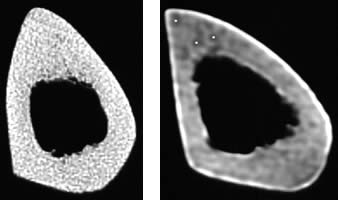
CT scans of tibiae
On the left, a cross-section of a healthy tibia — notice how the bone texture is even. On the right, a damaged tibia in a hurtin’ long-distance runner, with uneven texture marked by dots.
That’s a strong piece of evidence. On the one hand, it certainly tells us that running is hazardous to your tibias. On the other hand, it’s surprisingly possible to have the bone fatigue and no symptoms: the same research also showed that a few runners without pain also had bone abnormalities — about 15% of them were running around with scannable flaws in their tibias, but no actual symptoms.
Imaging technologies often show problems in people who have no pain, and with some conditions this is an extremely important thing for patients to understand.38 In the case of shin pain, however, this study found only a few cases of painless abnormalities, and it’s reasonable to assume that such patients are simply in the early stages of shin-wrecking and will probably start to hurt before long. Such abnormalities are almost undoubtedly a warning sign of an impending tibial stress fracture.
Another important point to take from this evidence is the idea that shin splints doesn’t just/always involve “inflammation” of the connective tissue wrapping around the tibia — an old idea about shin pain — but can instead be “a bone stress reaction that has become painful” (that’s a quote from the authors of the study). Bone can ache with fatigue.
This might seem like a hair-splitting difference, but here are three practical implications off the top of my head:
- Superficial inflammation might be more responsive to icing and topical anti-inflammatory medications. A bone stress reaction would likely be less responsive.
- If the superficial tissues are inflamed, then the tone of lower leg musculature would probably be a significant factor — because you don’t want tight muscles yanking on irritated attachments to the bone — but not so much if the main problem is bone fatigue.
- While a superficial inflammation of the periosteum would probably be sensitive to impact as well, it would probably be much less sensitive to it than bone fatigue. So this evidence suggests that reducing impact specifically might be important in recovery from shin splints. Much more about that below in the impact section.
But the difference between deeper bone and shallower periosteal fatigue isn’t huge, and they likely co-exist in many cases.
2.9
Does peak braking force determine when you break?
A 2018 study flagged “peak braking force” as a novel new risk factor for medial tibial stress syndrome.39 It’s an interesting and noteworthy data point, though not terribly consequential — it boils down to being an extra reason to “soften” running style, a strategy that is discussed in considerable detail below: see Hitting the road: shoes, surfaces, impact, and the spring in your step.
Peak braking force (PBF) is a measure of how hard your feet push backward horizontally on impact. PBF spikes on the downhill, because forward movement is powered by both momentum and gravity (and resisted by friction). This is in contrast to vertical impact forces, which is the much more conventional thing to worry about. Thanks to gravity, measurements of vertical forces in running are much larger than the horizontal forces.
But the horizontal forces are definitely still there.
The trial was done in my backyard — in Burnaby, a suburb of Vancouver. Napier et al measured a half dozen running gait metrics in sixty-five healthy female recreational runners and then tracked them through a half-marathon training program. It was some fancy measuring, like motion-capture tech for the movies. The runners were festooned with reflectors and recorded while running on a treadmill.
About a third of the runners got hurt, and shin splints was the most common injury (followed by ITBS), but there was no statistical correlation with most of the things they measured — most surprisingly “average vertical loading rate,” which was the prime suspect. The authors were looking for that specifically.
Instead, PBF was prominent in the injured! Extremely prominent.
Runners with the highest PBF scores were eight times more likely to be counted among the injured than runners with the lowest PBF scores. Eight times! It’s a correlation, not proven causation, but I don’t think that is “just” a correlation. That’s a big enough number that it’s very likely they are related in some way, and that way could certainly be causal.
Or not! Remember, causality is crazy hard to prove. A prospective trial like this is the bare minimum, but there are still definitely other possible common denominators, deeper roots that could be the cause of both high PBF scores and shin splints (see below).
So this is an interesting result that certainly looks like PBF could cause shin splints.
But it’s also a bit of an outlier in the literature, reporting a novel risk factor for the first time, based on data from a smallish study of women only, and measuring gait only on a treadmill, and there are other ways to explain the result. So there is definitely no guarantee that this result is going to be replicated by anyone else — and, a few years later, no one has even tried yet.
The authors reasonably concluded that braking force might be a good thing to try to reduce, and that probably can be done by running slower, “softer,” and with shorter steps (higher cadence) — stuff I have already been recommending in this tutorial for many years now.
If PBF doesn’t actually cause shin splints, then why are they linked?
Risk factors like this are correlations that might be explained by causation, but definitely not necessarily. Both risk factor and the injuries they are linked to can often be explained by something else… and so many risk factors are not causes, just fallible “indicators.”
So, if higher peak braking forces don’t cause shin splints, but they are genuinely correlated, then what do they have in common? What could cause both of them?
Physiology!
No one knows this, so I am just speculating, but here’s a hypothetical example. What if the real explanation for this 8× odds-ratio was a subtle tendency to fatigue faster? Which could easily be subtle, and have many possible causes, everything from illness to just a bit of mild but chronic sleep deprivation.
Fatiguing a bit faster than other runners could easily explain a change in running style that causes PBF to spike.
And many causes of fatigue could also easily explain a higher vulnerability to injury, independently of PBF.
Factors like this are systematically neglected in sports medicine. People specifically assume that sports injuries are simpler than they are, based mostly on an unjustified confidence that these injuries are basically “mechanical.” This illusion of knowledge keeps us from looking deeper. We fail to imagine other, messier, physiological, non-mechanical explanations for the data.
And that is a major reason why I am so reluctant to embrace structuralist explanations for shin splints (and much else).
2.10
The great pronation fizzle
The significance of pronation is straightforward in principle: if your ankle is collapsing inwards a little when you run, it probably results in abnormally strong stress on the shin anatomy. This could be relevant to any kind of shin splints.
“Pronation” is the biomechanical bogeyman of runners, the anatomical monster under their beds. There isn’t a serious runner alive who hasn’t heard the term, and a fairly amazing number of them have been diagnosed as pronators and bought expensive orthotics and shoes to try to compensate for it. Historically, pronation has been blamed for basically every running injury, and quite a bit more (aches and pains in the hips and low back). Certainly the relationship between shin splints and pronation is one of the all-time favourite subjects for scientific experiments, and many such studies have found a correlation between overpronation and shin splints.
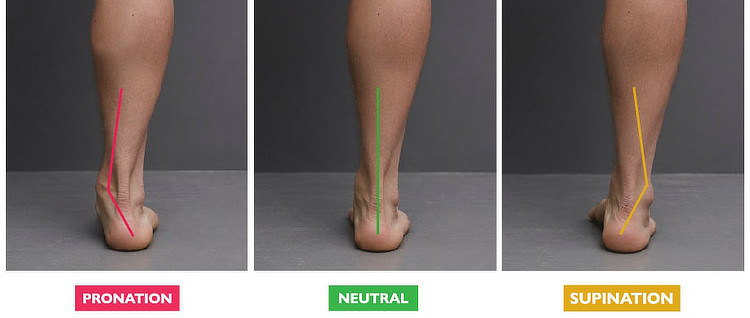
For instance, reviewed in 2009 by a research team at the University of Calgary, Reed Ferber, Alan Hreljac, and Karen Kendall.40 They looked at many dozens of studies, and tried to get a sense of whether or not the accumulated evidence is adequate to “blame” pronation for running injuries. And what did they conclude about pronation?
“No definitive answer can be put forth regarding potential running-related injury mechanisms and excessive foot pronation.” Ho hum. So, in over 250 studies of long-distance running injuries, there was “no definitive answer” about pronation.
Research that shows a “link”
More recently, as noted earlier, a couple big scientific reviews of risk factors for shin splints specifically did identify pronation in runners with shin splints, as measured by navicular bone height (“navicular drop”41).
And here’s one more I haven’t brought up yet: in 2014 — Neal et al were a little fussier, picked just 21 studies to study, and came to a more definitive sounding conclusion: they report “strong” evidence of a “small” risk.42 So, maybe something, but probably much ado about almost nothing.
What they identified there was a “link” between pronation and MTSS, not a causal relationship. Such findings have been (overwhelmingly) observations of simple correlation: runners with MTSS are more likely to have low-riding navicular bones.
What is normal anyway?
For what it’s worth, “normal” pronation range is approximately 6˚, give or take another couple degrees.43 Anything over 10˚ would be considered “over pronation” by nearly any clinician, and the further you go the more likely it is to be a real cause of trouble. However, as we have seen, the real clinical significance of over pronation is simply not known, and not likely to be great.
The pronation that we see in people could easily be normal, trivial anatomical variation and a big red herring. Podiatrist Ian Griffiths, one of my most expert sources on this topic, writing in 2012 (and I know his opinion on this hasn’t changed much):
[Overpronation] contributes nothing to our understanding — it is not definable, not reliable or valid, not diagnostic, its relationship to injury is not fully understood, and it does not dictate what the most appropriate management plan may be. It should not be replaced, it should be removed.
Ian Griffiths, Overpronation: Accurate or Out of Date Terminology?
Despite the numbers given above, a normal range of foot pronation has not been well established, and much of the research about pronation is based on assumptions about what “normal” is. Kind of puts an interesting perspective on all those times you’ve been told that you’re a pronator, doesn’t it? Compared to what? Chimps? Maybe a wide range of pronation is just how human beings work.
Causality and flat feet
The link between pronation and shin splints is weak, and there’s an excellent chance it’s not a causal link. People may not get shin splints because they over-pronate, but because they have something in common that makes them both likelier to get injured and likelier to have flat feet. And what could that be?
There’s at least one obvious candidate: one of the common and subtle connective tissue disorders. These conditions are routinely never diagnosed, so it’s highly plausible that they are a silent factor for many runners.
They are notorious for making people hypermobile in oddly specific ways, so they can also easily explain fallen arches. That explains A!
They are also notorious for making people prone to injury, so they could easily cause the injury. And that explains B.
So the flat feet and the injury could both be symptoms of that real cause — which is very subtle and basically never even considered.
Again, sports medicine and research needs more imagination about neglected X-factors, and more savvy about the relevance of general medicine to “simple” injuries. Although the pronation link suggests causality, it does not prove it by a long shot. It is the medical equivalent of circumstantial evidence in a courtroom — unconvincing, quite possibly not what it appears. It’s rare for experimenters to go to all the scientific trouble of even trying to prove cause. Ferber et al point out this weakness: only one study out of many dozens they reviewed “partially supported the speculation regarding a cause-and-effect” and “contradictory results were found in a study in which runners who had never sustained an overuse injury exhibited greater pronation.” That’s what you get when research isn’t built to sniff out cause-and-effect.
Pronation conclusions
The take-home message here is simple: with no clear research signal of a meaningful risk, it’s extremely unlikely that there is a strong link between pronation and shin splints. There might be a link, but it’s probably not a strong link, and it definitely isn’t necessarily a causal link.
Bear in mind that pronation has always been one of the most favoured of all possible risk factors for shin pain. We’re not talking about a particularly obscure or subtle theory here: this is something that the great majority of researchers and clinicians have “believed” in for decades now. For a long time, many cautious thinkers would have said that pronation was probably a factor in shin pain. And yet, when the evidence is reviewed, it’s just an unimpressive mess of contradictions.
Should you prop up your arches anyway?
I tackle this question below in a small section about orthotics. The bottom line (which won’t surprise you): it’s not crazy to try, but it’s not a good enough option to actually recommend.
2.11
Do women really get more shin pain?
- Aug 26, 2025 — Science update: A substantive update integrating new evidence from Farquharson et al, as well as some other trials and key points. It’s “just a science update,” but a good one, a good improvement to the chapter.
A big 2004 study of risk factors for shin pain concluded that women are about twice as likely to get shin pain as men.44 We’ve seen similar data, including another big prevalence study in 2025.45 It’s easy to look at such results and think, “Wow, twice the risk, there really must be something to that! Women must be as delicate as bone china!”
It’s a trap, and it’s shocking how many doctors and therapists still tend to fall for it, assuming that women get more shin splints because they just aren’t really “built” for running hard. Of course this obnoxious sexism is much less common than it used to be, but I guarantee it’s still out there in a big way. (I have a whole article about prejudice in physical and pain medicine, and the myth of feminine fragility is a major theme.)
Not only is that attitude obnoxious, the issue is much too complex to have such a dismissive, oversimplified view of it.
But it’s probably either just untrue … or it’s a minor phenomenon that has nothing to do with not being “built” for running. There’s a word for that either/or pattern there: a “deepity,” a claim that has a more profound or dramatic interpretation that’s just false (“not built for running”), versus a true interpretation that’s much less dramatic. (Deepities are everywhere in this business.)
Sex differences do exist, of course. For instance, women probably do have lower bone density, as well as smaller diameter long bones on average, and that certainly could constitute a sex-based vulnerability to MTSS and stress fractures. But women’s bones also aren't half as strong as men’s, if at all.46 So let’s look at that old twice-the-risk evidence more carefully, and bring in some newer evidence as well …
Thirty-five percent prevalence?!
The “double the risk for women” study was published in 2004 by Ben Yates and Shaun White, of the Podiatry Department at the University College Northampton. To get their data, they studied naval recruits doing basic training. Service members, sailors in this case, in basic training are always a good source of data about athletic injuries. One hundred and twenty-four recruits (84 men and 40 women) were studied as they went through basic training, to find out how many of them got shin splints, and to try to identify risk factors.
So how many got shin pain? And why?
Yates and White reported way more shin splints than any other study (still true as of 2025), and it’s a bit suspect.47 An amazingly large number of recruits — thirty-five percent of them! — developed medial tibial stress syndrome specifically.48 These particular recruits were also doing fairly intense training — apparently naval boot camp is more brutal than army boot camp! — so that might have a fair bit to do with the difference. And they were also probably more candid about their symptoms, having been carefully assured that reporting their leg pain wouldn’t cause their careers to hurt as well. So 35% is probably an overestimate … but even accounting for that, and even just arbitrarily subtracting another 10% “just in case,” we’re still talking about a lot of shin splints.
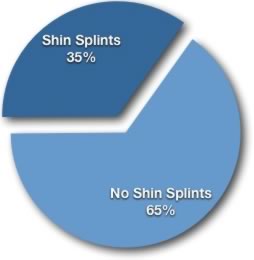
Shin splints is common!
35% of military recruits were diagnosed with shin splints. Most of them got it within the first four weeks of basic training.
The researchers were also looking at what shin-pain victims had in common, and they found two fairly strong factors shared by those with shin pain:
- too much foot pronating
- too much being a woman
That’s right, once again we have some male researchers reporting evidence that suggests that women get hurt more easily: “female recruits had twice the risk of developing MTSS than males.” Over half the female recruits developed symptoms of MTSS, compared to just 28% of the men. The authors write:
It has been shown that injury rates are higher when women train alongside men and are expected to achieve the same exit fitness levels … many female recruits reported that MTSS was precipitated when they had to “keep up” with male recruits while marching or doubling (jogging in step).
If women were allowed to exercise at their own pace, their injury rates might be identical — in which case they wouldn’t be “vulnerable” to shin splints in particular so much as they are vulnerable to overexertion. If for any reason men had to overexert to “keep up,” they would probably also have a much higher rate of shin pain. So, does this mean that women are actually more vulnerable to shin splints in particular? Probably not. It probably means only that women get more shin splints when they train with men.49 This is a strong argument for women to run with women! And Yates and White actually say this in their conclusions: “ … enabling female and male recruits to train separately should be undertaken to attempt to reduce the incidence of MTSS among military recruits.”
So why would women have to struggle to “keep up”? It’s probably not because they are “wimpier” or “not built for running.” There are at least two prosaic explanations for this:
- They came to the challenge with somewhat lower average fitness to begin with — because high fitness is much more culturally encouraged for men, and discouraged for women. “It is known.”50
Women are, on average, shorter than men,51 which makes it harder to keep up in the most obvious possible way: reach!
“This may have resulted in overstrenuous gait changes with abnormally long stride lengths, thus increasing the risk of developing MTSS. This theory is supported by Jones et al, who found that the shortest 25% of women had a greater risk of injury than the taller 75%.”52
New evidence in 2025 update
Farquharson et al mined data from healthcare records for over twenty thousand British Armed Forces personnel, reporting an overall prevalence of 1.6% in 2018, down from 2.2% back in 2013 — roughly 900 fewer cases across the Armed Forces.
(Why did the prevalence go down?53)
The prevalence was higher in recruits alone — 4.3%! Which implies that people who are straining to achieve a new level of fitness are definitely at higher risk.
And then there’s the female recruits: 7.0% of them had medial tibial stress syndrome in 2018. In contrast, male recruits alone were at 4.0% — almost half the shin pain that the female recruits had. This echoes the nasty ratio infamously reported by Yates and White way back in 2004.
Ladies are so fragile, amiright?
Noiamnot.
Fortunately, there are reassuring details for women
The gap between men and women was much more of a chasm in 2018 than any of the other years in the study. Women had more shin pain than men in each year, but 2018 was a particularly bad year for them, while it was the best year for the men. Exclude that year, and that female-shin-pain signal gets way weaker.
And another important point hiding in the data: what about the women who got past the difficult recruit stage? The seasoned pros, rather than the newbies? Their prevalence drops right back down to … 1.6%, exactly the same as the all-personnel average, and indistinguishable from men.
And that strongly corroborates the idea that the risk is greater for untrained people, independently of sex … but when trained, the prevalence for women drops to the same as men, or only a trivial difference.
So the shin pain risk for women is probably not a large as it seems here, and what little there is is mostly about training status — not the fragility of womanhood.
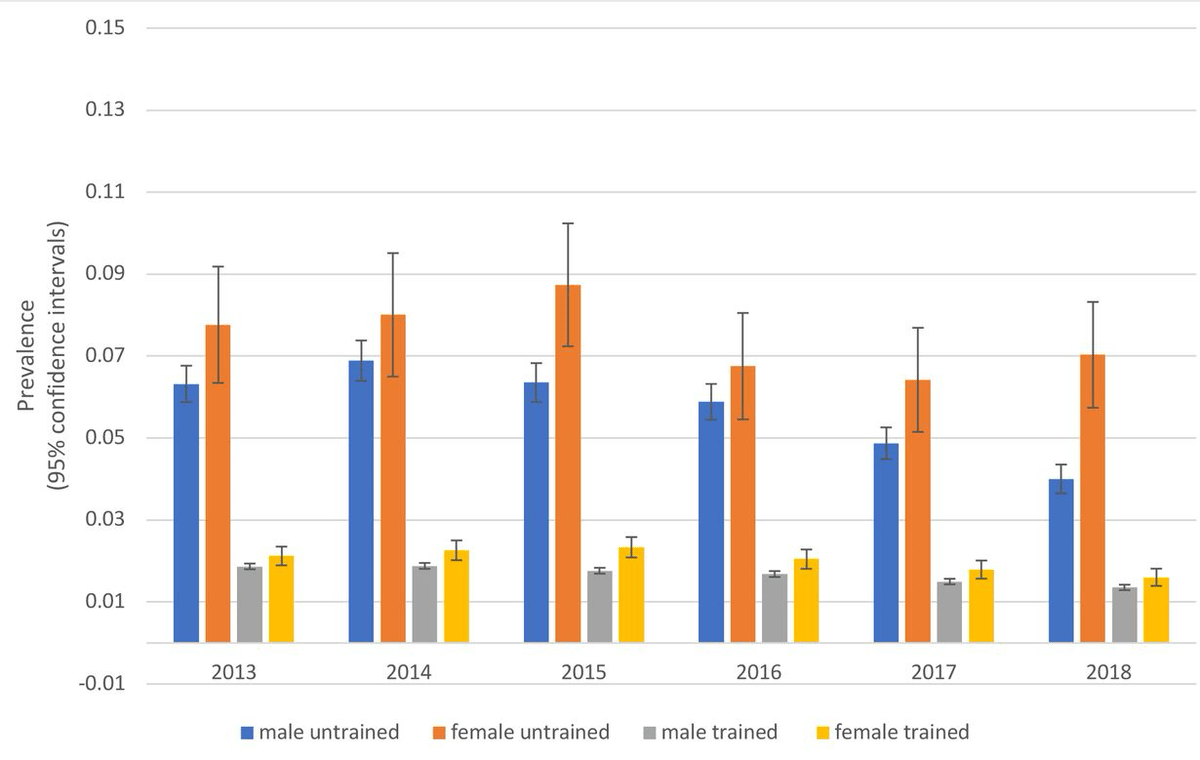
In that final year, on the far right … see how much bigger the male-female gap is? It was an outlier. (Click/tap to embiggen.) Image from Farquharson et al., BMJ Mil Health.
The answer to the female vulnerability question for now
After that perspective, what’s left of the idea of “feminine vulnerability” to shin splints now? Not all that much, of course. It’s not enough for the evidence to “kinda, sorta, maybe” support the idea. And if the evidence isn’t quite strong, who needs it?
Women probably do get some more shin splints … but also probably not “double” … and probably not because they are more delicate.
This is hardly a complete and rigorous analysis, but I’m not really asking you to believe anything … I’m just asking you not to “believe” that women are more afflicted with shin pain, because it’s clearly more complicated than that. In fact, it’s a great example of how muddled such issues can be, and how much disagreement there is even between experts. There’s no solid ground anywhere — except the ground your shins are pounding.
2.12
The role of fascia in compartment syndrome
Fascia is a polarizing topic, and many professional readers are going to have one of two reactions to the title of this chapter:
- Excellent, he’s going discuss fascia! What took so long?
- Oh hell no, he’s going to talk about bloody fascia? I’ll show myself out…
Sorry fascia lovers, but you’re not going to like this, but I encourage you to try to stick around for it anyway. Don’t treat this like a religious belief.
Those with reaction #2 will be appeased!
And for readers scratching their heads because they’ve never even heard the word “fascia”? Everything will be explained clearly…
The alleged general importance of fascia
The big controversial idea is that fascia — tough connective tissue wrappings around all muscles and organs — can get “distorted,” tight and restrictive, and it needs to be “released” by pulling on it artfully. Several prominent branded treatment methods are based on this idea, mostly since the 90s. Fascia is widely regarded as an exciting scientific frontier, with well-attended fascia conferences featuring gurus in the world of massage and manual therapy. Books have been written, empires built, and egos inflated. The word fascia is spoken with reverence and awe by a majority of the world’s massage therapists.
Fascia is a big deal. But it shouldn’t be. It’s one of the biggest red herrings in the history of musculoskeletal medicine. It’s much ado about nothing, a weird tempest in a teapot.
Although some fascia science may be inherently interesting as biology, no property of fascia has yet been shown to be clinically useful, no fascial pathology seems to be a factor in any common painful problem that we can do anything about, and no method of fascial manipulation is known to “fix” anything that’s allegedly wrong with fascia … or even change it. It’s very, very tough stuff.
I have challenged fascia fans to cite clinically relevant fascia science, with no result for years now. There are well-known studies of fascia’s toughness, its contractility, its involvement in soreness, its thickness in back pain, and much more. None of it actually confirms any clinical relevance of fascia, and some of it actually undermines it.
Even the “father of fascia,” Tom Myers, thinks that “now that ‘fascia’ has become a buzzword and is being used for everything and anything, I am pulling back from it in top-speed reverse… it doesn’t do half the things even some of my friends say it does.”
I’ve written extensively about this topic over many years. It’s much too big a topic to cover entirely here. For more information, see Does Fascia Matter? A detailed critical analysis of the clinical relevance of fascia science and fascia properties
Now, what about fascia and shin splints?
Some people believe that chronic compartment syndromes are a classic example of a “fascial distortion” — of a pathology caused by troubled fascia. Too tight! Alternatively, at the very least, even if the fascia is innocent and the problem is the swelling in a fascial compartment, it can still be treated by “releasing” the fascia — stretching or softening it, so that there’s more room.
Sounds great, but it’s probably all nonsense. There are several problems with this view, and some directly contrary evidence. Dahl et al’s 2011 experiment was quite persuasive.54 Basically they were looking for the fascial stiffness, tightness, or “distortion” in people with compartment syndrome, and found… the opposite.
They took tissue samples from the fascial compartment of the anterior tibialis muscle in several patients with compartment syndrome, several more who had both compartment syndrome and diabetes, and then some more from healthy individuals (for comparison, a control group). Although there was a lot of variability between individuals, on average there were no important differences, and in fact stiffness was 70% greater in the healthy patients — exactly the opposite of what one would expect to see if compartment syndrome was caused by stiff, thick fascia. The authors concluded:
structural and mechanical properties are unlikely to explain chronic compartment syndrome. To prevent chronic exertional compartment syndrome, it is necessary to address aspects other than the muscle fascia.
So fascial therapy for compartment syndrome is a treatment for a condition that hasn’t actually been identified. But even if it is…
Fascia is too tough to “release” anyway
Fascia is basically “gristle,” and while there are many variants and not all fascia is tough, the macroscopic fascial wrappings of muscle compartments definitely are. Trying to physically deform it55 would be like trying to stretch an oiled tarp through a blanket. Even without the blanket, even with good leverage, you couldn’t do it, because one of the most fascinating things about fascia is just how tough it is. Crazy tough!
This was shown in a now infamous study frequently cited to debunk fascia excitement.56 Chaudhry and colleagues showed that fascia is much too tough to “release” by stretching it. And that is consistent with well-established properties of fascia, namely that it’s extremely tough stuff. You cannot change the structure of fascia, because it is tougher than Kevlar. If the stuff were thicker, people would be bulletproof.
This is accepted even by prominent fascia gurus like Dr. Robert Schleip, who concluded in 2003 that plastic fascial change in response to moderate loading is “impossible to conceive.”57
Perhaps fascia can be “melted”? Some subtle effect? Now that’s just wishful thinking, or downright magical, with several absurd implications. If fascia could yield significantly or lastingly to any kind of touch, it wouldn’t be any good at its (tough) job of holding things together.
Bottom line: it makes no sense to blame fascia for compartment syndrome, or to try to change fascia as a treatment for compartment syndrome — except with a scalpel in an emergency, and more about that later.
Part 3
Diagnosis
How do you know which kind of shin splints you’ve got?
More than most of my tutorials, this one presents a diagnostic challenge! The chief concern of many readers will be to figure out which kind of shin pain you have — or to firm up a diagnosis that you don’t quite trust (even just that can be terribly helpful). However, with so many different types of shin pain, it’s not exactly straightforward.
In my other tutorials, sections about diagnosis mostly consist of confirming a few key features of one main condition, and discussing a few of the red herrings. In this case, however, we must start with a fairly daunting diagnostic process just to be reasonably sure of what condition we’re even talking about.
On the bright side, despite several possible sources of pain, there is little overlap between them. Consider a stress fracture and a compartment syndrome: pretty much the only thing they have in common is the shin. So, the diagnostic algorithm is really not all that scary. Let’s get on with it …
3.1
A diagnostic algorithm (you know it’s good if it’s an “algorithm”)
In 2005, Dr. Peter H. Edwards, Jr. published a paper in American Journal of Sports Medicine, offering a diagnostic algorithm to help simplify the process of identifying what sort of shin splints you have.58 He’s a doctor, so it’s not quite simple: as presented in the paper, the algorithm is impressively technical, complete with complex flow charts — you know something is good when it’s an algorithm and it comes with flow charts! All we need now is a laser pointer. (Shark-mounted, of course.)
Fortunately, although complex, Dr. Edwards algorithm is also excellent, and it can be boiled down to plain English quite easily … and that’s my job. Hopefully patients and professionals alike will appreciate the translation. So, here’s how it goes …
Patients can be neatly divided into two groups:
- those who have pain when they rest, and
- those who do not have pain when they rest.
Which are you? Having decided that, the remainder of diagnosing is fairly easy.
If your pain goes away when you rest, you probably have either:
- compartment syndrome, or
- impingement of a nerve or your popliteal artery.
If you have a very sensitive and specific spot in your lower leg, and you have tingling sensations, it’s almost certainly the nerve. If it’s hard to locate a specific tender spot, then it’s much more likely to be either a compartment syndrome or a popliteal artery impingement. Since compartment syndrome is much more common, and popliteal artery impingement often affects the calf significantly, I’m sure 99% of the people reading an article about shin splints can safely assume that they have compartment syndrome, not popliteal artery impingement. But you should at least know about the artery possibility.59
If you have pain even when you rest, then you probably have either:
- medial tibial stress syndrome (MTSS), or
- a stress fracture.
Both of these conditions tend to carry right on aching for quite a while after you stop exercising, and may even throb painfully when just sitting around at the office or at home. Telling the difference between MTSS and a stress fracture is relatively easy, fortunately: stress fractures are almost always in the upper two thirds of the shin, and MTSS almost always makes the bottom third hurt. These are not hard and fast rules, but good general guidelines. The difference can only be clinched by an X-ray (which can usually detect a stress fracture), or by CT or MRI scanning, which can detect bone damage even before it becomes painful — which is the topic of the next section.
3.2
Two really easy tests to both diagnose and predict medial tibial stress syndrome
In Newman 2012, Australian researchers Phil Newman, Roger Adams, and Gordon Waddington discovered something quite clever: they could predict which healthy soldiers in training were going to get shin splints, with surprising accuracy, and they could do it with a simple pair of tests that anyone can perform.60 Tenderness and boggy swelling around the lower shin bone are basically a dead giveaway that MTSS is what you’ve got, or that it’s just a matter of time until you do. These are “pathognomonic” signs — strong, defining signs.
They did their tests on 384 soldiers, and the checked up on them over 16 months. Soldiers who were positive on both tests were eight times more likely to develop MTSS than if they were negative. Hardly any of the double-negatives got MTSS (a “negative likelihood ratio” of <0.001, which is super duper low). Each test was also predictive independently, but one of them much more so: although swelling was more rare, it was nearly as predictive as the two test combo. And they’re so easy there’s no reason not to do both.
Another key finding: three times as many women got shin splints. This has the odd, counter-intuitive implication that the tests are actually more reliable for men.
So what are these magical tests? Both are applied by hand to the lower third of the shin …
- Press firmly and slowly with a fingertip along the inner edge of the shin bone. If it leaves a dent for more than a couple seconds, that’s “pitting edema,” and a positive test. This boggy tissue indicates that the area has been slightly swollen for some time. It’s such an easy test, check a few different spots to make sure you haven’t missed anything.
- Squeeze the shin bone firmly. Your fingertips should be reaching into the muscular tissue behind the shin on the inside edge. The amount of pressure should be about the same as you would use to squeeze out a washcloth. If the squeeze is tender, it’s a positive test.
These signs are mainly about predicting, but they are also useful for diagnosing, because they are strongly associated with MTSS. These signs can help clinch a diagnosis of MTSS as opposed to the other causes of shin splints.
They also tell us something about the nature of MTSS: it smolders for a long time, up to several months and possibly much longer, before finally bursting into flame. On the bright side, this also implies that the legs can tolerate quite a bit of tissue trouble before becoming painful. And it’s also an excellent way to monitor progress in rehab, and risk in future years. Just keep checking!
3.3
MRI and CT scanning may be helpful
In any case where there are some diagnostic doubts — a common scenario with shin pain! — a scan may be quite useful in determining just how much of a factor bone fatigue is.
Medical technology can determine just how damaged your tibia is (or isn’t), long before it’s obvious. Bone scans, CT scans, and MRI scans can all reveal bone fatigue — the microscopic cracks and thinning which precede stress fracture, which I introduced above.
Bone scanning was previously considered the “gold standard” for detecting subtle abnormalities in bone. Bone scanning, however, is a fairly invasive and drastic procedure, in which a radioactive tracer substance is injected. Over several hours it gets into the bones, by which point you are practically glowing in the dark! A detailed picture of the bone can then be taken with a camera that detects gamma radiation.
Fortunately, bone scanning is now considered overkill for this kind of diagnosis. Studies like the one described above (Gaeta), and also Batt, have shown that MRI and CT scanning is just about as effective as bone scanning … and a lot cheaper and safer.
Indeed, they can show signs of problems developing in the tibia long before a stress fracture occurs, and even before you feel any pain. Not many runners are likely to seek out a CT scan before they are actually hurting, of course, but it’s interesting to know that you can detect problems before there’s pain.
3.4
From high-tech to low-tech: the tuning fork test!
Here’s a simple and interesting test that you might be able to do yourself. It’s an easy test, but there is a catch: you have to have a tuning fork! Admittedly, not a lot of people have one of those just lying around the house these days. The tuning fork industry is not what it used to be, I bet. There’s an app for that.
Nevertheless, it’s such a good, quirky idea that it’s worth writing about. Briefly.
To perform the test, simply hit a tuning fork and hold the butt against the middle of your shin bone or on your ankle bone. If the vibrations aggravate your shin pain, you almost certainly have a stress fracture! If it has no effect, you probably do not have a fracture.
Interesting, no? Alas, science says it probably isn’t very reliable.61 Shocker!
3.5
Confirming the role of muscle knots in shin pain by treating them
It’s easy to get fooled: nearly everyone has a prominent myofascial trigger point (muscle knot) in the upper half of the tibialis anterior muscle. Just dig around with your thumbs in the upper half of the meaty part of your shin, and there’s a 98% chance you will find a deep, toothachy sensitivity. But … what does it mean? Is it the cause of chronic shin pain?
Treat it and see what happens.
Trigger points and general tissue sensitivity are common throughout the lower limb. Similarly, most people can easily find at least a few very sensitive spots in the calf, especially along the exposed edges of the leg bones, and at least some of those will be latent trigger points. It’s a “triggery” area.
The problem is that none of these trigger points are necessarily an important part of shin pain. It is quite possible for a person with no serious shin pain problem to have these problems. You can find out whether or not the trigger points you have are actually driving or complicating your shin pain by trying to get rid of them.
If you can find and treat a few key muscular trigger points in the lower limb, and your shin pain problem eases significantly, that’s pretty good evidence. Not perfect — the change in symptoms could be a coincidence, for instance — but good enough. And since it’s cheap and easy to experiment with self-treatment of trigger points, it’s a bit of a no-brainer to just go ahead and give this a shot. It’s remarkable how many cases of “stubborn” shin pain quickly vanish, or improve dramatically, with just a little treatment.
What exactly constitutes treatment for trigger points? A pill? Prayer? One of those things that Doctor McCoy would wave over people on Star Trek? Just stimulation, actually — changing the tissue state and neurological “equation” with a little rubbing. I’ll spell out the basics in another section below.
What if you fail?
Failing to treat shin pain this way does not mean that trigger points aren’t an important part of your shin pain — it might just mean that they are tricky to treat. Awkwardly, the worst cases of trigger-point-powered shin pain are actually the most likely to resist treatment. So we need some other ideas about how to evaluate this. Here’s a checklist. Check all that apply — the more you check, the more likely it is that trigger points are a significant factor in your shin pain.
- You have compartment syndrome, as confirmed by the diagnostic criteria above. Compartment syndrome is nearly always complicated by trigger points, much more so than MTSS or a stress fracture.
- When you press on sensitive spots in the tibialis anterior muscle, it doesn’t just hurt, but actually produces pain that feels a lot like your shin pain. Remember, that area will be sore on almost everyone — but if it’s the right kind of sore, if it feels like your shin pain, that’s good evidence that the trigger point is actually causing your pain. If you find the same thing with a spot elsewhere in the lower leg, that may be an indicator as well, but place less emphasis on this.62
- If you have foot pain, there’s a strong possibility that trigger points are involved, because tibialis anterior trigger points are notorious for causing foot pain as well as shin pain. Many people with shin pain also have some foot pain, but it may be significantly overshadowed by the shin pain, and gets overlooked as a diagnostic factor. Of course foot pain could be caused by many things, but it’s a good clue.
- If your shin pain isn’t particularly aggravated by impact, this could indicate that trigger points are more of a factor. Trigger points can cause pain on impact as well, but less so than MTSS and stress fractures, which are by their nature obviously very sensitive to being smacked around.
- If your lower limb feels particularly weak, stiff and heavy, this probably indicates greater importance of trigger points. Trigger points tend to cause these symptoms.
- If hot showers and baths seem to ease your shin pain, this is a strong indicator that trigger points are involved. Other kinds of shin pain will not generally be helped much by hot soaking, but trigger points will.
3.6
What’s the worst-case scenario?
Compartment syndrome can be extremely difficult to treat, especially once it passes a certain point. Severe cases like this will stop a runner from running or even walking without pain, and simply do not go away. If left untreated, a severe case of compartment syndrome can lead to starvation and death of the tissues, which you really do not want to happen.
Apart from this dire scenario, however, shin splints are much less ominous.
A hairline fracture, of course, can simply break the rest of the way. But usually, if rested properly, they will heal steadily.
Medial tibial stress syndrome and chronic compartment syndromes can be extremely persistent and painful, but will usually heal with enough rest. For an unlucky few, they can become extremely exasperating chronic problems requiring thorough experimentation with a variety of rehabilitation strategies and therapies. In the future, this article will be revised to provide extensive information for exactly these patients. Meanwhile, the self-treatment information below is adequate for mild and moderate cases.
3.7
Possible explanations for extremely stubborn shin splints
There are a variety of reasons why a case of shin splints might be unusually stubborn:
“Sneaky” stresses. It’s remarkable how often patients continue to engage in activities that they believe are safe, but continue to challenge tissues and retard healing. This topic will be addressed again below when we discuss proper resting strategy. Meanwhile, anyone with a difficult case should ask themselves: am I truly giving my shin the break it might need to heal?
Difficult trigger points. As discussed above, myofascial trigger points may be the entire cause of shin splints, or simply a complicating factor. In either case, they may be resistant to treatment: trigger points range from easy to treat all the way to nearly impossible, and no one knows why or how to predict how a given trigger point will respond to treatment.63
Abnormal anatomy. The most likely explanation for a stubborn case that usually won’t get diagnosed or even discussed by therapists and most doctors is that there may be something odd about your anatomy. We are not all created equal, and anatomical abnormalities can be at the root of many different kinds of problems. However, shin splints in particular is vulnerable to this problem. Did you know that there is actually a lot of uncertainty about what lower leg anatomy is even supposed to be like? Probably not — but there is!64 Even “normal” cases of shin splints and lower leg pain are often, by nature, caused by abnormal anatomy.65 But there may also be unique variations — abnormal anatomy that only you have 😃 — that is making your shin splints especially serious. There could be an invisible cause for your problem. For more information about this idea, see You Might Just Be Weird: The clinical significance of normal — and not so normal — anatomical variations.
Pain system dysfunction. Pain neurology and psychology is overwhelmingly complex and mysterious, and there are numerous subtle and poorly understood ways in which our interpretation of pain can become dysfunctional. See Pain is Weird for a primer on this subject.
3.8
Other causes of shin pain
In addition to multiple causes of shin pain that are all accepted as different causes of “shin splints,” there are other things that can cause shin pain that are usually not considered to be sub-types of “shin splints.” But they could be mistaken for shin splints. What are some of these other possibilities? Just how many ways are there for shins to hurt? Fortunately, not too many more.
This is the first and last mention that most of these conditions will get in this book, but they do all deserve at least an introduction:
- Neuropathy causing shin pain usually involves the common or superficial peroneal nerves (almost the same thing). Like the notorious “funny bone” nerve (ulnar), they are somewhat exposed on the side of the leg just below the knee, and injury prone. Trouble with the sural nerve, on the back of the calf, is another much less likely cause of confusion; although it primarily affects the outer half of the back of the calf, symptoms may also almost wrap around to the front, causing some lower shin pain. Note that nerve entrapments can occasionally do a good imitation of a painful trigger point (deeper, aching pain), but usually they produce more classically nervy symptoms (electric and tingling).
- Tendinitis (yes, with an “i”66) of the Achilles, peroneal, or tibialis posterior tendons. None of these is especially likely to be mistaken for a shin problem, especially Achilles tendinitis, which is obviously on the back of the leg; still, with complications misdiagnosis is possible. Moving around to the side, the peroneal muscles and tendons might feel a little more like a shin problem, or a part of it, since you could certainly have a bit of both going on. However, most peroneal tendinitis is very ankle-y (outside). Tibialis posterior tendinitis is also ankle-y, but the inside, which is very unlikely to be confused with shin splints. However, even though the muscle itself is part of the calf, it is very deep, and discomfort in the muscle — which often goes with tendinitis — might be experienced as a deep shin pain.
- Popliteal artery entrapment syndrome (PAES) cuts circulation to the lower leg by pinching the popliteal artery where it passes through the back of the knee. It gets confused with compartment syndromes. It isn’t common but it’s not rare either,67 the most common of several ways that leg circulation can be impaired. It’s caused by an anatomical abnormality and/or scar tissue that forms in response to an overuse injury — so it can be provoked by running. The lack of blood starves the leg, resulting in a pale, cold calf and intense pain after athletic activity when demand for oxygen is greatest. Since the pain affects primarily the back of the leg, this problem is only occasionally diagnosed as a “shin splints” problem — it doesn’t seem very shin-y, and it doesn’t even really seem to make sense to call it a shin pain problem. It’s probably more common for genuine shin splints to be misdiagnosed as PAES than the other way around.
Radiculopathy/sciatica is another kind of neuropathy — irritation of nerve roots exiting the lower spine.68 Nerve roots connect to skin and muscle in distinctive patterns, which aren’t very precise — lots of overlap and fuzziness,69 so the symptoms can be a bit unpredictable and unclear, and patients cannot reliably tell what’s radicular from location alone.70 But! The shin is roughly at the epicentre of typical radicular pain patterns. The most commonly affected nerve root (the fifth and lowest of the lumbar roots), causes symptoms (on average!) right in the “shinniest” part of the shin, and the effects of neighbours’ spread out from there, further to the inside (L4) and the outside (S1) of the leg.
Radicular pain could also easily be worse during activities, sustaining the illusion of an “overuse” injury. And to really blow your mind, it’s even conceivable that mild chronic radiculopathy is actually responsible for the vulnerability of the tissues of the lower leg to developing an overuse injury in the shin — a root cause.
Fortunately for diagnostic sanity, there are usually clear clues that you’re actually dealing with a back problem, not a shin problem. Not always! But usually. Radicular pain is more unpredictable and widespread than you’d expect from a leg injury. It also tends to be a “shooting” or electrical pain, plus some tingling, numbness, and weakness are also typical. The nerve roots most likely to be causing trouble can cause weakness and pain throughout the leg and lateral foot, and reduced or absent patellar and Achilles reflexes. If your patellar and Achilless reflexes are fine, it almost eliminates radiculopathy. Radicular pain is likely to be worse while sitting (and with changes in back position in general), another major distinguishing feature. And finally, you’re very likely to have some actual back pain — surprise! — and the back pain and the shin pain are likely to wax and wane in concert.Bone cysts are tumour-like growths. If you aren’t a kid with shin pain, and you don’t have one, you don’t need to worry about this at all. But, if you are, or you do …
Unicameral (simple) bone cysts (UBC) are a common problem and completely unexplained — just one of those (damn) things. They mostly happen in kids (5-15), and mostly in the longest bones, usually the top of the femur or humerus … and, only once in a blue moon, a tibia. And they usually don’t hurt! And so it’s super rare for UBCs to imitate shin splints, because few of them occur in the shin, and only some of those are a problem. But they do happen! Sometimes even in both legs at the same time.71 They’re easy to remove surgically, and they can be identified with MRI … but who does an MRI for a stubborn case of shin splints? It’s a tricky diagnostic problem, for sure.72
What about actual bone cancer? Not just a cyst? It can happen, of course, but it’s rare, and usually easy to distinguish from shin splints as it progresses — because it hurts much more, much more continuously, and more independently of exertion and strain.
Proximal tibiofibular joint pain mostly causes lateral knee pain, and so it is more likely to be misdiagnosed as runners’ knee (the notorious iliotibial band syndrome) than shin splints. Although the injured PTFJ is not quite a knee joint and does cause pain below the knee, it is not nearly low enough for most people to think “ow, my shin” and actual misdiagnosis as shin splints is probably quite rare.
However, I have encountered both of these diagnostic mistakes in my career. For example, one patient took his classic tib-fib pain to an orthopaedic surgeon who thoroughly and expertly assessed only his actual knee joint. When the patient said, “But doctor, the pain is below the knee! What about that?” The surgeon shrugged and said, “Oh, well, I can’t help you with anything below the knee. Might be shin splints?”
In the eyes of a knee specialist, “below the knee” equals “shin splints” I guess. 😜
All that said, there could be some people out there who have always thought their shin pain was rather high and lateral… and that could be tibiofibular pain. You can read more about it here: The Tibiofibular Joint and Knee Pain.
Part 4
Treatment
What can you do about shin splints?
In sections ahead, I will discuss every major treatment option (and several minor ones) for the “big three” causes of shin split pain — MTSS, stress fractures, and compartment syndrome. All three conditions can be helped to some degree by some self-treatment approaches. And, of course, more difficult cases may require professional help and/or more drastic treatments.
Treatment recommendations for shin splints are greatly complicated by the different types of shin splints. On the one hand, what works for one type of shin splints is not necessarily going to work for another. On the other, some treatment approaches — such as a well-planned resting strategy — are surprisingly effective in most cases of shin splints, regardless of the exact type.
Some approaches to rehab don’t actually “fix” anything, but are still very important parts of the equation: good examples include reducing running impact, and strengthening the lower leg musculature.
4.1
Some important things to keep in mind about placebos
A placebo is relief from belief: people often feel better just because they believe they have been treated. More precisely, it is the appearance or illusion of a treatment effect that is not actually attributable to a biological treatment mechanism. It’s a fascinating phenomenon, but its “power” is over-hyped.
This is a standard chapter in all of my books, summarizing several key points about placebo that are important context for any discussion of evidence-based treatment options. I do not substantiate any of these points here — all the references are in a more detailed article about placebo.
- “The” placebo effect is not just one phenomenon, but miscellaneous illusions that can collectively create the appearance of an effective treatment. Placebo is complicated!
- Placebo may have a somewhat special relationship with pain. Reassurance (placebo) has more potential to relieve pain than most symptoms, because pain is modulated by perception to some extent. However, the evidence is very clear that placebo analgesia is not a strong effect!
- Clearly, placebo is not a magical mind-over-pain superpower and its effects tend to be minor and/or brief. It can’t affect injury and organic pathology; it can only tinker with our experience of them, and even that appears to be limited.
- Placebo can also backfire. When a placebo effect wears off — as it usually does — people often fear that they must be really screwed, and then placebo turns to nocebo, placebo’s evil twin: feeling worse because of belief.
- Placebo potency is driven by whatever impresses the patient with the seriousness and legitimacy of treatment: risks, costs, size, intensity, technology. (But It’s a bit of a myth that tiny details like pill colour can move the needle.) This stuff is why we have the concept of “therapy theatre” — because so much therapy is all about putting on a show.
- One of the best ways to impress people is with novel and intense sensations, because the patient can feel the “power” of the treatment. This is the basis of most manual (hands-on) therapies: they are sensation-enhanced placebos. Interactive therapy theatre.
- Placebo has been hijacked and re-branded for its public relations value to alternative medicine. If your treatment isn’t evidence-based, no worries: you can still sell the power of placebo! “The power of placebo” is widely, weirdly used as a justification for therapy that can’t beat a placebo.
- Placebo does not work when you know it’s a placebo, contrary to what many people have heard. The popular idea of “placebo without deception” is just bullshit, based on an experiment that created a strong expectation effect by inflating the participants’ expectations of placebo. So it was just an odd way of getting to the same phenomenon.
- Many snake oils supposedly work on animals, and if animals are immune to placebo then the treatment must be legit. But animals (and their biased human observers and caregivers) are definitely not immune to placebo. In fact, with animals there is even more opportunity for an illusion of a treatment effect.
We have a word for medical treatments that only work if you believe that they will, and it rhymes with “gazebo.”
Book Review, Unlearn Your Pain [Schubiner], by Scott Alexander
Is it okay to pay for a placebo?
All of the above boils down to this practical question: As long as it works, who cares how? And placebo can work! So why not? Many people claim to be happy to pay for a placebo, a sentiment raised in most discussions about a treatment that failed to beat a placebo in a fair test (invariably overlooking the fact that neither the treatment nor the placebo actually work very well).
I have no problem with people paying for a placebo as long as their eyes are wide open, but the wider your eyes get the less likely you are to get even a minor benefit.
And paying for things is never completely harmless.
Treatments with unknown efficacy but some plausibility and low risks are the least objectionable placebos to pay for. I’ve tried many such treatments, knowing full well that any effect I enjoy is probably just placebo (or regression to the mean, or natural recovery)… but it might be an actual effect, and I’m willing to pay a little for that chance. I’m gambling on getting a genuine benefit, with a bit of placebo as a consolation prize. So, for me, the plausibility has to be there.
What I want readers to take away from this is that placebo is not therapy. It’s mostly just an over-rated curve ball that accounts for an awful lot of temporary “success” stories.
4.2
You and “vitamin I”: anti-inflammatory meds, especially Voltaren® Gel

Most drugs work on only about a third of the population, they do no damage to another third, and the final third can have negative consequences.
Craig Venter, extremely famous and spooky smart geneticist (public lecture, Vancouver, May 3, 2011)
Vitamin “I” — ibuprofen, the main ingredient in drugs like Advil and Motrin — is an almost universal treatment choice for shin pain (and, of course, every other repetitive strain injury). The drugs ease inflammation and fever, and the injury seems to be inflamed, so it’s a perfect match! Or people just take them because it’s a pain-killer and they have pain to kill. For one reason or another, nearly every patient and professional assumes that NSAIDs are at least somewhat helpful, though few are foolish enough to think it’s any kind of a cure.
In fact, the NSAIDS are probably one of the weakest treatment options — because of course repetitive strain injuries are not actually very “inflamed,” per se.
Scientific evidence on this topic has always been scarce and discouraging,73 and even the anecdotal evidence for ibuprofen is weak. I’m sure there are some testimonials for ibuprofen — there are testimonials for anything. But consider: even though ibuprofen is probably the first or second line of defense for virtually every case, the world is clearly still full of serious, chronic shin pain … that ibuprofen could not stop.
NSAIDs may have more relevance to some kinds of shin splints than others, though — more than just pain control. Reducing inflammation cannot cure damaged tissue — it can only reduce the intensity (pain) of inflammation. But sometimes inflammation is most or all of the problem, so taking the edge off it might be better than just a little symptom control. Compartment syndrome is probably the best example …
Compartment syndrome — Compartment syndrome is defined by swelling. If that swelling is part of an inflammatory response — which it often would be initially — then eliminating the inflammation early on has the theoretical potential to actually solve the problem, by controlling the swelling. However, as the problem becomes chronic, the “chemical profile” of the compartment probably looks less and less inflamed, and more and more like it’s just suffocating — a more serious situation that NSAIDs can’t touch. Probably NSAIDs aren’t miraculously curing many cases of chronic compartment syndrome, but it might be surprisingly helpful in the early stages.
Medial tibial stress syndrome and stress fracture are painful but relatively stable conditions. If you can control the pain with NSAIDs, that would be pure win: eliminating the symptom would cure the problem as far as the owner of the shin is concerned. But NSAIDs aren’t likely to work that well, the shin would remain in danger regardless, and there are reasons to avoid NSAIDs even if they work (coming up below).
Trigger points — Muscle pain does not seem to be inflammatory by nature. Muscle knots (trigger points) are more like poisoned muscle than injured muscle. Although there’s some anecdotal evidence that taking an anti-inflammatory medication might reduce muscle pain a little, mostly it doesn’t seem to work very well.
So NSAIDs might be useful, depending on which kind of shin splints you have. But they may miss the mark in principle, and they also have limits where they are relevant. Their primary limitation is simply that there is only so much inflammation that they can control, even when that’s worthwhile.
And then there’s the bad news.
NSAID chemistry may be mostly irrelevant to the chemistry of shin pain, but it gets worse: they may actually interfere with recovery from the connective tissue degeneration that actually is the problem, because NSAIDs retard soft-tissue healing. Just what every RSI victim needs! (Fortunately, they don’t actually damage connective tissue, like steroid injections. Probably.) There’s no direct evidence that NSAID use will impede recovery from any type of shin pain… but it’s possible.
And it gets even worse! NSAIDs are also well-known as “gut burners” for their disagreeable and common effects on the gastrointestinal tract, which is a deal-breaker for many patients. And they can, paradoxically, actually cause headaches.74 Oh, and one more thing: they increase the risk of strokes and heart attacks, even in healthy people, at any dose. (Diclofenac [Wikipedia], a popular oral NSAID almost everywhere on Earth but North America, has even worse cardiovascular side effects than the others.75 Oral diclofenac specifically should probably be banned.) Lovely!
A drug is a poison with potentially beneficial side effects.
Dale Favier, Massage Therapist, poet
I know some readers are thinking right now, “Yeah, well, okay … but I’m still going to take my Vitamin I.” With dosing caution — small doses, short-term use — I have no serious objection. If there’s any reason to take them, it’s that they might relieve some pain by unknown mechanisms (the inflammation question is not exactly simple).
Or — and this seems almost crazy, I know — you could just actually heed the science, ignore the conventional “wisdom,” and never bother popping another NSAID unless you’ve got some uncomfortable classic inflammation to take an edge off. Imagine two NSAID scenarios …
- The (not-unlikely) worst-case scenario: slowed healing, aggravated pain, GI tract upset, increased chance of a stroke or heart attack, waste of valuable seconds popping pills.
- Best-case scenario: temporary modest pain relief, no side effects.
Speaking of dosing caution: why soak your whole system with NSAIDs just to reduce inflammation in one small area?
Voltaren Gel — not exactly a magic bullet, but probably safe, reasonable, and worth a shot.
Voltaren is basically another NSAID (diclofenac) in a tube, and a relative newcomer to the range of options. Because you smear it on and it’s absorbed through the skin, you don’t have to carpet bomb your entire digestive tract and circulatory system with the stuff to get it to the problem. This significantly reduces your overall exposure to the risk of the side effects mentioned above76 — but you still get an adequate dose into the tissue with the issue.
Another reason that Voltaren is interesting and well worth bringing up here: it would never have been approved for sale if it didn’t have some genuinely persuasive evidence attached to it. The stuff actually seems to do something for arthritis pain — pain that probably has much more in common biologically with RSIs. So we’ve got something like a shred of a reason for optimism here and greatly reduced risk. Yahtzee!
- Worst-case: It could be just as much of a chemical clean miss as any other medication, in which case you’re basically just smearing expensive Vaseline on yourself.
- Best-case: It could actually provide some real pain relief, with a very low risk of side effects.
To wrap this up, here’s comedian Louis CK satirizing a doctor talking about the painkiller dilemma: “Oh, it’ll do some intestinal damage after a while. But you’ve just got to weigh that against how much you like your ankle not hurting!” This is a short excerpt from his 2008 stand-up show, Chewed Up, which is well worth buying.
 1:00
1:004.3
The art of rest: the challenge and the opportunity for patients who have supposedly “tried everything”
Rest is the most important and misunderstood and neglected treatment option for all of the big four types of shin splints. It is particularly essential to rest adequately before proceeding with any other vigorous rehab exercises, especially strengthening.
Almost everyone tries “taking it easy for a while,” and that will certainly help or even outright solve the majority of minor cases. And yet for many serious and chronic cases, the patients I talk to have rarely done much more than that. It is routine for me to encounter athletes who insist that they have “tried resting” who have not actually done a good job of it, both because athletes tend to be lousy at taking it easy — and I am speaking as an athlete with that problem — but also because no one has ever explained to them what a good resting strategy actually consists of.
I do not mean to portray rest as a miracle cure for shin pain. However, it is cheap and safe and can be much more effective than most people realize. It is well worth trying thoroughly and properly before resorting to any other costly or riskier treatment option, especially surgery.
Stress fractures are more or less completely resolved by adequate rest — obviously. If you rest thoroughly enough and long enough, almost all stress fractures will heal. If it doesn’t seem to, it’s probably because it coexists with a case of MTSS or a compartment syndrome, which may be less responsive to rest. Nevertheless, even serious MTSS too may ease dramatically with adequate rest.
Trigger points are unpredictable in their response to rest. To the extent that muscle dysfunction is a factor in your case, rest may help — it’s worth a try. But so many factors determine how stubborn a trigger point is that it is hard to know what it will do. Whereas the other kinds of shin pain are more or less directly the result of overuse, trigger points may be present for other reasons, and so they may not disappear when the overuse is removed from the equation.
Most readers of this tutorial are already well into chronic pain. However, for future reference, if you start to develop shin pain while running or during any sport, reduce your activity intensity immediately. If it persists, stop altogether for 3-10 days, possibly more for the most ominously painful cases. There is good evidence that a major risk factor in developing overuse injuries is trying to push through the pain.77
What constitutes a “good resting strategy”? Here are some key concepts that often get missed …
The envelope of function is a graphical expression of your tolerance for tissue stress. Too much stress, too fast, and tissue will fail — that much is obvious. What almost everyone misses is that overuse injuries collapse the envelope of function. Once you have exhausted tissue’s capacity to absorb punishment, your tolerance for additional stress collapses. Suddenly, things that used to be no problem at all are capable of causing pain, or (insidiously) just keeping your tolerance low. This is how “taking it easy” fails: you take a break from running, sure, but not from walking or a dozen other “easy” activities that are nevertheless stressful enough to perpetuate the injury. The basic lesson here is that you can’t just rest from the activity that hurt you in the first place — for a while, you have to rest from anything that might be aggravating the tissue.
In the case of shins, this means you also need to avoid walking — even if it’s not obviously painful.
If that sounds like a tall order, it is. That’s the point: proper resting is a pretty substantial commitment. It’s also well worth trying. I have seen many recoveries from overuse injuries that seemed to come from applying primarily this one principle. And it’s hard to imagine an injury where the need is more obvious than in the case of most kinds of shin pain, which are so obviously caused by overexertion.
The fear of resting. Especially among runners and athletes prone to shin splints, there is a very common, nervous objection to the suggestion to rest thoroughly: the fear that you will “go to pot” or get critically out of shape. It’s true, you can lose your athletic edge pretty quickly. Optimal, competitive fitness takes hard, constant maintenance. But you lost your shot at maintaining optimal fitness the moment your shin started hurting, and you aren’t going to get it back until it stops.
You certainly won’t “go to pot” in a month. Or two. Or even six. All the more so because there are plenty of ways of continuing to pursue fitness while protecting your shin(s). But you certainly will go to pot if you never heal. First things first. It takes what it takes. And the only thing worse than having to rest for a while is failing to heal entirely. In general, you have to be healed before you can maintain or develop fitness, let alone optimize it.
If you’re specifically worried about gaining weight, there are many experts saying loud and clear that calorie intake more than exercise by far. Do your best to eat less! And of course that’s not easy.78
For much more about good resting strategy, see The Art of Rest.
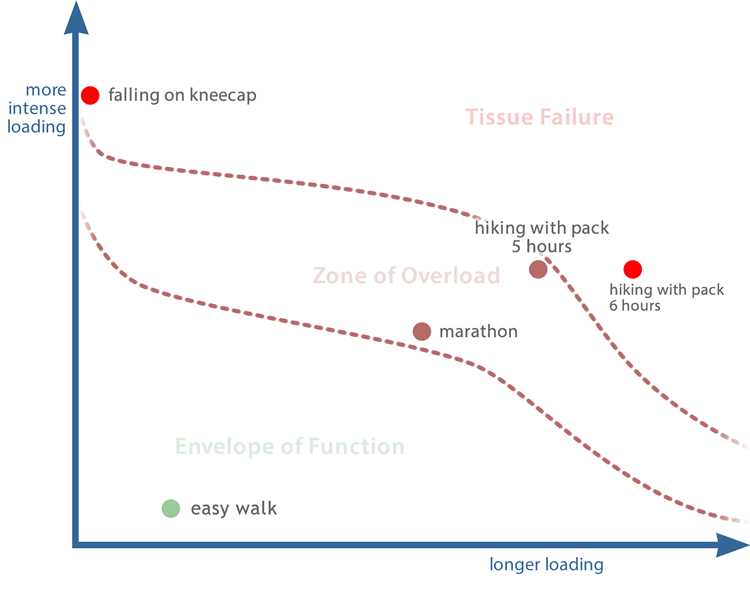
Here’s a diagram I’ve borrowed from my tutorial on PFPS. It plots three examples of stressful activities on a graph: falling on your kneecap, a marathon, and a hike. Each of them is outside the “envelope of function” — either too intense, or too sustained, for the tissue to tolerate. The “envelope” is the space on the graph where you can tolerate the combined intensity and duration of stress. After injury, that space shrinks!
4.4
A resting refinement — elevating the leg (for compartment syndrome only)
If you have compartment syndrome, don’t just rest: rest with your feet up.
Elevating the affected leg is a crucial component of self-treatment for compartment syndromes. Getting the lower leg above the heart greatly facilitates venous blood flow, lymphatic function, and reduction of the swelling in the compartment that is fundamental to the problem.
So put your feet up!
Anyone with compartment syndrome should be integrating elevation into their treatment plan. Every minute that you spend with your affected leg elevated reduces the pressure in the compartment and gives the tissue more opportunity to return to homeostasis. It is well worth experimenting with long periods of elevation, 30 minutes and beyond, to see if “more is better.” It may be, it might not be, but it’s certainly worth trying.
4.5
Surgery for shin pain

Countless articles online (I tried to count them and failed) say exactly the same thing: you may have to consider surgery for your shin splints, if conservative therapy doesn’t work. That’s basically true, but it leaves one wanting more — and, when I write a tutorial, I try to offer a little more. What’s involved in surgery, and what evidence is there that it will help?
As always, when I write about surgery, I am out of my depth — I am no surgeon. This section is a survey of the basics, referencing and interpreting the work of the real experts. It’s more than you can easily find on your own trolling the Internet, but it’s hardly a complete, in-depth analysis of the subject either. Naturally, you should always consult an orthopedic surgeon — if not three of them — before making any decisions about surgery.
Surgery is indeed a useful option for chronic cases of MTSS and compartment syndrome. It’s also usually the only serious option for the two not-quite-so-common causes of shin pain: artery and nerve entrapments. It has no relevance at all to stress fractures or to cases dominated by trigger points.
For MTSS, there are only two somewhat recent scientific papers that give us any guidance, but fortunately that guidance is fairly clear: a study of about 75 patients done in 2003,79 and an even smaller Swedish study with similar results.80 See the footnotes for the full abstracts.
Medial tibial stress syndrome. Surgery for MTSS is a fasciotomy, in which irritated connective tissue is cut or scraped from the bone and allowed to regrow in a healthier state. Although Yates et al report that “outcomes of surgical treatment of this condition have varied” in the past, nevertheless they found an excellent, good or fair result was achieved in all but 9% of the legs they operated on. They concluded: “Surgery can significantly reduce the pain associated with medial tibial stress syndrome.”
The 2007 Swedish study was only half the size, and results weren’t quite as good, but still enough to raise eyebrows: 65% of their patients improved.
Despite some promising results, I think the real message here is twofold:
- We still know very little about how to operate on this condition and whether or not it works. Like so many of the injuries I write about, we are basically still in the dark ages — we really do not have the evidence yet.
- It’s not risk free. Surgery is never risk free. In both studies, some patients had negative outcomes — they got worse, not better.
So surgery could be a viable option for MTSS, but it is an option that should not be considered until all other options have been exhausted.
Compartment syndromes. For patients with a confirmed diagnosis of chronic compartment syndrome, surgery is likely to be the only realistic choice. However, fortunately, it is also a straightforward and effective one. In 2008, Derek Farr and Harlan Selesnick wrote in American Journal of Orthopedics that “Most [compartment syndrome] patients do not respond well to nonoperative intervention. Fasciotomy provides satisfactory relief of symptoms and helps patients return to their sports.”81
Note that I also think it is worth experimenting with the relatively cheap and easy option of trigger point therapy for a compartment syndrome, especially for the tibialis anterior muscle. I have almost no direct experience with success stories of this nature — compartment syndrome is rare enough that I have had relatively little experience with different treatment methods and outcomes. But it’s plausible and reasonable, and the low stakes certainly make it worth a try before resorting to surgery. More about this below in the trigger point treatment sections.
Stress fracture. Tibial stress fractures are not generally regarded as operable, because they can usually be treated without it. However, for the rare cases where a stress fracture is not healing, surgery is an option, and a 2009 study of elite dancers in the American Journal of Sports Medicine found that surgery worked quite well.82 Between 1992 and 2006, seventeen hundred dancers were evaluated at a dance medicine clinic; only 24 of them had stress fractures (not many), and conservative therapy had failed in only 7 cases. Those dancers were operated on: their fractures were stabilized with “drilling and bone grafting or intramedullary nailing” — good old carpentry-style surgery! They did well — shins that had previously refused to knit finally knitted. Recovery was slow but steady in all cases, and they were all dancing normally again by about the six-month mark.
Popliteal artery entrapment. Surgery for popliteal entrapment syndrome is effective. A 2009 study in Journal of Vascular Surgery found that 43 patients, “under general anesthesia, all had excision of the soleal band, with relief from symptoms.”83 The trick is simply being diagnosed correctly in the first place.
4.6
Icing for MTSS and compartment syndrome
If ice can help a repetitive strain injury in any way beyond brief numbing, no one has ever actually proven it or shown how it might work84 — an ordinary, common home remedy that science has almost totally ignored. We can only speculate.
Icing shin splints may be helpful for MTSS and compartment syndrome particularly. The purpose of icing is to reduce inflammation, which is likely to be present to at least some degree in both of those conditions. Even if there is minimal inflammation — remember, there’s some scientific debate about how much “inflammation” per se is really involved (in MTSS in particular) — icing is so cheap and easy and safe that it’s probably worth experimenting with.
For MTSS, focus your icing along the inside edge of the tibia. For anterior compartment syndrome, focus on the meaty front of the shin. Apply raw ice in strokes for about three minutes or until you’re numb, whichever comes first. See Icing for Injuries, Tendinitis, and Inflammation for more information about icing technique. The only safety concern is to avoid over-icing in one session, which can “burn” the skin.
I think that “power icing” — many sessions of icing — has some chance of working in cases where ordinary amounts of icing might fail. You should particularly consider this strategy if you find icing in smaller doses has an obvious benefit — if so, it’s well worth trying a larger quantity of icing. There is no scientific evidence to support this theory, but I have a few reasons to believe it might work, and there is little harm in experimenting with it. To ice intensively, simply do a large number of icing sessions per day for three days: that’s at least 15 sessions, three days in a row. If this has no effect, the experiment is complete and you can safely assume that power icing is not going to work for you. On the other hand, you may find that it helps enormously!
Stress fractures are unlikely to be helped much by icing. The bone is going to heal in its own sweet time, with or without ice. Ice is unlikely to do anything for a stress fracture except temporarily relieve pain.
Cases dominated by trigger points are unlikely to respond well to icing. Trigger points, as a general rule, do not like to be chilled. There are exceptions, due to the complex array of physiological variables, mostly unknown, which affect the acuity of trigger points. By contrast, they do tend to like heating. This will be discussed with other trigger point treatment options.
4.7
Contrast bathing (especially for compartment syndromes)
Impaired circulation and therefore oxygen deprivation is the major cause and the greatest danger of compartment syndrome. Dipping your legs alternately in hot and then cold water is a very effective way of stimulating circulation in the compartment without irritating the tissues. See Contrast Hydrotherapy for more information about the basic technique.
The worse your case of compartment syndrome, the more cautious you need to be, however. The heating phase of contrast hydrotherapy may cause some swelling in the compartment. Switching to cold should immediately “balance” that effect, which reduces the risk considerably — in fact, the whole idea of contrasting a leg with compartment syndrome is to “pump” the compartment with this alternation in states, so you actually want a certain amount of heat and swelling followed by cooling. However, use the heat cautiously, especially at first: do not use excessively hot water, and keep the heating phase somewhat short, perhaps only 30 seconds. Here’s a recommended procedure for compartment syndrome:
- 30 seconds, hot water, ~95˚F
- 45 seconds, icy cold water
- 45 second, hot water, ~100˚F
- 60 seconds, icy cold water
- 60 second, hot water, ~105˚F
- 60 seconds, icy cold water
- 60 seconds application of raw ice to make sure it’s really chilled
- 3 minutes, rest with leg elevated to “drain” compartment
By “contrast” (ha ha), for most other conditions — including MTSS — contrasting can be more aggressive with the heating phase, and there’s no need to finish with ice and elevation. It’s just the unique characteristics of compartment syndrome that require the more cautious approach.
MTSS and trigger points can probably benefit from contrasting as well. Stress fracture is less likely to be helped.
4.8
Trigger point massage for your shins & calves
I have made the case that trigger points — poorly understood sensitive spots in muscle — are a factor in most cases of shin pain, and a major or dominant factor in at least some cases, causing, mimicking or complicating the problem. Over the years, I have seen several “stubborn” cases of shin pain vanish with just one or two sessions of trigger point therapy for the tibialis anterior muscle. This is the best-case scenario, and certainly not every case goes so well. However, even when trigger point therapy didn’t completely solve the problem, it often reduced the symptoms so significantly that it was a heck of a lot better than nothing.
Suppose you have only a moderate intensity of chronic shin pain, and you more or less manage to continue running or playing or whatever it is that you like to do — it’s uncomfortable, but you manage. You’re reading this tutorial not so much because you have a severe case, but because it’s so annoyingly persistent. Lots of shin pain patients are in this position! Then along comes some trigger point therapy, and your symptoms are reduced, say, 60% — not exactly a cure, but still quite helpful! In fact, at only 40% of its previous intensity — which was almost liveable to begin with — now suddenly it’s just not that big of a deal anymore. Sure, you still have a little pain, but you can easily live with it. It’s not a cure, but it’s still a success story.
Read fifty other articles about shin pain, and you might not find a single one that says anything more than “try a little massage.” Go see anyone but a massage therapist, and chances are good that they won’t seriously recommend massage for this condition either. And yet I suspect that massage is probably one of the most promising treatments.
Massage has the potential to improve a case of shin pain almost regardless of which kind it is. But I have no direct scientific support for that claim whatsoever,85 and I’m biased on this topic, so I’ll try to keep my enthusiasm in check. So you can’t do massage for shin pain because it’s evidence-based: you can only do it because it’s worth trying, because it makes some sense and isn’t obnoxiously expensive or risky to try. Sometimes that’s about as good as it gets in health care.
Obviously, the best-case scenario is trigger point therapy applied by a skillful, experienced therapist. (For help identifying the right therapist, see How Do Your Find Good Quality Massage Therapy?) But self-treatment using your own thumbs or self-massage tools is not only a perfectly good option in the case of shin pain, it’s actually preferable: you can easily reach your own leg,86 and it’s a lot easier and cheaper than trying to find good professional help.
Another thing that makes trigger point therapy for shin pain so particularly straightforward is that there is just one key trigger point that is going to be by far the most important in the majority of cases, and it’s easy to reach and find and press on, and easy to heat, and easy to stimulate with gentle movement. This critical trigger point is in the top third of the meaty part of the shin, in the tibialis anterior muscle.
This spot is one of the “perfect spots” in the body for massage — perfect spot No. 3. A complete guide to this trigger point is published as a separate article:
Basic trigger point therapy consists of four things:
- Rubbing. Simply reach down and rub the upper third of your shin muscle! For more detail, see the full Spot No. 3 article.
- Heating. As a general rule, trigger points love heat. The lower leg is easy to dunk in hot water or wrap a heating pad around. This might seem like a trivial advantage, but there are areas of the body where it is quite difficult to comfortably and easily heat trigger points.
- Mobilizing. Mobilizing is simply gentle rhythmic contraction and elongation of muscle tissue. In the case of the lower leg, mobilizing could not possibly be simpler: just draw circles with your toes! This will alternately contract and elongate every muscle in your lower legs. This basically just encourages normal muscular function. However, this exercise is much more tiring to the lower leg muscles than most people expect. It’s easy to exhaust the tissues and aggravate trigger points. An appropriate number of mobilizations in a bad case of shin pain is sets of only about 20 toe circles (ten each way), a few times per day. Assess your own tolerance for the exercise: the goal is to stimulate without irritating. Adjust your intensity and repetitions accordingly.
- Avoid aggravating factors. Trigger point therapy isn’t just about actively “repairing” trigger points, but about avoiding anything that will irritate them. Avoid anything that tends to make trigger points worse, particularly as muscle exhaustion and chills.
Combine and experiment with these techniques for 2–3 days. If basic trigger point therapy for the tibialis anterior has little or no effect, there are two possibilities:
- Trigger points aren’t your problem, and you should move on to other treatment options.
- Trigger points are your problem, but they are difficult to treat and not responding quickly. A little more experimentation is justified, but not a lot more.
It’s not easy to know which is the case! If you have good reasons to believe that trigger points really are the problem — for instance, if you checked off every item in the checklist for trigger points above — then you should probably continue to experiment with self-treatment. You could simply try more persistence: keep doing the basic therapy above for a while longer. And/or seek professional assistance. And/or study trigger points in more detail with the PainSci trigger points guide: The Complete Guide to Trigger Points & Myofascial Pain.
What about the calf muscles?
There is a strong possibility that there are also clinically relevant trigger points in the calf. Since medial tibial stress syndrome involves painful irritation where calf muscles are yanking painfully on the edge of the tibia, it’s not much of an intellectual leap to realize that those calf muscles might also benefit from some massage.
Trigger points in the calf are a little trickier to reach (though still manageable), but also much less specifically predictable than Perfect Spot No. 3. Although there are a couple of key spots in the calf where trigger points tend to hang out, it’s better not to get hung up on trying to find those spots: instead, simply feel free to explore for any sensitive spot. A sensitive spot may or may not actually be a trigger point, but it’s just fine to treat it “as if” it were — just rub it respectfully — and see what happens.
4.9
Stripping: a popular massage techique for the shins
Stripping is worth its own chapter because it is a particularly common approach to massage for shin splints. Indeed, it’s an almost inevitable technique, if you take your shins to a massage therapist. But it’s also a confusing mix of potential benefits with counter-productive ambiguity and — often — intensity.
Stripping in this context refers to long, deep strokes along the length of the lanky tibialis anterior muscle. It almost always seems to be associated with strong pressures and challenging intensity for the patient, but it doesn’t have to be that way: like any other massage pressure, it can be carefully modulated to suit patient tolerance, and it should be. A problem with stripping is that, in practice, it’s usually applied with a no-pain-no-gain sensibility — typical of trendy “fascial release” styles of massage — that has the patient gasping.
This is so much the case that gentler strokes simply wouldn’t be called stripping. A gentler, softer stroke with the palm along the length of the same muscle would just be called massage (effleurage or “deep stroking” to be precise). To make it stripping, add more pressure and do it with an elbow, knuckles or a tool!
The name is curious: it seems to be an almost poetic description of the technique, hopelessly vague. Is it “stripping” away tension and stiffness? Is it massaging in a strip shape? Is it stripping trigger points out of muscle? Is it stripping layers of connective tissues away from each other, breaking sticky adhesions between them? Do we call it stripping because it sounds and seems like ripping or scraping? Some therapists certainly act like it! The name seems to be more about the feel of the word than anything more clinically precise.
Stripping and “fascial release”
So is stripping anything more than a strong massage? Many massage therapists think so, and probably the majority who choose to “strip” shin splints, based on the currently fashionable idea that they might be able to loosen the connective tissue “sausage wrapping” around the anterior muscle compartment (fascia). Fascia can contract a little, and the pressure it exerts on the compartment it surrounds could conceivably be a factor in compartment syndrome — but the contraction is almost certainly too weak for that.87 And from that shred of dubious clinical significance, it’s another long reach to assume that it’s possible to change the behaviour of the fascia — to convince it with therapy to stop squeezing.88
If fascia isn’t actually actively squeezing the compartment, then it is simply too small for the contents, and fascial therapy would only be relevant if it could actually change the size of the compartment — that is, permanently loosen the fascial wrapping enough to effectively treat compartment syndrome — but this is pretentious wishful thinking. Fascia is extraordinarily tough stuff, and creating even a minor, temporary change in its flexibility is simply impossible.89
As covered in detail above in the fascia chapter, therapists often express science-y sounding excitement about biological properties of fascia. Unfortunately, although fascia may be scientifically interesting, there is no reason to believe that it can be sculpted like clay to a degree that would be useful here.
And, of course, stripping compartment syndrome could easily also be a problem …
Dangers of stripping
It should go without saying at this point that stripping is going to be ineffective or even dangerous for some cases — but I’m saying it anyway, because stripping is so likely to be offered by massage therapists, and so likely to be intense. The enthusiasm for stripping is such that it could well be offered even when the underlying problem is a stress fracture or, god forbid, compartment syndrome.
Stripping is particularly inappropriate for compartment syndrome, because the compartment is under pressure, and stripping significantly increases that pressure. Tissues inside a swollen compartment are also much more likely to be boggy and literally fragile, harmed by chronic hypoxia, and more susceptible to adverse reactions. Is a bunch of microtrauma, and maybe even some macrotrauma, going to help compartment syndrome? Probably just the opposite. The only way to perform stripping more safely on a swollen muscle compartment is more gently and very slowly, giving the compartment a chance to “drain,” if it can.
A surprisingly good analogy: it’s just like rolling up an air mattress. The valve cannot release air as quickly as you can roll. Rush it and the valve hisses as the remaining air is squeezed tightly into the end of the mattress.
Stripping for trigger points.
What about stripping for cases of shin splints that seem to be all about trigger points? Or at least complicated by them?
Trigger points are a mysterious phenomenon, perhaps even a neurological illusion — not what they seem to be — and so it’s never clear what will make them go away and what won’t, and it varies widely from case to case, even day to day. In my experience, sometimes some good strong “stripping” — not too extreme, but strong — seems to get terrific results. Other times, not at all. And when you are thinking in terms of stripping, it is certainly easy to over-do it.
Self-massage tools for stripping-style massage
You can self-strip easily. Rolling pins are almost perfect, actually. And a tool like the Tiger Tail Rolling Muscle Massager is truly perfect: a slightly yielding and grippy foam rubber surface, actually designed for this and similar jobs. If you want to strip your shins, that will work well.
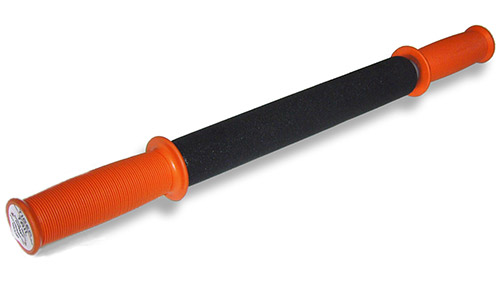
The Tiger Tail Rolling Muscle Massager
Perfect for “stripping” your own shins.
The only clear common denominator in the meaning of stripping is simply “really strong and focused strokes,” and yet it is emphasized way out of proportion to how many patients actually need that style. If I had my druthers, “stripping” as a concept would be retired and we would simply perform whatever safe massage intensity is appropriate and appealing for a given case. So don’t strip. Just rub!
Most of the time, people would be better off with something less aggressive than “stripping.”
Foam rolling
Using a foam roller on your legs isn’t really “stripping,” but it’s pretty close. It’s a blunt instrument, but it can be used fairly powerfully.
Foam rollers are often regarded as if their use is a massage therapy technique in its own right, something we would still want to do even if we had a massage therapist on retainer. But the simple truth is that it’s just a handy self-massage tool: it applies pressure, period. Whatever massage is good for is what foam rolling is good for. However massage is limited is how foam rollers are limited. There has never been the slightest shred of evidence that foam rolling does anything physiologically different from the effects of massage.
Rollers are mechanically convenient for certain kinds of self-massage chores, and not for others. The main reason to use a foam roller rather than some other tool is just pure convenience: they just “fit” better on certain body parts.
Like the lower leg! It’s easy to apply and control pressure to any of the musculature of the lower leg. That’s it.
I’ve already mentioned tools like the Tiger Tail and rolling pins, which are obviously just smaller, harder rollers. But foam rollers are ubiquitous; you could well already have one. And the softness and wide diameter of foam rollers could be a great way to start especially — an easy first massage step.
4.10
Hitting the road: shoes, surfaces, impact, and the spring in your step
If there’s any reason for a shin splints victim to go barefoot, wear minimalist shoes, or high-tech shoes, or tinker with running posture and technique in any way, it’s probably to reduce impact. Impact is potentially relevant to all causes of shin splints, but most obviously (duh) stress fractures. And perhaps since the publication of Franklyn-Miller et al in 2014,90 impact also has more to do with compartment syndrome than has been appreciated in the past. If they are right that compartment syndrome is a misleading term and it’s actually “biomechanical overload syndrome,” then reducing impact would be a major way of treating it.
But the problem with impact is not as obvious as you might think. There’s lots about impact that is counter-intuitive. For instance, “high impact” exercises — like jumping down from a height — are actually less jarring to the shin than running is, mainly because of effective shock absorption in the joints.92 I would still advise caution with any high-impact exercise, but it’s quite interesting that things that look like they would probably be quite hard on shins aren’t actually so bad.
And hard-surface running on roads and sidewalks isn’t an obvious a villain as it seems like either. It is not necessarily terrible for runners in general; I fully explore that debate in a dedicated article, Is Running on Pavement Risky? But the risk of impact aggravating your shin splints is an avoidable risk, and stress fractures are right at the top of lists of running injuries that are most likely to be bothered by jarring gait.
I’ll deal thoroughly with barefoot/minimalist running in the next section; it’s such a huge fad, and so conceptually relevant, that it needs special attention. But there are many other important ideas to consider first …
Impact and injury: do they go together?
Maybe. Probably a bit. It’s surprisingly hard to tell.
The impact of walking/running is measured in many ways. Loading rate is the main technical way of measuring how jarring a runner’s steps are: how fast load is applied to tissues. Peak acceleration at various anatomical landmarks is another. There’s a lot of research about impact, some of it concerning different surfaces, just a few of those specifically about the relationship between impact and injury. As of the end of 2016, there were only about 18 decent experiments, with too many differences between them to clearly interpret. A review of these by van der Worp et al concluded just a single thing with confidence: a history of stress fractures is associated with higher impact forces in running gait.93
Furthermore, there is a broad association between higher loading rates and runners with all kinds of injuries (no specific one).96 And that’s backed up by a good quality trial from just a little later in 2016: Davis et al found that “all impact-related variables were higher” in 250 women runners who got injured in a year after extensive gait analysis.97 Also, the best evidence so far on barefoot running makes it pretty clear that running without padding is problematic.98
And one final interesting data point: horizontal forces matter too. In fact, a 2018 study showed no correlation between vertical loading rate and MTSS, but injured runners were dramatically likelier to have a high “peak braking force,” a measure ow how hard your foot pushes backwards on impact. This study was discussed in detail above in the chapter “Does peak braking force determine when you break?”
So the common-sense idea that impact is injurious does appear to have some scientific support. Thus it probably makes sense to try to reduce it.
Just keep in mind that it’s amazingly complicated and unclear. Zadpoor et al found that ground reaction forces (how hard you hit the ground) actually have no correlation with stress fractures, and loading rates (how fast you hit the ground) are only slightly correlated.99 That’s surprising for what seems like the most impact-related running injury. When van der Worp et al concluded that loading rate is associated with stress fractures, it’s probably not the whole story.
Maybe it’s because the stresses that fracture are not simple. The forces in normal running are mostly below the threshold at which we would expect them to cause stress fractures directly, but Milgrom et al demonstrated100 that there are much stronger forces involved in activities that involve greater shear strain,101 probably enough to cause fractures more directly/quickly. Thus it is runners who include a lot of stairs and jumps that are potentially at greater risk for stress fractures than just running, regardless of surfaces. This is just a good example of the thick layers of “it depends” obscuring the truth.
Shocking absorption! How we take a lickin’ and keep on tickin’
Humans have a couple main biological shock absorption tricks:
- Muscle tuning is the dynamic dampening of impact vibrations with precisely timed muscle contractions — a very cool system.102 And quite exotic (and likely not embraced by all experts).
- Springing is the more obvious one: we adjust the springiness of our entire body by being bendier. Harder surface? More bending! Softer surface? Less bending!103 It’s obvious in an extreme example, like bouncing on a trampoline, where you can keep your knees straight; but jump down just one metre onto concrete, and you’ll have to bend your knees quite a lot. We do the same thing much more subtly when we walk and run. We’re amazing at making much finer, faster adjustments to surface rigidity when running.104
Bodies can and do work to minimize the effect of jarring steps on any one anatomical structure. Every precisely timed vibration-dampening contraction takes energy and yanks on our anatomical rigging; every bit of extra springing takes joints a little further into flexion, with a little more muscle power to control the movement.
The amount of bending and bracing may be directly relevant to shin splints. And if it is, then so is the surface hardness. And therefore so too is the springiness of what we put between our feet and the ground.
For example: consider the tibialis anterior
On a hard surface, the transition from heel-strike to flat foot (double-support phase) demands exceptional muscular performance from the long-suffering tibialis anterior muscle — more than it can provide in many people, in fact — and from the entire lower leg in general. Without any give or elasticity in the surface, the only limitation on the force of the heel-strike is the muscle-controlled descent to flat-foot: a very high-velocity, high-load eccentric contraction of the tibialis anterior muscle, and a nearly perfect formula for delayed-onset muscle soreness… and “compartment syndrome,” too! Reducing this strain is exactly how Franklyn-Miller et al seemed to have success helping people with presumed compartment syndrome:
Freed from the restrictions of the compartment pressure model we have managed our patients with anterior symptoms by altering their running gait characteristics to reduce the load on the tibialis anterior.
Which is why they proposed that at least some compartment syndrome might be better described as “biomechanical overload syndrome,” and they were speaking specifically of tibialis anterior overload.
If a healthy tibialis anterior can be irritated by this process (and it certainly can), an exhausted one stands no chance at all, and the situation gets worse. Similarly, the yanking on attachments to bone is probably also a problem for MTSS.
Put a literal spring in your step
It’s a good rule of thumb that the overall amount of training you do is probably more important than any subtle adjustments you can make to how you run. But if you can adjust enough to make a little difference, why not? And some adjustments are probably better than others. Consider the trouble with regular running shoes. Despite all their methods of cushioning and “controlling” gait, they clearly don’t do much to prevent common running injuries.105
In particular, mass-produced running and walking shoes claim to absorb shock in all kinds of ways, but they aren’t springy. A spring gives energy back to you: it compresses, and then forcefully expands. Most shoes are mushy: they are made of foam, and foams absorb energy but don’t give much back. Running on foam is like landing on a trampoline that goes down but not up: it can’t toss you back up in the air. Ironically, there is some evidence that the mushy shock absorption of most running shoes might actually increase knee stresses — perhaps because they are actually interfering with the spring-like function of the arch, increasing the demand on other joints.106107
There is one type of shoe that is designed to simulate running on springier surfaces by literally putting a spring in your step. OESH Shoes (for women only) are a good example, and there are others based on springs.
Dr. Casey Kerrigan left her career in biomechanics research to found Oesh and make shoes that don’t just absorb impact energy, but give some of it back. The goal was to change your gait by effectively giving you a bouncier surface to run on — little carbon-fiber springboards. In theory, the springs will change the way we move, reducing the need to flex the joints of the legs and feet for shock absorption. Hips, knees, ankles, and arches do bend slightly less when you walk or run on a springier surface. Therefore, hopefully, more spring in the shoe means less spring in the joints — less bending, less effort and strain on tissues. There is some evidence that sprung shoes can do some of the work for you.108
But the effectiveness of spring-loaded shoes at actually preventing (or treating) injury is — of course — untested, unproven, and impossible to prove without a large trial that may never happen. However, the principle is an interesting and promising one. Claims of injury prevention rarely pan out, but in my opinion there’s a better-than-average chance that these kinds of shoes actually do reduce injury-causing forces more than other shoes; that was the whole point of a research-inspired design, and maybe they’re onto something. You can try them with less risk and radical departure from normal shoes than minimal/barefoot running (see next section), and with lower costs compared to any number of popular therapies. It’s a reasonable thing to try for any stubborn case.
Impact reduction take-home points
Stay off concrete as much as possible. Prefer tracks and treadmills for the bounciest of all options, the best at giving you some of your impact energy back and reducing the load on your biomechanical spring. (Grass, sand, and chip trails are much softer than pavement, but are more like running on foam: mushy, not springy.) Do beware of hilly trails though — descending is harder on the tibialis anterior! And maybe everything else as well, because you’re “falling” more.
I work just a couple blocks from a running track. I don’t usually walk there, because I’d far rather stick to tree-lined streets and parks. If I developed shin pain, I’d absolutely make walking on that track part of my rehab regimen, because that surface is obviously springier than anything else I can walk on regularly. Not everyone has such a convenient option, of course, but it’s an instructive idea.
- Try sprung shoes. If you can’t run on a springier surface, then try shoes based on arch springs, like OESH Shoes. (Not heel springs!109) Failing that, at least keep your regular running shoes fresh — the EVA foam in the midsole breaks down,110 and the biomechanics of running do shift in response. It probably does not matter a lot, but there’s also no need to take the risk.111 Although we’ve established that any non-spring shock absorption (mostly foam) is fundamentally different and probably not very helpful, if I run on foam I at least want it to be fresh foam!
Run more gently. Avoid that jarring feeling! Experiment with your running style; do anything that feels less like you’re slamming your feet down. We can definitely run more softly if we try to,112 most easily by shifting to a forefoot impact and basically running more like a tiptoeing cartoon thief; barefoot running or minimal shoes help with this, as they strongly discourage heel impact and so we shift our impact to the forefoot. But there are trade-offs! Forefoot impact undoubtedly shifts the burden between tissues, which might help solve shin splints while risking new injuries. More about this in the next section.
Alternatively, another strategy for running softer is probably less prone to dicey trade-offs: slow down and take smaller steps! Basically just run less aggressively, period.
- Avoid high-impact exercise like plyometric jumping, but also don’t worry about them much, and they can actually be reintroduced before running. This advice is based on Milgrom, who found that most seemingly “high-impact” exercises are “unlikely to place an athlete who is accustomed to fast running at higher risk for bone fatigue.”113
4.11
Should you run naked? On faddish running styles and running shoes (or the lack thereof)
Redundancy warning: this section is duplicated verbatim in all four of my tutorials about running overuse injuries, because the point is the same regardless of the injury type being discussed. That said, shin splints are definitely more sensitive to impact, stress fractures especially (see previous section). Probably not as sensitive as you think … but still more sensitive.
The biggest fad in running since running itself is “natural running,” or running barefoot or in barely-there shoes (minimalist shoes). The idea is that humans are “born to run” and that running “au naturale” is healthier: lower risk of injury, and perhaps even a viable treatment for injuries you already have. For the whole backstory of the natural running fad, see Does barefoot running prevent injuries? I’ll focus on the evidence of injury relevance here.
As of early 2016, the best available evidence strongly suggests that barefoot running has no injury prevention benefit, let alone a treatment benefit. Details below.
(And don’t miss the brilliant sequel, Shit Runners Say To Barefoot Runners
2:48)
The first trace of real evidence on barefoot running
After a good decade of what amounted to nothing more than speculation about the benefits of barefooting, the first kinda, sorta direct evidence on the subject was finally published in the summer of 2012 (see Daoud et al). It suggested that barefoot running, or running with a forefoot strike, may reduce injuries.
It was not very good evidence, however: it came from a retrospective study of Harvard runners, showing that the forefoot strikers among them were less injury prone than their peers, based on medical records. This is not a great method. These runners could have been less injured for many other possible reasons. (For instance, they may have been the more cautious runners, using several strategies to minimize injury.) A study of this type (retrospective) just cannot prove a causal relationship, and that’s not just nitpickery: it really can’t.
The data is interesting, though. It’s like good circumstantial evidence in a court case — technically weak, uncertain by nature, but still emotionally persuasive.
And then better barefoot data happened
In 2016, Allison Altman and Irene Davis published the first prospective comparison of injury rates in shod versus barefoot running, in British Journal of Sports Medicine (see Altman).
“Prospective” is what we needed the whole time: follow a bunch of initially uninjured runners of both types to see what happens to their bodies. Only this kind of study is designed to actually answer the question. Although it wasn’t a perfect test, it was a huge improvement.
They studied more than 200 experienced runners over the course of a year: 94 wearing shoes, 107 with no shoes or (for about a quarter of their mileage) “true minimalist shoes.” The barefooters had been running that way for at least six months, and more than 18 on average (so they weren’t in that awkward transition phase where injury rates could well be higher).
The results are clear and unsurprising: there was no important difference in injury rates, just the types of injuries.
Each is better in some ways, worse in others. Although the paper emphasizes “fewer overall injuries” for barefoot runners, injury rates are what matters — the number of injuries per 1,000 miles, say — and they were “not statistically different between groups due to significantly less mileage run in the barefoot group.” That’s clearly bad news for the claimed benefits of barefoot running — full stop. (Although you might argue that it means that we don’t need expensive shoes, since barefoot is no worse.)
But there’s an extremely important caveat. And it does not flatter barefoot running.
The barefoot running volume was just 24 kilometres a week, while runners in shoes ran nearly twice as much — 41km — without an increase in injury rate. It’s safe to assume that the injury rate would be worse at a higher mileage than a lower one. Which means that the injury rate for barefoot running is probably the same as shod running at best.
Although this is all made clear in the paper, it’s strange that it wasn’t more strongly emphasized, because the implications are damning. As Alex Hutchinson put it for Runner’s World, “The only way the comparison has any relevance is if they’re arguing that barefoot running reduces injuries by preventing you from running as much as you’d like.”
A larger and longer study may have different results. And maybe there’s a real difference between minimally shod and true barefoot. That they mainly tested true barefoot running strikes me as the only real weakness in the study. (Minimalist shoes seem more relevant: true barefoot is never going to have large scale popularity.)
But this is an excellent start, and we can now say with high confidence that barefoot running is not a panacea for running injuries — and more and better data will probably, if anything, be even more embarrassing for the natural running fad’s claims of injury prevention.
Remember that most of our genetic predilections for behavior were shaped by the African savanna many thousands if not millions of years ago. So while “natural” in some sense, these predilections don’t necessarily serve us well today, since we live in a radically different environment. What happens in nature is a poor guide for making decisions anyway. One of the biggest boners in ethical philosophy is the naturalistic fallacy, which equates nature with “what’s right” and uses “what’s natural” to justify or excuse prejudice. We human beings are humane in part because we can look beyond our biology.
The Violinist’s Thumb, by Sam Kean
On running style and biomechanics in general
The nature of overuse injuries means that running style and biomechanics probably aren’t as important as the sheer amount of activity. I doubt that any running style, shoe, insert, or surface can change the forces on your joints enough to matter much one way or the other, relative to the overall training load. If you’re doing so much running that you’re going to injure your legs or feet sooner or later, no biomechanical advantage is going to do any more than slightly delay your fate.
It might do that. It might matter, a little. Of course it might. I also realize that many badass distance runners are pushing the envelope and interested in any sliver of a competitive edge. And very frustrated people with chronic pain are interested in any relief, even just a little. But small advantages and benefits are really hard to prove, and tinkering could just as easily backfire (this is not unusual with orthotics, for instance).
I have not gotten any reader reports of a “cure” by barefoot running, and I get a lot of reader reports from very serious runners. Even if I did I’d be all, “Okay, that’s nice. So?” Of course, you’re going to come across people who swear by these methods, but the only way to actually find out if something like a running technique or a shoe truly works in any way is to test them extremely thoroughly and carefully and science-ly, and perhaps with explosives, like the MythBusters … and most of those tests simply have not been done, and probably never will be done. Other than the 2016 paper testing barefoot running (Altman), we have virtually no real research about this stuff, and trying to guess if it works is like wondering if Guinness or Heineken makes you better at darts. Don’t be shocked by the lack of real science here — it’s entirely predictable.
There is a popular 2010 study by Lieberman et al about the biomechanics that has shown that “habitually barefoot endurance runners often land on the fore-foot before bringing down the heel” and “generate smaller collision forces than shod rear-foot strikers.” Daniel Lieberman is a smart guy, his research is interesting, and he interviews well. However, inferring injury prevention outcomes from his findings is pure guesswork. It’s so easy to see the words “smaller collision forces” and assume that it must be a good, injury-preventing thing. That is really just not a safe assumption, of course. For all we know, that smaller collision force (assuming it’s real) is coming at the expense of, say, much greater stresses on your calves and achilles to control the springier ankle action … which might protect against shin splints while sending achilles tendinitis rates through the roof. We don’t know that stuff, and we can’t know until thousands of runners have been carefully studied.
Biomechanics expert Benno Nigg on forefoot running: “It increases some forces and decreases others, mainly shifting the load to different structures,” from his book Biomechanics of Sport Shoes, well-described by Amby Burfoot for RunnersWorld.com. (That’s a great little read, and an excellent companion to this rant.)
If one part of your anatomy is in trouble, maybe there’s something to be said for shifting the load to other anatomy that is not currently injured. However, you also just end up with two injuries. “Shifting the load” isn’t going to eliminate stress on the original injury.
And, get a load of this: you can’t even get experts to agree that smashing the ground more softly is going to help something like, say, stress fracture — the one injury that seems to be particularly likely to be associated with higher impact! A 2011 review of thirteen papers on this topic was thoroughly inconclusive: “There is disagreement in the literature about whether the history of stress fractures is associated with ground reaction forces (either higher or lower than control), or with loading rates.” Translation: we literally cannot confirm that smashing the ground harder with your legs actually increases the risk of injuring them, and it might actually be exactly the other way around.
Do you really want to delve any deeper than that? Yeah, me neither. All that really matters here is that it’s obviously un-guessable, and yet that’s what everyone seems to be happy to do.
Given the shifting scientific analysis, runners are left with impassioned testimonials and heated debates.
If Vibram had any research supporting the health/running benefits of their FiveFingers product, I’m pretty dang sure they’d be shouting it out—but they aren’t. Their “health & wellness” page is barely longer than a haiku and offers only five incredibly broad bullet points of vague, meaningless, but nice-sounding things like “improve posture” and “move naturally” and (of course) “align the spine”—sure, it’s just like wearing a chiropractor on your foot! •eye-roll•
ChiRunning.com claims to teach a “revolutionary approach to effortless, injury-free running,” but if there’s any evidence for this claim on their website they seem to be hiding it. I couldn’t find even a half-hearted attempt to cite partially relevant research.
There are several other methods and many more products that have never been properly tested and would quite likely fail if they were. Somewhere in there, you could probably find stuff that helps, at least a little bit, but it is all literally impossible to know without testing. So I don’t waste a heck of a lot of energy on trying to figure out if these things work when the only way that it possibly can be figured out is not going to happen.
4.12
Correcting pronation with orthotics or motion control shoes
As explained in detail above, there is plenty of evidence “linking” over-pronation (flat feet) to shin splints (specifically and especially medial tibial stress syndrome). However, the link is not strong, and it’s probably not causal — that is, people probably don’t get shin splints because they over-pronate, but because they have something in common that makes them both likelier to get injured and likelier to have flat feet (such as, say, one of the very common subtle connective tissue disorders).
So the premise for this section is rather weak. We’re talking about a problem that may not even exist.
So, should you try to correct your over-pronation, despite those caveats?
I don’t think it’s worth it.
For years, I dismissed orthotics as a treatment option in this tutorial very briefly in the Hall of treatment shame, a “bogus” treatment option. I have given the topic a little more status and attention by devoting a section to it due to reader interest: it’s something people really want to understand, and that’s understandable. If orthotics have a fighting chance, if there’s any justification for trying them, they are cheap and easy enough to try that it seems well worth considering.
But I still don’t think it’s a great idea. Sorry. 😜
Orthotics and motion control shoes are generally a bit scammy
The value of shoe design and orthotics has always been exaggerated by the many kinds of people who sell shoes and orthotics. It has always been much too easy to promote the idea of a foot “upgrade” for a moderate price point, expensive enough to impress (“they must be good if they cost $200!”) but not completely unaffordable. Evidence concerning the efficacy of orthotics for treating any lower leg problems has always been minimal and sketchy,114 let alone anything else (like back pain).115 Read more: Are Orthotics Worth It? A consumer’s guide to the science and controversies of custom orthotics, orthopedic shoes, and other allegedly corrective foot devices And there is no evidence about orthotics for shin pain specifically. And no clear reason to believe that they would help other than the fact that we see pronation in people who get hurt.New stresses!
Orthotics/shoes may be relatively cheap and easy to try, but they may have a hidden price tag.
The best-case scenario is that any kind of tinkering with gait has the potential to change the equation and reduce load, slightly … but it’s a bit of a long shot and it’s probably more likely to go the other way and stress the leg even more (or just in new ways). People routinely report struggling to adapt to orthotics and motion control shoes.
If you really want to try orthotics, I won’t judge — it’s not the worst idea I can think of — but I really cannot come anywhere close to recommending them as a treatment option.
4.13
Stretching is probably mostly ineffective for all kinds of shin splints
The next two chapters are devoted to the two main types of therapeutic exercise: stretching and strengthening. In broad strokes, stretching isn’t very useful at all, but it’s so popular that I’ll discuss it thoroughly anyway; and strengthening isn’t an effective “treatment” per se but nevertheless has a critical role to play in rehab.
Unfortunately, there is little reason to believe that stretching is an effective treatment for any form of shin splints, or frankly much of anything. Stretching is generally over-rated and poorly understood, and much less effective at injury prevention and treatment than most people believe. In my popular article about stretching, I describe several examples of how stretching doesn’t really seem to do what people think and hope it does.116 In this section, I’ll go over some of the science that’s most relevant to shin splints — there hasn’t been a ton of it, but what exists is discouraging.
To kick off the bad news, way back in 1974, a large study of the effect of “four prophylactic programs for prevention of shin splints” in “2,777 first-year midshipmen” included stretching, but “none were effective.”117 The 97 sailors who actually developed shin pain were divided into five different groups doing five different treatment regimens, including a group that stretched. “All were effective to varying degrees” but “none were effective” — which sounds like a contradiction, but the authors meant that none of the results were noteworthy. A scientific “meh.”
And similar results have been reported ever since. A 2002 review in Medicine & Science in Sports & Exercise looked at studies of calf stretching as a prevention for shin splints, and found that there was “no strong support” for it.118 Then a 2005 review of stretching science in Clinical Journal of Sports Medicine looked at several studies concerning lower leg injuries, including shin splints, and found that the (admittedly limited) evidence “showed stretching had no effect in reducing injuries.” Regardless of whether stretching was of individual muscles or entire groups, there was no reduction in injury rates.119
Even more recently, in 2008 a study published in American Journal of Sports Medicine showed “no significant differences in incidence of injury” in soldiers doing preventative exercises (including stretching) for MTSS and knee injuries.120
Despite such evidence, there are two thin rays of hope for stretching as a shin pain therapy. If it works at all, here’s how it might:
- Stretching might prevent or help anterior compartment syndrome, by relieving muscular trigger points (muscle knots) in an irritated tibialis anterior muscle. However, it’s a long shot, as there is a significant problem with the strategy: it is mechanically difficult to stretch the tibialis anterior muscle — it is one of “the unstretchables” by virtue of its biomechanics.121 And, even if you could stretch the tibialis anterior, stretch is simply an unreliable treatment for myofascial trigger points. See below for more about this.
- It’s also possible that calf stretching might help (sometimes also called “heel cord” stretching, the “heel cord” referring to the Achilles tendon). Exactly how calf stretching is supposed to help has never really been made clear by anyone — see the footnote for some speculation.122 However, there is virtually no evidence that calf stretching will actually have any effect on shin pain except, perhaps just the teensiest bit of good news from that old 1974 mentioned above, but it’s only a thin shred of evidence.123
In either case, success may depend on stretch having a beneficial effect on trigger points. And, as always, stretching as a treatment for trigger points is unreliable! It can work, but there are quite a few ways in which it can fail or even backfire, causing negative reactions.124 It is basically a crapshoot whether stretching will have the desired effect, or make you worse. (Probably only temporarily worse, but still!)
On the bright side, stretching is cheap and easy and the risks are fairly minor. So you might as well cautiously give it a try.
And how do you stretch shin muscles? Simply point your toes firmly and hold it. Do this while you watch TV. Sitting at a desk, put the top of your foot on the ground and push it into a point. Piece o’ cake.
Calf stretching is a little more complex than people realize. Thorough calf stretching requires both straight-knee and bent-knee stretches in order to stretch both the gastrocnemius muscle (which crosses the knee and gives the calf its distinctive shape) and the lesser-known underyling musculature that can only be stretched if the gastrocnemius isn’t being stretched.125
If you have MTSS, particularly use caution with stretching — the tissue is already severely irritated, and pulling on it is unlikely to help, and might do harm.
A stress fracture will be unaffected or, at worst, only slightly irritated by stretching in the lower limb.
4.14
Strengthening can’t “fix” shin pain, but still has a vital role in rehab
Strengthening is the forced adaptation of muscles to doing more work than they are used to doing. If you do more with your muscles than they are comfortable with — sorry, muscles, but this is for your own good — they will get comfortable with it over time. You will get stronger. Weirdly, technique is surprisingly unimportant; as long as muscles are getting quite worn out, you’ll make decent progress.
Strengthening is not a “treatment” for shin splints (or much of anything), despite its reputation for being an important part of rehab. For instance, the study cited in the previous section — Brushøj et al, about the soldiers doing preventative exercises — is just as damning for strengthening as it is for stretching. If strengthening can prevent shin pain or any other leg injury, it certainly failed to do so in 500 soldiers doing good basic strengthening exercises of the lower limbs. And if strength can’t prevent injury, it probably can’t treat it either.
And yet building strength is still an important part of rehab, mainly because it’s a great way of exercising in a way that is easy to control and keep in the Goldilocks zone: not too much, not too little, which is known as “load management” in rehab jargon.
When you are ready — when you are healed enough to tolerate the stresses of easy strength training — you should slowly but steadily work on your ankle strength, flexion and extension, mainly. In other words, the power of your toe pointing and lifting.
The corrective exercise trap
Exercise is the closest thing there is to a general miracle drug,126127 and strength training is one of the best ways to exercise, practically like magic: healthier and more efficient than most people realize.128
But tedious, specific, “corrective” or “therapeutic” strengthening exercises are also a tired cliché of rehab and physical therapy. This style of rehab is largely based on the flawed and even harmful assumption that there is something in-correct about patients — fragile, weak, crooked — which can be both identified and fixed by specific, expertly prescribed strengthening exercises (and stretching too). That belief is the “trap” of corrective exercise, for pros and patients.129 (You can read much more about “the trap” in my main strength training article.)
There is probably nothing identifiably wrong with shin splints patients that can be fixed by getting stronger, and trying too hard risks harm to anatomy that is already exhausted. Probably the most common of all rehab errors is doing too much, too soon, trying to “toughen up” without resting enough first.
Weak hips hypothesis is weak
The best example of the corrective exercise trap for shin pain is the pet theory that running injuries can be prevented and treated by strengthening the hip musculature specifically. Supposedly hip weakness has a cascade of biomechanical consequences throughout the lower body, resulting in vulnerability to injury. By purporting to connect a long series of biomechanical dots, the idea seems more impressively technical than it actually is.
The weak-hips hypothesis originated with iliotibial band syndrome in the 2000s and has now spread to all other running injuries. Unfortunately, the evidence just isn’t there to justify any clinical confidence about it.130 And yet there is now a small army of pros out there prescribing hip strengthening for any and all running injuries! Should shin pain patients jump on that bandwagon?
As of 2022, there is only one scrap of promising evidence, one weak signal that maybe hip strength is relevant to shin splints, a small 2018 study that showed some sign of a link between shin pain and hip weakness.131 If you only looked at that study, you might feel tempted to get busy training your abductors. But if you looked at two other similar studies first, you might lose interest — because they found no such link.132133
Also, those negative studies were both quite a bit larger. And the biggest followed ten times as many athletes for three years instead of two. And found nothing. •sad trombone•
When you see evidence pulling both ways like that, chances are the “signal” is just noise in the data.
But who doesn’t want stronger hips? It’s not a problem to have stronger hips. So, if you want to work on your hip adbuction strength just in case, I can respect that. It’s just quite a long shot that it’s actually relevant to shin pain.
Escaping the corrective exercise trap
“You can’t go wrong getting strong” — unless you have an overuse injury like shin pain and you start doing too much training, too soon. Strengthening is a risky activity before the tissue has calmed down enough to tolerate some loading. Overloading cannot fix overloading!
But once the worst is over, strength training can and should become a valuable component of rehab (from nearly any kind of injury or chronic pain problem). It is your most important load management tool, and it’s especially valuable in that awkward phase of rehab when you need some challenging stimulation for your legs, but a lot less than you’d get from even a short run.
You should strength train when you have already paid your dues doing easier work first. You should do it to cover the many steps between “feeling better” and “stronger than ever.” You should do it to test your tissues, to reveal remaining vulnerabilities, to demonstrate to yourself that you really are better. When you are ready for it, strength training is a powerful way of demanding the highest possible function from your tissues, the most potent way of “using it” instead of “losing it.”
Baby steps: progressive training and load management
If you still have pain with normal activity — just standing and walking around, without any athletic or otherwise unusual exertion — you aren’t ready to challenge your leg muscles with strength training.
The “getting out of trouble” phase is where the most cautious consistency is called for. You could still easily overdo it and provoke a setback, so strength training in this period should be quite tame, just a little better-than-nothing stimulation. You only just barely exhaust your muscles, and you err on the side of caution in allowing adequate recovery time. Not only do you wait until any post-workout soreness has died down before doing it again, but you wait another day or two after that!134 This carefully restrained effort could go on for weeks in the worst cases, slowly building up from “super easy” to “not really difficult.”
There’s no clear or sudden transition into more vigorous strength training — you just slowly up the ante until, eventually, you have worked your way up to matching the training intensity of a typical uninjured beginner. And then, someday, when you are entirely or mostly recovered, you can continue upping the ante and start working on getting stronger than you were before the injury.
How to strengthen muscles
The physiological changes associated with strength training occur when you wear out a muscle within a minute or two.135 If you’re not doing this, you might be doing something worthwhile, but it’s not strength training (or not the most efficient strength training, anyway). But if you are, regardless of the details, you’re probably going to get stronger.
There’s a never-ending scientific debate about how to optimize the variables for different types of people and different goals by fine tuning the number of sets, the length of the break between sets, the number of workouts per week, and so on. But in general it all matters less than people think. Example: you can go to the gym less frequently but still gain strength fast enough for anyone but a bodybuilder.136 Which is nice!
Regardless, there are going to be individual differences. Some people, for instance, are literally genetically incapable of strength training!137 But most people will be just fine with the dials set like so:
- only a few key exercises per workout
- 1–2 sets per exercise (a “set” is a batch of repetitions of an exercise)
- sets separated by a couple minutes rest
- each set lifting about as much as you can keep in the air for a couple seconds, or 10–20 slow- to medium-speed repetitions per set
- about a week of rest between workouts (see below)
That’s a generic, moderate dosage of strength training. A healthy-but-untrained person would have virtually no risk of injury with that dosage… but an injured person has to work up to that. They must “progress” to that.
What strengthening exercises for shin splints specifically?
Shin splints patients should mostly do heel raises and toe lifts. Almost all of the muscles of the lower leg are ankle muscles, primarily extension (“pointing” the toes) and flexion (lifting the toes). These are the movements to focus on.
Heel raises are dead simple: you just stand up on your toes repeatedly. You make it harder by carrying extra weight in your hands or a backup while you do it. You double or halve the intensity by doing it on one or both feet at a time. So the easiest possible heel raise is using both calves at once to lift only your body weight a few times until you feel a little burn… and the hardest is to do a single calf, with a heavy backpack, until completely unable to raise again.
Raise a little heel 🎶 raise a little heel 🎶 raise a little heel! If you don’t like what you got, why don’t you change it? If you know there’s something wrong why don’t you right it?
~ Trooper, from the classic song, “Raise a Little Heel”
Toe lifts are much more finicky. It’s awkward to “load up” a toe lift. On the bright side, you don’t need to load it up much in the early stages: the tibialis anterior gets worn out quite easily (especially in shin splints patients in my experience). Simply repeatedly lifting the toe towards the shin and clenching, without any resistance, is actually enough for most people at first. Even an uninjured person will “feel the burn” with a couple dozen toe lifts, and an injured patient may feel it immediately.
But eventually you’ll want to add resistance, and really the only convenient way to do that is with an exercise elastic — those giant rubber bands you see at gyms, also readily available at any medical or exercise supplies store, and even in drugstores these days.
More ways to go wrong getting strong
The clever rhyme “you can’t go wrong getting strong” is quite misleading, because you really can go wrong. Overloading an overuse injury is the most relevant rehab error for shin pain, but there are many other examples of how strength training can backfire:
- direct injury (rarer than people think, but of course still possible)
- misdiagnosis (optimistically strength training while disaster is unfolding138)
- irritation of some common neuropathies
- sensitization, a fairly common pathological over-sensitivity (especially with chronic injuries), can involve greatly reduced exercise tolerance and usually requires more patience than most people can stand
And more. See Strength Training for Pain & Injury Rehab for a more detailed discussion of all those.
Another one that’s of concern for shin pain patients is:
- trigger point exacerbation
We don’t understand how trigger points work, and so we also don’t have a good grip on what irritates or relieves them, but anecdotally it seems like physical stress often does bother them, and it makes a certain amount of sense.139 I suspect that quite a few “injuries” at the gym are not muscle strains (tears) but simply aggravated trigger points, which can be so acute that they feel like injuries. Even if you discard the idea of trigger points entirely, you can easily just cite the more generic idea or “functional” muscle injury or “fatigue-induced muscle disorder,” which is basically something between normal post-exercise soreness and outright trauma.140
So what if your shin pain is either entirely or partially caused by a tibialis anterior trigger point? Or fatigue induced muscle disorder? Or even just significantly complicated by one? I suspect this is a major factor in a lot of cases, and the main take-home message is that you should be more cautious about overdoing it than you otherwise would be. There is a real risk that training overzealously could piss off that trigger point and really set you back — or make it feel that way. Which is almost as bad.
Fortunately, most of the risks of strength training go away if you just add one simple caveat: “You can’t go wrong getting strong … with good load management.”
4.15
Steroid injections: a complicated mix of certain risks and uncertain rewards
Corticosteroids are potent anti-inflammatory agents (and not the same thing as the anabolic steroids taken by bodybuilders141), usually injected, if there’s a clear target. Oral steroids are a thing too, but mostly for systemic pathologies.142 They are potent and have a substantial short term pain-killing benefit for a variety of musculoskeletal conditions, but for others — like undiagnosed shin pain — it’s often unclear what anatomy to inject. And there are serious side effects to consider in any case.
Corticosteroids should be a bottom-of-the-list treatment option for most chronic shin pain patients. But I do think it (just barely) deserves discussion here: it’s a useful option to consider for some severe chronic cases. It’s also worth understanding the risks as self-defense from any healthcare professional who is excessively enthusiastic about them.
Injecting corticosteroids
People avoid needles and knives — we’re funny that way. It’s a sensible impulse, and it is reasonable to be reluctant to try the more invasive medical treatment options of injections and surgery. If you are squeamish about them — or if you simply wish to avoid the expense — then more conservative treatment methods are obviously worth a good try.
Wherever pain is caused by inflammation, corticosteroid injections are also likely to produce substantial temporary pain relief — at the cost of a (minimally) invasive procedure with some risks. They can be injected with a needle, or blasted through the skin with an electrical charge (iontophoresis).
There’s miscellaneous encouraging evidence from other conditions: frozen shoulder,143 runners knee,144145 tennis elbow,146 and plantar fasciitis.147
And yet in other seemingly similar biological situations, steroid injections don’t seem to do well at all. For instance, in contrast to frozen shoulder, the notorious rotator cuff of the shoulder is a hotbed of tendinopathy, and one of the most common targets of steroid injections… that don’t seem to work all that well. A 2017 review of 11 studies of 700 patients was scathingly negative.148
Location, location, location
No one wonders about where to inject steroids as a treatment for plantar fasciitis or Achilles tendinitis or tennis elbow, because conditions have highly localized and superficial pain in well-defined anatomical structures. They each have what amounts to an injection bull’s eye.
Not so with shin splints. Undiagnosed shin pain is a syndrome with too many possible origins in too many tissues for a clear, specific target.
So how do you know where to inject? You mostly can’t know. It’s just going to be a gamble. (And this uncertainty about exactly where to inject applies to anything that might be injected to treat shin splints.)
Corticosteroids and the different types of overuse shin pain
Compartment syndrome, stress fractures, and shin muscle exhaustion are all poor choices for steroids.
Compartment syndrome is probably not a condition you can treat with corticosteroids at all, although I do not really know. If it’s possible, there’s essentially no documentation of it. What is documented is that anabolic steroids — the kind that bodybuilders take to enhance performance and get “hyooge” — is actually a major risk factor for compartment syndrome (and much else).149 If you have possible compartment syndrome, and you’ve been taking anabolic steroids, the only steroid-related treatment you should consider is to stop taking anabolic steroids.
Stress fracture is obviously not amenable to injection of anything. Injecting bone is a bad idea, and injecting them with steroids is an even worse idea. All kinds of steroids are trouble for bone integrity. The corrosive effect that corticosteroids have on connective tissue is probably worse with bone — if anyone ever did it, which they don’t.
Trigger points are not a good target. Corticosteroids are probably largely irrelevant to whatever is going on with trigger points. Even if you can figure out where to inject them — one or two obviously dominant sore spots in the tibialis anterior — they probably just won’t work.
That just leaves one major type…
Steroids for medial tibial stress syndrome
MTSS is the only type of shin splints that might be responsive to corticosteroids, but even that is uncertain. The traditional view of MTSS is that it’s a type of tendinopathy, but as explained earlier (see “Bone tired”) it may actually be more like the early stages of a stress fracture — which would largely disqualify it from consideration. So really the only hope for steroids as a shin splints treatment is that the pain is not only MTSS-y, but that MTSS is tendinitis-y — that is, dominated by inflamed connective tissue along the medial edge of the tibia.
This is another evidence-free zone. Virtually the only scientific paper about steroids for MTSS is about a pair of cases in 2016: both a couple of young, fit women with chronic shin pain.150 Steroids were tried for both cases, and the paper reports “no positive effect.” But they did report “considerable” depigmentation of the skin, and — far worse — tissue atrophy, which is one of the main risks of corticosteroids. Believe it or not.
Harms and dosage
The main risk — and it’s a big deal — is that steroids actually “eat” connective tissue, slowly.151 Since the nature of repetitive strain injury is that tissue slowly “rots” and degenerates under stress, steroid corrosion of connective tissue is an ironic hazard — steroids may dangerously exacerbate the basic problem even as they relieve pain. This is why physicians wisely limit steroid injections to about three — a limit that may be overly cautious for some conditions, but for shin pain it’s probably a sensible limit that should be strictly observed.
The negative effect of steroids on connective tissue integrity is probably minor with limited dosing — the saving grace for this treatment. But the danger is real.
Recommendations
If you bite the bullet and get your shin injected with steroids:
- Best-case: Significant short term pain relief without any significant adverse effects, and a useful aid in rehab.
- Worst-case: No benefit, direct worsening of the problem (accelerated degeneration of connective tissue), and a poorer long term result.
Unfortunately, in the case of shin splints, the worst-case is more likely. Which is why you should only consider this if your need is especially great and short term — that is, you embrace the risks in exchange for the hope of temporary pain management, a crutch to help you get through, for example, some specific challenge in your career.
If you’re going to try injections, be smart about it and use them tactically, coordinating them with other strategies and phases of rehab. For instance, be particularly diligent about resting in the immediate aftermath, so that you are hopefully combining the benefits of both and creating the best possible chance of success. And the corollary of that: don’t waste the injection by carelessly negating its effects with excessive use.
4.16
Hall of treatment shame: the most bogus shin splints treatments
The hall of treatment shame is a place for treatments that actually do get prescribed for shin pain — sometimes for obvious reasons, sometimes for mysterious ones — but are known to be ineffective or just highly implausible.
Anything in this section is, in my opinion, at the best, “possibly worth a shot, but probably not.” At the low end, these bad boys are “100% guaranteed to be useless.”
If you’re hoping that I’ll give the treatments listed below a fair shake, brace yourself for disappointment: the whole point is that these things are too foolish to be taken seriously.
However, neither am I going to waste time discussing the very silliest options. Amusingly, no matter how many treatment options I cover, there is always some joker out there who writes in to say, “How about aromatherapy? My cousin got aromatherapy for his shin splints, and then he won the lottery and never had to worry about his shins ever again. Coincidence? I think not! Ergo, you should endorse aromatherapy in your evidence-based tutorial!” People are mighty peculiar.
The hall of shamers:
- Stem cell therapy
- Prolotherapy
- Active Release Techniques® (ART)
- Graston Technique®
- Chiropractic therapy
- Acupuncture
- Supplements and nutraceuticals.
- Therapeutic taping
- Laser therapy
- Transcutaneous electrical nerve stimulation
- Blood flow restriction training
•
Platelet-rich plasma (PRP) injections bathe injuries in a concentrated mixture of platelets from your own blood, a simple and broadly plausible regenerative medicine concept — or is it “simplistic”? Platelets are involved in clotting and wound healing, and so the more-is-better hope is that they’ll stimulate healing “naturally” — not that there’s anything natural about a concentrate platelets, any more than “concentrated tears” or “concentrated cerebrospinal fluid” would be natural and helpful. But it has now been widely used since the 2000s, mostly for arthritis and tendinitis and plantar fasciitis. The hype and costs of PRP have always been high. There could be risks above and beyond the basic risks of any injection. And, most importantly of all, it probably just doesn’t work very well, if at all — although you can cite some positive studies (there are *always* positive studies), the body of evidence as a whole is thoroughly unimpressive, at least three major evidence reviews have concluded “ineffective,” and some of the most positive-looking trials have serious flaws. This stuff mostly just can’t beat placebos in fair tests, or not by much, and that’s unlikely to change after twenty years of mediocre results. For more information, see Does Platelet-Rich Plasma Injection Work? An interesting treatment idea for arthritis, tendinopathy, muscle strain and more.
•
Stem cell therapy is closely related to PRP, but it’s more directly and truly “regenerative therapy” and probably more promising than PRP in the long run. Meanwhile, it’s an extreme case of caveat emptor for many more years at least: stem cell therapy clinics have sprung up everywhere and they are way ahead of the science. Regulation (American) of stem cell clinics is “something of a dumpster fire.”152 There are serious risks of wasting your money at the very least, and serious medical risks from shoddy practices as well.153 There’s no data on stem cell therapy for shin splints, and other evidence is discouraging.154
PRP and stem cell therapy are perfect examples of pseudo-quackery: treatments that sound plausible, mainstream, and high-tech, but are no more evidence based than most overt quackery. There’s a surprising amount of this sneaky kind of quackery to beware of. Here’s another one…
•
Prolotherapy was invented as a back pain remedy several decades ago. It involves injecting substances that irritate tissues and force them to “toughen up.” It has subsequently failed, in every fair scientific test, to show any clear sign of efficacy,155 and that remains true today despite an alleged evidence-based comeback tour. The idea of toughening up tissues has such strong emotional appeal that it has been adopted for numerous other conditions, and it’s conceivable that it might be helpful for some of them. However, it is not clear how prolotherapy would be of assistance for any kind of shin pain, and it probably it isn’t.
•
Active Release Techniques® (ART) is a popular kind of “deep tissue” (i.e. intense) massage that incorporates some movement. Done in the right way, ART has the potential to be effective for treating trigger points in the leg musculature. However, it’s more likely to be an imprecise substitute for more effective trigger point therapy. ART is based on an unclear therapeutic rationale, and practiced and marketed almost exclusively by chiropractors who want to incorporate some massage therapy into their practice. It is often intense and painful, and certainly has the potential to aggravate some cases of shin pain.
•
Graston Technique® (the best known example of “instrument-assisted soft tissue mobilization,” which also includes the Astym® brand, and gua sha) is an expensive and mostly painful massage technique, usually offered by chiropractors. It’s a classic modality empire, and the most common example of hurts-so-it-must-be-good therapy. The idea is to cure by doing a little expertly inflicted damage, breaking down “scar tissue” and “stimulating healing” with intense pressures and sharp edges. It’s just a (profitable) theory that has a lot wrong with it, and obviously there are risks. Even if these kinds of therapies are someday proven to help a few people and harm none, I would still avoid it, if only because of its traditionally distastefully overconfident theory and marketing. Read more about provocation therapy.
Graston gets offered to shin splints patients despite the fact that hard-edge tools scraping down the shin sounds horrrrrible. The meaty part of the shin, and the calf, are targeted instead — it’s just an intense form of massage for those muscle tissues. Nothing about this is a good idea. Stick to regular massage and trigger point therapy at saner intensities.
•
Chiropractic therapy, meaning mainly spinal manipulative therapy. Many chiropractors routinely recommend spinal adjustment for a wide variety of health problems, including any pain problem, and any serious disease — this is the “big idea” of chiropractic, and it has been criticized by experts for a century, including several prominent chiropractors. These are explored in my article The Chiropractic Controversies (among hundreds of others around the web).
Some chiropractors try to rationalize the value of spinal adjustment for shin pain by arguing either that “alignment” problems in the joints of the low back, hips and knees may have consequences in the shins. A few even believe that adjustment of only the uppermost intervertebral joint in the neck has therapeutic effects throughout the entire body. Even if such causal relationships exist, they are too subtle, idiosyncratic, hard to diagnose, and tricky to treat — a chain with nothing but weak links. In short, the relevance of spinal manipulative therapy to shin pain is basically nil.
•
Acupuncture. Over the past decade, acupuncture has been steadily stripped of its former credibility as a pain treatment by one fair scientific test after another. The general theme has been that random needling — without regard for any of the principles of acupuncture — works exactly as well as real acupuncture, which is “sorta.” Both real and faked acupuncture have a placebo effect, because people believe that needles are potent medicine. For all the sordid details, please see my full analysis: Does Acupuncture Work for Pain? Acupuncture might have some potential to “accidentally” treat shin pain insofar as the treatment overlaps with trigger point therapy, especially for the tibialis anterior muscle. Treatment of trigger points is part of acupuncture, but is rarely its focus, and of course inserting needles is the only treatment method they use. Acupuncture needles can be used as a therapy for trigger points (“dry needling”), but that should be the focus of the treatment, not a sideshow.
•
Supplements and nutraceuticals. There are several popular supplements — such as creatine, glucosamine sulfate, whey protein, turmeric/curcumin and bromelain — that allegedly reduce inflammation and/or enhance athletic performance in a variety of ways. These substances probably do have some interesting biological effects, and probably some anti-inflammatory action — this is not really even controversial in some cases. For instance, there’s little doubt that bromelain does have anti-inflammatory properties. It’s more a question of whether these substances are more effective or safer than existing anti-inflammatory meds — which is unproven and somewhat unlikely. Some nutraceuticals are of particularly dubious value, due to fairly obvious too-good-to-be-true marketing hype. It might be worth experimenting with such nutraceuticals, but cautiously: even if they contain exactly what they are supposed to, they may not work, but there is a real danger of buying products that are adulterated, contaminated, or just fake.
•
Therapeutic taping — the colourful tape introduced the world by the 2012 Summer Olympics — remain popular as a prevention/treatment for all kinds of sports injuries. It’s mostly just a trivial sensory “hack,” a placebo powered by a minor sensory cue and hype. Products that basically just introduce a little novel sensation — and there are many variations on this theme — are never impressively effective. They all produce minor results that are completely consistent with a bit of placebo. According to the British Journal of Sports Medicine, “Kinesio taping does not appear to have a beneficial effect on pain when compared with sham treatment.”156 . For a more detailed review of taping and its cousins, see The Dubious Science of Kinesiology Tape. But this is not a promising treatment for shin splints.
•
Laser therapy — The photobiomodulation therapies (mostly “cold” or “low-level” laser therapy) exist on the bleeding edge of scientific plausibility. Healing with light might not be as kooky as it sounds, but it does have a huge theory versus practice problem: it is inspired by some legit basic science that could conceivably lead somewhere clinically useful, someday. But meanwhile, in the real world? Laser therapy is embraced and sold almost exclusively by profiteering jerks who cannot possibly know what specific technologies and settings actually work for what conditions (if any). Although quite safe and plausible in an “anything’s-possible” way, laser therapy is just too much of a long shot to be worth a shot. The evidence for it is underwhelming across the board.
•
Transcutaneous electrical nerve stimulation — Another zappy, technological treatment, but even less promising for shin pain patients than laser therapy. Tickling your nerves with a bit of electricity is not going to help. It may create some unusual sensations and some minor, fleeting relief powered by a placebo, but it’s not going to alter the course of shin pain. Your wallet will be lighter, though.
It’s probably much more worthwhile to experiment with coarse vibration therapy — just vibrating massage tools, a form of massage.
•
Blood flow restriction training, AKA compression band training or “flossing” is basically exercising muscles while choking off their blood supply with big elastic bands. The idea is that this helps build strength and muscle mass. It’s not clear how exactly. BFRT is a more focussed and extreme version of the older idea of compression garments for performance and rehab — mostly tight leggings and sleeves — which have a long history of vague claims, and evidence of only trivial physiological and sensory effects.157 The legs are a mechanically convenient place to try BFRT, and that’s where you usually see it. I think BFRT is a very low potential option with a fairly strong what-could-possibly-go-wrong factor. Avoid or experiment conservatively.

Part 5
Appendices
5.1
Reader feedback … good and bad
Testimonials on health care websites reek of quackery, so publishing them has always made me a bit queasy. But my testimonials are mostly about the quality of the information I’m selling, and I hope that makes all the difference. So here are some highlights from the kind words I’ve received over the years … plus some of the common criticisms I receive, at the end. These are all genuine testimonials, mostly received by email. In many cases I withold or change names and identifying details.
Thank you so much for taking the time to put this book together, and in a way that makes it feel like you wrote it just for me! You have a great writing style.
Chyna Pittman
Thanks for the great tutorial! Much more helpful than any of the professionals I’ve seen for my chronic running-induced shin pain — all the doctors, sports massage therapists, chiropractors, and physical therapists!
Cassandra Clarke
I was so sick of reading crappy little articles with the same old advice. Seems like there’s about ten thousand that all say the same useless things. Thanks for the deep dive!
Sandra Frank, Ottawa, Ontario
A year of shin pain and hardly anything but painkillers and ultrasound from doctors and physios. I was giving up! I thought I’d never have a nice long walk again. Actually I was even more discouraged after reading this book, because so many treatments are apparently bullshit. But then I started experimenting with some of the massage ideas, and bam! The nightmare ended! Unbelievable!
Alison Fromer, “just a serious walker”
My shin pain has been very stubborn. I know as well as anyone there’s no easy way to deal with this, and this book confirmed that! But I really appreciate the education. Even after a couple years of dealing with shin splints, I still had a bunch of nagging questions that this book really helped to clear up. That alone was worth the price, but there were also a couple rehab ideas I’d never come across. Totally worth it.
Andy Flaco, New York runner
One more noteworthy endorsement, with regards to this whole website and all of my books, submitted by a London physician specializing in chronic pain, medical education, and patient-advocacy (that’s a link to his excellent blog):
I’m writing to congratulate and thank you for your impressive ongoing review of musculoskeletal research. I teach a course, Medicine in Society, at St. Leonards Hospital in Hoxton. I originally stumbled across your website whilst looking for information about pain for my medical students, and have recommended your tutorials to them. Your work deserves special mention for its transparency, evidence base, clear presentation, educational content, regular documented updates, and lack of any commercial promotional material.
Dr. Jonathon Tomlinson, MBBS, DRCOG, MRCGP, MA, The Lawson Practice, London
What about criticism and complaints?
Oh, I get those too! I do not host public comments on PainScience.com for many reasons, but emailed constructive criticism, factual corrections, requests, and suggestions are all very welcome. I have made many important changes to this tutorial inspired directly by critical, informed reader feedback.
But you can’t make everyone happy! Some people demand their money back (and get it). I have about a 1% refund rate (far better than average in retail/e-commerce). The complaints of my most dissatisfied customers have strong themes:
- Too negative in general. Some people just can’t stomach all the debunking. Such customers often think that I dismiss “everything” … which I disagree with.
- Too negative specifically. Some are offended by my criticisms of a treatment option that they personally use and like. Or sell!
- Too advanced. Although I work hard to “dumb” the material down, quite a few people still just find it too dense and dorky.
- Too simple. Some people think they already know everything about the topic. Maybe they do, and maybe they don’t. I always wish I could give these readers a pop quiz. 😉 In my experience, all truly knowledegable people get that way by embracing every new persective and source of information.
5.2
Acknowledgements
Thanks to every reader, client, and book customer for your curiosity, your faith, and your feedback and suggestions, and your stories most of all — without you, all of this would be impossible and pointless.
Writers go on and on about how grateful they are for the support they had while writing one measly book, but this website is actually a much bigger project than a book. PainScience.com was originally created in my so-called “spare time” with a lot of assistance from family and friends (see the origin story). Thanks to my wife for countless indulgences large and small; to my parents for (possibly blind) faith in me, and much copyediting; and to friends and technical mentors Mike, Dirk, Aaron, and Erin for endless useful chats, repeatedly saving my ass, plus actually building many of the nifty features of this website.
Special thanks to some professionals and experts who have been particularly inspiring and/or directly supportive: Dr. Rob Tarzwell, Dr. Steven Novella, Dr. David Gorski, Sam Homola, DC, Dr. Mark Crislip, Scott Gavura, Dr. Harriet Hall, Dr. Stephen Barrett, Dr. Greg Lehman, Dr. Jason Silvernail, Todd Hargrove, Nick Ng, Alice Sanvito, Dr. Chris Moyer, Lars Avemarie, PT, Dr. Brian James, Bodhi Haraldsson, Diane Jacobs, Adam Meakins, Sol Orwell, Laura Allen, James Fell, Dr. Ravensara Travillian, Dr. Neil O’Connell, Dr. Tony Ingram, Dr. Jim Eubanks, Kira Stoops, Dr. Bronnie Thompson, Dr. James Coyne, Alex Hutchinson, Dr. David Colquhoun, Bas Asselbergs … and almost certainly a dozen more I am embarrassed to have neglected.
I work “alone,” but not really, thanks to all these people.
I have some relationship with everyone named above, but there are also many experts who have influenced me that I am not privileged to know personally. Some of the most notable are: Drs. Lorimer Moseley, David Butler, Gordon Waddell, Robert Sapolsky, Brad Schoenfeld, Edzard Ernst, Jan Dommerholt, Simon Singh, Ben Goldacre, Atul Gawande, and Nikolai Boguduk.
5.3
What’s new in this tutorial?
Regular updates are a key feature of PainScience.com tutorials. As new science and information becomes available, I upgrade them, and the most recent version is always automatically available to customers. Unlike regular books, and even e-books (which can be obsolete by the time they are published, and can go years between editions) this document is updated at least once every three months and often much more. I also log updates, making it easy for readers to see what’s changed. This tutorial has gotten 65 major and minor updates since I started logging carefully in late 2009 (plus countless minor tweaks and touch-ups).
Aug 26, 2025 — Science update: A substantive update integrating new evidence from Farquharson et al, as well as some other trials and key points. It’s “just a science update,” but a good one, a good improvement to the chapter. [Updated section: Do women really get more shin pain?]
Feb 12, 2022 — Minor addition: Added tibiofibular pain to the list of possible causes of shin pain. [Updated section: Other causes of shin pain.]
Feb 11, 2022 — More information: Technically this is a new section, but I’ve created it just by transplanting and elaborating on the brief dismissal of orthotics that was in the “hall of shame” section for years. It is more substantive, but it says essentially the same thing. [Updated section: Correcting pronation with orthotics or motion control shoes.]
Feb 11, 2022 — Minor upgrade: Just a couple elaborations and refinements, based on new risk factor evidence. [Updated section: The great pronation fizzle.]
Feb 11, 2022 — New chapter: This is a chapter that is entirely about a single citation, one interesting experiment: Napier et al. [Updated section: Does peak braking force determine when you break?]
Feb 11, 2022 — Major upgrade: This is a huge upgrade to this section, which is now both more interesting and consequential than I expected when I started it. I’ve added significantly more detailed and referenced information about risk factors. [Updated section: The main risk factor for shin splints: overload!]
Jan 20, 2021 — Improvements: A bit more and clearer information on the role of radiculopathy/sciatica in differential diagnosis of shin pain. [Updated section: Other causes of shin pain.]
Nov 18, 2020 — New chapter: No notes. Just a new chapter. [Updated section: Steroid injections: a complicated mix of certain risks and uncertain rewards.]
Nov 17, 2020 — Minor new sub-topic: [Updated section: Stripping: a popular massage techique for the shins.]
Nov 8, 2020 — Science update: Cited Milgrom et al on seemingly high-impact exercises actually being not so high impact, and Barton et al on the value of running technique [Updated section: Hitting the road: shoes, surfaces, impact, and the spring in your step.]
Jul 18, 2020 — Major improvements: Substantial editing and elaboration. The chapter is now bigger and better. [Updated section: Introducing several other possible causes of shin splints.]
Jun 26, 2020 — Science update: Added some more recent citations, some more detail, and a photo. [Updated section: The great pronation fizzle.]
Jun 25, 2020 — Upgraded: Added more detail, especially about trigger points and minor muscle injury, with a couple new citations. [Updated section: Strengthening can’t “fix” shin pain, but still has a vital role in rehab.]
May 4, 2020 — Upgraded: More and better information, and also probably mostly complete now. There might be some other ridiculous treatments for shin splints, but probably none that are popular enough to bother writing a paragraph about. [Updated section: Hall of treatment shame: the most bogus shin splints treatments.]
Jan 22, 2020 — Expanded: Added sub-topic: “More ways to go wrong getting strong (especially with shin pain)” [Updated section: Strengthening can’t “fix” shin pain, but still has a vital role in rehab.]
Jan 20, 2020 — Science update: Expanded on the sub-topic of hip strength, based on three new studies. [Updated section: Strengthening can’t “fix” shin pain, but still has a vital role in rehab.]
Dec 14, 2019 — Major upgrade: Completely rewritten and greatly expanded. Previously this chapter was just a brief dismissal of the value of corrective strength training for shin splints — which wasn’t wrong in itself, but it was inadequate, and in particular it neglected the genuinely valuable role that strength training can play in rehab, even if it can’t “fix” anything. [Updated section: Strengthening can’t “fix” shin pain, but still has a vital role in rehab.]
May 17, 2019 — Expanded: Added radiculopathy, tendinopathy, and more detail about specific peripheral neuropathies. [Updated section: Other causes of shin pain.]
Mar 16, 2019 — Big new chapter: No notes. Just a new chapter. [Updated section: The role of fascia in compartment syndrome.]
Jan 25, 2019 — Science update: Quirky sidebar about the relationship between running softly and quietly. [Updated section: Hitting the road: shoes, surfaces, impact, and the spring in your step.]
Archived updates — All updates, including 45 older updates, are listed on another page. ❐
Jan 1, 2007 — Publication.
5.4
Notes
- From a fascinating talk about the athletic toughness of human beings, Brains Plus Brawn, by Dr. Daniel Lieberman, evolutionary biologist of “Born to Run” fame.
- Yates B, White S. The incidence and risk factors in the development of medial tibial stress syndrome among naval recruits. Am J Sports Med. 2004 Apr-May;32(3):772–780. PainSci Bibliography 55469 ❐
Yates and White reported shin pain prevalence of 35% in naval recruits at the end of basic training — a high risk population, to be sure, and the highest figure ever reported. But other studies have also reported quite high numbers. Shin pain clearly ranges anywhere from “pretty darned common” to “rather shockingly frequent.”
More prevalence data later.
- As are all knee injuries from the knee down. Ferber et al estimated in 2009 that about 80% of all running injuries occur in the knee and lower leg. 50% of those are in the knee, while “injuries to the foot, ankle, and lower leg—such as plantar fasciitis, Achilles tendinitis, and medial tibial stress syndrome (also known as shin splints)—account for almost 40% of the remaining injuries.”
- Farquharson E, Roberts AJ, Warland AI, Parnis N, O'Connell NE. Prevalence of medial tibial stress syndrome in the British Armed Forces: a population-based study. BMJ Mil Health. 2025 Mar:e002788. PubMed 39578017 ❐
This prevalence study of medial tibial stress syndrome (a major sub-type of shin splints) in the British Armed forces found a prevalence of 1.6% in 2018, down from 2.2% back in 2010 — much lower than a notorious older study that reported 35% (Yates & White), but their definition was looser, they relied only on symptom report, and those reports were professionally safer (having been assured that “reporting symptoms would not impact their career”). So 35% is probably a big overestimate … while 1-2% is likely a big underestimate! I’m going with “at least 3%,” but that’s being careful; honestly it’s probably three times that.
These papers come again later to help answer the question, "Do women get more shin splints?"
- Back splints, anyone? Shoulder splints? Head splints? I’ve been wondering about this little bit of language oddity for years now, but I still can’t dig up anything about the origins of “splints” and why it’s apparently exclusive to shin pain.
- Batt ME. Shin Splints — A Review of Terminology. Clin J Sport Med. 1995;5(1):53–57. “Currently the term [shin splints] is used widely and variably, with little consensus of definition. Broadly, it denotes the occurrence of exertional lower leg pain … ”
- Edwards PH, Wright ML, Hartman JF. A practical approach for the differential diagnosis of chronic leg pain in the athlete. Am J Sports Med. 2005 Aug;33(8):1241–1249. PubMed 16061959 ❐ The authors of this paper describe several common lower leg pain problems (several of which are covered by this tutorial, and including at least three types of shin splints) and then comment that “symptoms associated with these conditions often overlap, making a definitive diagnosis difficult.”
- Grant HM, Tjoumakaris FP, Maltenfort MG, Freedman KB. Levels of Evidence in the Clinical Sports Medicine Literature: Are We Getting Better Over Time? Am J Sports Med. 2014 Apr;42(7):1738–1742. PubMed 24758781 ❐
Things may be getting better: “The emphasis on increasing levels of evidence to guide treatment decisions for sports medicine patients may be taking effect.” Fantastic news, if true! On the other hand, maybe I should be careful what I wish for, since my entire career is based on making some sense out of the hopeless mess that is sports and musculoskeletal medicine …
In 2012, the The Journal of Foot & Ankle Surgery ranked 136 websites about common foot and ankle diagnoses. Expert reviewers gave each a quality score on a scale of 100. The average score? Just below fifty. Fifty! See Smith et al.
Or see Starman et al for a review of other kinds of health care information (with nearly identical grades).
P.S. These references are aging now… but nothing’s really changed!
- Generally speaking, medical philosophy about overuse injuries is significantly bogged down by a simplistic over-emphasis on “mechanical” risk factors such as various kinds of crookedness. Shin pain is certainly blamed on a variety of common anatomical scapegoats (like excessive foot pronation), none of which have ever really been established scientifically. Much more about all this below!
- The importance of muscle dysfunction is a recurring theme throughout this website. It’s not relevant to every injury, but it is involved to some degree in most kinds of injuries, either as a root cause or a significant complicating factor. I’ll explore this in much greater detail below.
- Compartment syndromes outside of the calf are rare, because it’s all about plumbing: it’s harder to pump tissue fluid out of the lowest (most distal) large tissue compartments in the body. Once in a while there’s a compartment syndrome in the forearm, because it has the same plumbing problem to a lesser degree. Compartment syndromes elsewhere in the body probably only occur in unusual circumstances involving very specific or serious injury.
- Acute pain usually “makes sense,” in that the cause is relatively obvious: stress and strain on the tissue. Chronic pain is a bit of a vicious cycle that, to some degree, persists regardless of physical stresses. Chronic pain often seems to have a bit of a life of its own.
- OutsideOnline.com — SweatScience [Internet]. Hutchinson A. Why Perfectionists Get More Shin Splints; 2018 October 19 [cited 25 Aug 26]. PainSci Bibliography 53088 ❐
Alex speculates:
Do perfectionists simply train harder, and get injured more as a result? If so, it’s possible that their lofty goals produce faster race times despite the heightened injury risk, in which case it’s not clear this is a problem. But it’s also possible that perfectionists are more susceptible to bad training decisions—refusing to take a day off in the early stages of an injury, or ramping up training more quickly than their body can handle.
- Kluitenberg B, van Middelkoop M, Smits DW, et al. The NLstart2run study: Incidence and risk factors of running-related injuries in novice runners. Scand J Med Sci Sports. 2015 Oct;25(5):e515–23. PubMed 25438823 ❐
A giant 2015 study of almost 1700 novice runners in a “Start to Run” program found that a lot of them got hurt (almost 11%), and of those that did get hurt were more likely to be older, heavier, have a history of previous musculoskeletal problems, and less prior running experience.
- That could just be that the vulnerable have already been weeded out. But the other possibility is that it’s related to impact: beginners are probably more likely to be less graceful, hitting the pavement harder or just more awkwardly. They may also be less aware of the warning signs.
- Soligard T, Schwellnus M, Alonso JM, et al. How much is too much? (Part 1) International Olympic Committee consensus statement on load in sport and risk of injury. Br J Sports Med. 2016 Sep;50(17):1030–41. PubMed 27535989 ❐ “Load” can also refer to life stress and “internal” loads, which are legion. Psychology, for instance, probably does matter, and not just perfectionism leading to pushing too hard: anything from daily hassles to major emotional challenges, as well as stresses related to sport/competition itself. These squishy, messy things almost certainly are actually risk factors for injury and — crucially — for how stubborn injuries are. These are the factors that could make the difference between someone who gets a touch of the shin splints versus someone who simply cannot shake the condition.
What is “valgum”? What is “varus”? Valgum and varus mean “twisted away/towards” the midline. So a forefoot varus is a forefoot that is twisted towards the midline, while a genu valgum is a lower leg that is bent away from the midline (knock knees).
- These are the ones I learned/heard about in my training and early in my career, and the ones that still crop up constantly in conversation with injured runners: “My physio said I’m pronating too much.” While a skilled and competent professional might know better, I’m afraid these ideas are very common and highly problematic. A lot of this tutorial is devoted to undermining the influence of these rather knee-jerk pseudo-diagnoses.
- Hamstra-Wright KL, Bliven KCH, Bay C. Risk factors for medial tibial stress syndrome in physically active individuals such as runners and military personnel: a systematic review and meta-analysis. Br J Sports Med. 2015 Mar;49(6):362–9. PubMed 25185588 ❐
- Reinking MF, Austin TM, Richter RR, Krieger MM. Medial Tibial Stress Syndrome in Active Individuals: A Systematic Review and Meta-analysis of Risk Factors. Sports Health. 2017;9(3):252–261. PubMed 27729482 ❐ PainSci Bibliography 52540 ❐
- Napier C, MacLean CL, Maurer J, Taunton JE, Hunt MA. Kinetic risk factors of running-related injuries in female recreational runners. Scand J Med Sci Sports. 2018 May. PubMed 29846979 ❐
- Dorkosdesk.com [Internet]. Dorko B. Asking Why: Evolutionary Reasoning and Manual Care; 2017 Dec 20 [cited 20 Jun 26]. PainSci Bibliography 52565 ❐ Paraphrased by another PT, Diane Jacobs, in personal correspondence: “Movement aberrations are not pathological, but just a nervous system trying to get by as best they can, with the pain-on-movement problem.”
A causing B is one possible explanation for that risk… but it is not required. The correlation could mean that both A and B are caused by some unknown factor: X. Or it could mean that A is necessary but not sufficient — just a partial cause, and maybe not the most important part.
X causes A.
X causes B.
In that scenario, the risk is not a coincidence. The correlation between A and B is there for a reason. But the cause is something else: the unknown X-factor.
- There are countless awkward “engineering” solutions to such problems, such as a heel lift for a short leg. They are highly idiosyncratic, and most are just as likely to cause problems as solve them. Typically, people with genuine anatomical abnormalities and weird biomechanics have also developed fine-tuned coping mechanisms — and trying to treat the problem by “correcting” the imbalance can easily disturb that delicate balance.
- A “proximate cause” is the most direct cause. In a murder mystery, the weapon is the most direct cause of the murder, and the motive is the most indirect “root” cause.
- Heinrichs KI, Lachowicz WM, Detmer DE. Concurrent Periostalgia and Chronic Proximal Deep Posterior Compartment Syndrome in a Collegiate Track and Field Athlete: A Case Report. J Athl Train. 2000 Oct;35(4):450–452. “In addition to the more widely publicized anterior compartment syndrome, the deep posterior compartment syndrome can just as frequently occur.” Although this muscle compartment is in the back of the leg, it may feel like shin pain: the compartment borders on the back edge of the shin bone, and may clearly hurt there.
- Franklyn-Miller A, Roberts A, Hulse D, Foster J. Biomechanical overload syndrome: defining a new diagnosis. Br J Sports Med. 2014 Mar;48(6):415–6. PubMed 22983122 ❐ PainSci Bibliography 53656 ❐
There are many questions over whether the technique of intracompartmental pressure measurement is reliable. Examination of the widely accepted diagnostic criteria published in the seminal paper by Pedowitz et al. reveals significant flaws, as the CECS and non-CECS groups were preselected by their differences in intramuscular pressure. We have also demonstrated significant overlap of the published diagnostic criteria for CECS with the published normative data. Furthermore, intramuscular pressure measurement varies considerably with the depth of the catheter tip, the means of measurement and the mode of exercise. It is also important that the criteria presented are only applicable to the anterior compartment. CECS is also reported as being diagnosed in the deep posterior and peroneal compartments of the leg, the foot and the forearm, despite diagnostic pressure criteria never having been established in these other myofascial compartments.
- Ingraham. The Trigger Point Identity Crisis: The biological evidence that a trigger point is a lesion in muscle tissue. PainScience.com. 3775 words. This article reviews the conceptual foundations of micro-spasm hypothesis in detail and concludes that the evidence is “good enough for a moderate degree of confidence that… the general hypothesis that the clinical phenomenon known as ‘trigger points’ is associated with a muscle lesion… [and] that lesion has characteristics that are consistent with the more specific ‘integrated hypothesis’ that the lesion is essentially a small contracture.”
- Ingraham. Trigger Points on Trial: A summary of the kerfuffle over Quintner et al., a key 2014 scientific paper criticizing the conventional wisdom about trigger points and myofascial pain syndrome. PainScience.com. 5633 words.
- Ingraham. Trigger Point Doubts: Do muscle knots exist? Exploring controversies about the existence and nature of so-called “trigger points” and myofascial pain syndrome. PainScience.com. 16305 words.
- That’s speculation, though — it’s difficult or impossible to prove with existing scientific evidence. It’s reasonable, but it could certainly also be wrong. It may not actually happen, or it may be rare.
- An eccentric or braking contraction is an interesting but routine type of muscular contraction that seems like a paradox: the muscle is contracting even as it is lengthening! It is the yang to the yin of concentric contraction. Eccentric contraction is a bit physiologically mysterious, and is known to be harder on muscle, causing more soreness (quadriceps after hiking down a mountain is the classic example). It may be a good stimulus for adaptation in tendon as well as muscle. However, just because it is a little harder on muscle does not make it ‘better exercise’ or a reason to run downhill rather than up. See The Role of Eccentric Contractions in Rehab: A weird bit of muscle physiology, and what it has to do with recovery from injury.
I use anecdotes on PainScience.com only with great caution, because they are inherently unreliable. It’s historical fact that there has never been a snake oil so outlandish or even harmful that it lacked for happy customers who swore by it. While people may well “know” what they felt, that does not mean that they understand it. Anecdotes are not even the lowest level of “evidence” — they don’t constitute evidence at all.
I am not anti-anecdote. I am against giving anecdotes too much weight as a form of evidence. But I always want to hear patients’ stories. They are an amazing source of important questions and inspiration … and both the telling and the listening are inherently valuable.
And so I will cite anecdotes! But only if the source seems unusually bright and articulate; if it doesn’t blatantly confirm a bias; if it echoes something I myself have experienced (which gives me a higher level of confidence in it); and if it is balanced in general by the best available evidence.
- That’s swelling bad enough that the tissue gets so boggy that you can put “dents” in it — the skin doesn’t smooth out.
- Gaeta M, Minutoli F, Vinci S, et al. High-resolution CT grading of tibial stress reactions in distance runners. American Journal of Roentgenology. 2006 Sep;187(3):789–793. PainSci Bibliography 56137 ❐
- For instance, in the case of low back pain, MRI scans are notorious for showing things that look bad but aren’t actually causing any pain. These red herrings cause no end of confusion and unnecessary treatment. The poor correlation between MRI results and back pain symptoms is described in detail in the low back pain tutorial.
- Napier C, MacLean CL, Maurer J, Taunton JE, Hunt MA. Kinetic risk factors of running-related injuries in female recreational runners. Scand J Med Sci Sports. 2018 May. PubMed 29846979 ❐
- Ferber R, Hreljac A, Kendall KD. Suspected Mechanisms in the Cause of Overuse Running Injuries: A Clinical Review. Sports Health: A Multidisciplinary Approach. 2009;1(3):242–246. PubMed 23015879 ❐ PainSci Bibliography 55475 ❐ For a detailed analysis of this article, see Does Hip Strengthening Work for IT Band Syndrome?. There is some overlap with this tutorial.
- The navicular bone is the “keystone” of the arch of the foot. If it’s low, the arch is low. So a “dropped” navicular is just a anatomically precise way of saying “flat feet.”
- Neal BS, Griffiths IB, Dowling GJ, et al. Foot posture as a risk factor for lower limb overuse injury: a systematic review and meta-analysis. J Foot Ankle Res. 2014;7(1):55. PubMed 25558288 ❐ PainSci Bibliography 52564 ❐
- Cornwall W. M, McPoil TG. Influence of rearfoot postural alignment on rearfoot motion during walking. The Foot. 2004 Sep;14(3).
- Yates B, White S. The incidence and risk factors in the development of medial tibial stress syndrome among naval recruits. Am J Sports Med. 2004 Apr-May;32(3):772–780. PainSci Bibliography 55469 ❐
- Farquharson E, Roberts AJ, Warland AI, Parnis N, O'Connell NE. Prevalence of medial tibial stress syndrome in the British Armed Forces: a population-based study. BMJ Mil Health. 2025 Mar:e002788. PubMed 39578017 ❐
Even among similarly trained athletes, men generally show higher areal bone mineral density and bone strength indices than women at weight-bearing sites. I could do a whole chapter on this sub-sub-topic, but probably the best single citation to support that statement is Nieves et al: a direct comparison of men and women of the same size and body composition, which found that men still had ~8% higher hip BMD and ~5.3% higher tibial BMD than women, pointing to a true sex difference beyond lean mass or size alone.
But it’s complicated, and clearly a lot of the difference maps to body size and especially lean mass: that is, it may have more to do with body composition than sex. Some experiments that have controlled for those factors, the difference often shrinks and even vanishes (like Baker et al). But even if we accept the 5% tibial difference reported by Nieves et al, that may well not be enough to explain a doubled risk of MTSS. It’s not like we have a formula that expresses how much extra injury is produced by a 1% drop in bone strength. But 5% is not much.
“We are concerned by the lack of imaging in the diagnosis of MTSS. We feel that the basis on which they made the “clinical only” diagnosis of MTSS may have been too generalized and imprecise. This may have led to an overestimation of the incidence of MTSS.”
- They didn’t even look at other kinds of shin splints — just medial tibial stress syndrome. They eliminated stress fractures, compartment syndromes, and all “other causes of exercise-induced leg pain,” and even cases with “mixed symptoms” — that is, the 35% were recruits who only had MTSS! One mitigating factor that makes the figure a little less spectacular is that the study did include minor cases of medial tibial stress syndrome — in fact, only 30% of the recruits had sought treatment for their pain.
- And, in fact, a study (Almeida et al) comparing injury rates in men and women training separately found that “the difference between the rates was not statistically significant.” Hmm.
Bell NS, Mangione TW, Hemenway D, Amoroso PJ, Jones BH. High injury rates among female army trainees: a function of gender? Am J Prev Med. 2000 Apr;18(3 Suppl):141–6. PubMed 10736550 ❐
This study (four years earlier than Yates) shows that women did (back then) have a lower starting fitness level than men:
“The significant improvement in endurance attained by women suggests that women enter training less physically fit relative to their own fitness potential, as well as to men. Remedial training for less fit soldiers is likely to reduce injuries and decrease the gender differential in risk of injuries.”
- Not shorter than me: I am only 5’3", shorter than 99% of North America men, and at least half the women. My wife enjoys the fact that she is approximately one tenth of an inch taller than I am.
- Jones BH, Bovee MW, Harris JM3, Cowan DN. Intrinsic risk factors for exercise-related injuries among male and female army trainees. Am J Sports Med. 1993 Sep-Oct;21(5):705–710.
- No clear reason, although they hope it’s due to “changes aiming to reduce musculoskeletal injury” such as, perhaps, “new service-issue footwear and a new system of periodised training with a greater emphasis on strength and conditioning and reduced running.” Maybe! It’s not at all surprising that “less running” and better load management would do the trick! But there’s really no interpreting the modest improvement with any confidence: “With policies and priorities differing across services and between units, it is difficult to quantify which of these changes, if any, may have had an impact.”
- Dahl M, Hansen P, Stål P, Edmundsson D, Magnusson SP. Stiffness and thickness of fascia do not explain chronic exertional compartment syndrome. Clin Orthop Relat Res. 2011 Dec;469(12):3495–500. PubMed 21948310 ❐ PainSci Bibliography 53566 ❐
- “Mechanical deformation” is lasting change in the shape of the tissue, like working clay. This is in contrast to elastic deformation, where the tissue snaps back to its pre-manipulation state. To “deform” in this context is not a bad thing (as in deformity), but a change in form — the goal that therapists generally have, in fact.
- Chaudhry H, Schleip R, Ji Z, et al. Three-dimensional mathematical model for deformation of human fasciae in manual therapy. J Am Osteopath Assoc. 2008 Aug;108(8):379–90. PubMed 18723456 ❐ PainSci Bibliography 55079 ❐
- Schleip R. Fascial plasticity: a new neurobiological explanation. Journal of Bodywork & Movement Therapies. 2003 Jan;7(1):11–19. PainSci Bibliography 54759 ❐
- Edwards PH, Wright ML, Hartman JF. A practical approach for the differential diagnosis of chronic leg pain in the athlete. Am J Sports Med. 2005 Aug;33(8):1241–1249. PubMed 16061959 ❐
ABSTRACT
Chronic lower leg pain results from various conditions, most commonly, medial tibial stress syndrome, stress fracture, chronic exertional compartment syndrome, nerve entrapment, and popliteal artery entrapment syndrome. Symptoms associated with these conditions often overlap, making a definitive diagnosis difficult. As a result, an algorithmic approach was created to aid in the evaluation of patients with complaints of lower leg pain and to assist in defining a diagnosis by providing recommended diagnostic studies for each condition. A comprehensive physical examination is imperative to confirm a diagnosis and should begin with an inquiry regarding the location and onset of the patient's pain and tenderness. Confirmation of the diagnosis requires performing the appropriate diagnostic studies, including radiographs, bone scans, magnetic resonance imaging, magnetic resonance angiography, compartmental pressure measurements, and arteriograms. Although most conditions causing lower leg pain are treated successfully with nonsurgical management, some syndromes, such as popliteal artery entrapment syndrome, may require surgical intervention. Regardless of the form of treatment, return to activity must be gradual and individualized for each patient to prevent future athletic injury.
- And how do you confirm the difference? This final discrimination is not easy, unfortunately. The sign you have to look for is the presence or absence of a pulse in the foot. You have to exercise the leg until symptoms start, and then check the pedal pulse — the largest pulse on the top of the foot. If you can find a strong pedal pulse while your leg is hurting, your popliteal artery is fine. The trouble, of course, is that a failure to find it doesn’t mean it isn’t there — you may just not be sure where to look. The pedal pulse is not always easy to find, even for professionals (see Mowlavi).
- Newman P, Adams R, Waddington G. Two simple clinical tests for predicting onset of medial tibial stress syndrome: shin palpation test and shin oedema test. Br J Sports Med. 2012 Sep;46(12):861–4. PubMed 22966153 ❐
- Schneiders AG, Sullivan SJ, Hendrick PA, et al. The Ability of Clinical Tests to Diagnose Stress Fractures: A Systematic Review and Meta-analysis. J Orthop Sports Phys Ther. 2012;42(9):760–71. PubMed 22813530 ❐
This analysis of studies since the 1950s tried to determine if either ultrasound or tuning forks are actually useful in finding lower-limb stress fractures. Neither technique was found to be accurate; “it is recommended that radiological imaging should continue to be used” instead. Fortunately — because the tuning-fork diagnosis idea is rather fun — they aren’t saying that it actually can’t work … just that’s it not reliable for confirmation, which is kind of a “well, duh” conclusion. Which is why I’ve relegated this information to a footnote.
- Basically, sensitive spots elsewhere in the leg may not be trigger points! For instance, you might have a case of “pure” MTSS with no trigger points, yet if you go poking around you might very well find some spots in the soft tissue along the inside edge of the shin bone that feel exactly like your problem … but have nothing to do with trigger points.
- Or even if it will. There has never been good enough testing of treatment to know if it works in the first place. It probably does, at least a little, in some people. But we don’t understand why muscles get trigger points in the first place … so we can hardly have a reliable science-based treatment for them.
- Hislop M, Tierney P. Anatomical variations within the deep posterior compartment of the leg and important clinical consequences. Journal of Science & Medicine in Sport. 2004;7:392–399. “There are a number of contentious areas within the literature surrounding the anatomy of the leg, particularly involving the deep posterior compartment. Conditions such as chronic exertional compartment syndrome, tibial periostitis (shin splints), peripheral nerve entrapment and tarsal tunnel syndrome may all be affected by subtle anatomical variations.”
- For instance, compartment syndromes may occur much more often in people who have a naturally smaller muscle compartment. And popliteal entrapment syndrome is, by nature, caused by a common anatomical abnormality. And minor structural abnormalities of the legs and feet, as previously discussed quite a bit, are probably at least a minor factor in most cases of MTSS and stress fracture.
“Tendinitis” versus “tendonitis”: Both spellings are acceptable these days, but the first is the more legitimate, while the second is just an old misspelling that has become acceptable only through popular use, which is a thing that happens in English. The word is based on the Latin “tendo” which has a genitive singular form of tendinis, and a combining form that is therefore tendin. (Source: Stedmans Electronic Medical Dictionary.)
“Tendinitis” vs “tendinopathy”: Both are acceptable labels for ticked off tendons. Tendinopathy (and tendinosis) are often used to avoid the implication of inflammation that is baked into the term tendinitis, because the condition involves no signs of gross, acute inflammation. However, recent research has shown that inflammation is actually there, it’s just not obvious. So tendinitis remains a fair label, and much more familiar to patients to boot.
- Turnipseed WD. Functional popliteal artery entrapment syndrome: A poorly understood and often missed diagnosis that is frequently mistreated. Journal of Vascular Surgery. 2009 May;49(5):1189–1195. (Yep, the doctor’s name really is “Turnipseed.” Ya gotta wonder how that came to be.) Popliteal entrapment and compartment syndromes “occur in the same population with similar symptoms.” Turnipseed found 43 cases out of 854 patients who were treated for compartment syndromes or popliteal artery entrapment or both.
- “Lumbar” radiculopathy tends to informally include not only the five lumbar nerve roots, but also the sacral nerve roots as well. And “sciatica” is almost the same thing, but places the emphasis on a specific set of nerve roots that all feed into the big sciatic nerve (just the two lowest lumbar roots, and the first three sacral).
- Rainville J, Laxer E, Keel J, et al. Exploration of sensory impairments associated with C6 and C7 radiculopathies. Spine J. 2016 Jan;16(1):49–54. PubMed 26253986 ❐
The dermatome patterns most professionals are familiar with were established many decades ago, and were not studied much again until the 21st Century. This study carefully checked the exact location of symptoms in 120 patients with suspected radiculopathy (symptoms in a dermatomal pattern, caused by nerve root compression). Perhaps unsurprisingly, they found that the dermatomal patterns were not as precise as the old maps would lead us to believe, and exhibit significant overlap, “to the extent that caution should be exercised when predicting compression of either the C6 or C7 nerve roots based on locations of impaired sensation.”
- Taylor CS, Coxon AJ, Watson PC, Greenough CG. Do L5 and s1 nerve root compressions produce radicular pain in a dermatomal pattern? Spine (Phila Pa 1976). 2013 May;38(12):995–8. PubMed 23324941 ❐ “Patient report is an unreliable method of identifying the anatomical source of pain or paresthesia caused by nerve root compression.”
- Toepfer A, Harrasser N, Lenze U, et al. Bilateral diaphyseal bone cysts of the tibia mimicking shin splints in a young professional athlete-a case report and depiction of a less-invasive surgical technique. BMC Musculoskelet Disord. 2015;16(1):220. PubMed 26296652 ❐ PainSci Bibliography 54068 ❐
- UBCs imitating shin splints is so rare that the possibility is effectively unknown to most professionals, and they are basically impossible to tell apart from regular shin splints. Andreas Toepfer et al., authors of the case study cited above:
Musculoskeletal tumors and tumor-like lesions are rare encounters in sports medicine practice but have to be taken into consideration in any patient with therapy-refractory [stubborn] symptoms, especially in young patients.
- Schwellnus MP, Theunissen L, Noakes TD, Reinach SG. Anti-inflammatory and combined anti-inflammatory/analgesic medication in the early management of iliotibial band friction syndrome. A clinical trial. S Afr Med J. 1991 May;79(10):602–6. PubMed 2028354 ❐
This 1991 experiment compared anti-inflammatory and pain-killing meds to a placebo in 43 runners with IT band syndrome. The authors somehow managed to spin the results as positive, but I can’t see it: when I look at their data, I see no advantage over placebo. I believe that there was technically a small benefit to the medications, but so small that you’d miss it if you blinked. Whoop-de-doo.
- Medication-overuse headaches (MOH), formerly known as “rebound” headaches, are probably mostly caused by dependence-and-withdrawal physiology, like getting a headache when you quit drinking coffee, but it might be more complicated. Pain-killers taken for headaches may be a surprisingly common and ironic cause of headaches (though maybe less of a plague than some headlines have led us to fear; see Scher). This topic is obviously of special interest to patients with unexplained headaches, and so I discuss it a lot in my headache guide, but it’s also just a major side effect for anyone treating anything with pain-killers long-term.
- McGettigan P, Henry D. Use of non-steroidal anti-inflammatory drugs that elevate cardiovascular risk: an examination of sales and essential medicines lists in low-, middle-, and high-income countries. PLoS Med. 2013 Feb;10(2):e1001388. PubMed 23424288 ❐ PainSci Bibliography 54748 ❐
Diclofenac is an extremely popular painkiller associated with serious cardiovascular risks, as with other NSAIDs: “There is increasing regulatory concern about diclofenac. … Diclofenac has no advantage in terms of gastrointestinal safety and it has a clear cardiovascular disadvantage.”
- Science Based Pharmacy [Internet]. Gavura S. How risky are NSAIDS?; 2015 Jul 25 [cited 16 Aug 18]. PainSci Bibliography 54751 ❐
A good general discussion of painkiller risks and side effects, but the relative safety of topical treatments is of particular interest:
The main advantage of topical NSAIDs is the reduced exposure of the rest of the body to the product, which reduces the side effect profile. Given the toxicity of NSAIDs is related in part to the dose, it follows that topical treatments should have a better toxicity profile. Consequently, the cardiovascular risks of topical diclofenac, even in those with a high baseline risk of disease, should be negligible with the topical forms.
- In a study previously discussed in the section about women and shin pain (Yates), we learned that female military recruits seemed to be more vulnerable to shin pain than male recruits. However, an excellent possible explanation for the data is simply that they were being forced to “keep up” with faster men. Being able to “back off” when your tissues show signs of stress is probably a major risk factor in overuse injuries. I hypothesize that relatively minor adjustments in training intensity — backing off surprisingly little, at just the right times — could be quite important.
- Many, many factors are involved in energy balance — not all of them under our control.
- Yates B, Allen MJ, Barnes MR. Outcome of surgical treatment of medial tibial stress syndrome. J Bone Joint Surg Am. 2003 Oct;85-A(10):1974–1980.
ABSTRACT
BACKGROUND: Medial tibial stress syndrome is a common chronic sports injury characterized by exercise-induced pain along the posteromedial border of the tibia. The reported outcomes of surgical treatment of this condition have varied.
METHODS: Of seventy-eight patients who underwent surgery for medial tibial stress syndrome, forty-six (thirty-one men and fifteen women) returned for follow-up. The outcomes of the surgery were determined by comparing preoperative and postoperative pain levels as indicated on a visual analog pain scale and ascertaining the ability of the athletes to return to presymptom levels of exercise.
RESULTS: The mean duration of postoperative follow-up was thirty months (range, six to sixty-three months). Surgery significantly reduced pain levels (p < 0.001) by an average of 72% as indicated on the visual analog pain scale. An excellent result was achieved in 35% of the limbs; a good result, in 34%; a fair result, in 22%; and a poor result, in 9%. Despite the success with regard to pain reduction, for a variety of reasons only nineteen (41%) of the athletes fully returned to their presymptom sports activity.
CONCLUSIONS: Surgery can significantly reduce the pain associated with medial tibial stress syndrome. Despite this reduction in pain, athletes should be counseled that a full uninhibited return to sports is not always achieved.
- Holen KJ, Engebretsen L, Grontvedt T, et al. Surgical treatment of medial tibial stress syndrome (shin splint) by fasciotomy of the superficial posterior compartment of the leg. Scand J Med Sci Sports. 1995 Feb;5(1):40–43.
ABSTRACT
From September 1988 to June 1990, 35 athletes were treated for medial tibial stress syndrome (shin splint) by fasciotomy of the superficial posterior compartment of the leg. Thirty-two patients were available for the follow-up, including self-assessment, clinical examination and activity scoring. The mean postoperative observation time was 16 months. Thirteen patients were performing sports at top international or top national level; 19 patients were competing at different lower levels. Twenty-three patients improved, 7 were unchanged and 2 had poor results.
- Farr D, Selesnick H. Chronic exertional compartment syndrome in a collegiate soccer player: a case report and literature review. American Journal of Orthopedics. 2008 Jul;37(7):374–377.
- Miyamoto RG, Dhotar HS, Rose DJ, Egol K. Surgical treatment of refractory tibial stress fractures in elite dancers: a case series. Am J Sports Med. 2009 Jun;37(6):1150–4. PubMed 19293326 ❐
- Turnipseed WD. Functional popliteal artery entrapment syndrome: A poorly understood and often missed diagnosis that is frequently mistreated. Journal of Vascular Surgery. 2009 May;49(5):1189–1195.
- Collins NC. Is ice right? Does cryotherapy improve outcome for acute soft tissue injury? Emerg Med J. 2008 Feb;25(2):65–8. PubMed 18212134 ❐
This is a 2008 review of just 6 studies of therapeutic icing, only two of them any good: one with slightly positive results, the other showing no effect. So that’s two studies that showed little or no benefit, which is leaning towards bad news, but it’s just not enough data to clinch it. (Four animal studies showed reduced swelling, but we can’t take animal studies to the bank.) The bottom line is just that “there is insufficient evidence.”
- As far as I know, massage for shin pain has simply not been tested by researchers at all, ever, not even inadequately (as is the case for so many other treatments). Massage hasn’t even been studied enough for conditions like back pain. While the results on that topic are somewhat encouraging (see Furlan et al), they are hardly complete or certain, and obviously their applicability to foot pain is dubious at best. Having already explained the possible importance of muscle function and pain, I am at a dead end. All I’ve got is my professional experience (hardly reliable) and speculation. Full disclosure!
- This is quite different than the situation for, say, people with IT band syndrome, where relevant trigger points in the hips are what need the work, and they are more impractical to self-treat, and less likely to matter. But shins and calves, though? Piece of cake!
- Schleip R, Naylor IL, Ursu D, et al. Passive muscle stiffness may be influenced by active contractility of intramuscular connective tissue. Med Hypotheses. 2006;66(1):66–71. PubMed 16209907 ❐
In this follow-up to a famous paper reporting that fascia contains muscle cells (see Schleip et al), the authors focus on clinical implications, speculating in particular that fascia’s ability to contract is a factor in muscle tightness and therefore in any condition negatively affected by muscle tightness. The relevance of weak fascial contractions to the conditions provided as examples is dubious. I analyze this paper, and its predecessor, in detail in the article: Does Fascia Matter?.
Compartment syndrome is one of the examples. It is actually the only one with a clear, direct and logical connection between “fascia can contract” and a way that it could contribute significantly to a health problem. And yet there is a clear problem with the scale of the forces involved. Compartment syndrome is by definition only a problem when the pressure is fairly significant, probably exceeding the maximum force with which fascia could squeeze the compartment. I don’t know, of course — it would be an interesting research project — but it does seem like, again, fascial contraction is probably not strong enough to matter. If fascial compartments were prone to problematic contraction, we’d constantly be getting “compartment syndromes” all over the body, when in fact they almost never occur anywhere but the leg. Still, at least it’s easy to see how fascia could actively effect compartment syndrome in principle, and the numbers might favour fascial contraction as factor. - Again, it’s not impossible. It’s perfectly reasonable to assume that just the right sensory input could change the behaviour of the tissue. On the other hand, it might also be impossible, or temporary … or it might even start squeezing harder! Who knows? No one knows — and that’s the point.
- Chaudhry H, Schleip R, Ji Z, et al. Three-dimensional mathematical model for deformation of human fasciae in manual therapy. J Am Osteopath Assoc. 2008 Aug;108(8):379–90. PubMed 18723456 ❐ PainSci Bibliography 55079 ❐
In this paper, Chaudhry and colleagues show that fascia is much too tough a tissue to “release” by mechanical deformation. This contradicts a defining rationale for therapies focused on manipulating fascia. Although not all therapists assume that fascia is “tight” and needs to be “released,” a great many still do.
The authors imply in their summary that it might be possible to change the thin superficial nasal fascia, but the main text of the paper makes it clear that even that fascia is extremely tough, and would only mechanically deform if subjected to surprisingly intense forces. This is consistent with well-established properties of fascia, namely that it’s extremely tough stuff. Collagen is like that.
If I could write my own conclusion to this paper, it would go more like this:
CONCLUSION: You cannot change the structure of fascia, because it is tougher than Kevlar. If the stuff were much thicker than it is, people would be bulletproof.CLINICAL IMPLICATIONS: If you want to physically change someone's fascia by force, you're going to have to get medieval. This directly contradicts a major popular rationale for fascial manipulation. - Franklyn-Miller 2014, op. cit.
- Barton CJ, Bonanno DR, Carr J, et al. Running retraining to treat lower limb injuries: a mixed-methods study of current evidence synthesised with expert opinion. Br J Sports Med. 2016 May;50(9):513–26. PubMed 26884223 ❐
A review of the opinions of experts — and the very limited hard evidence — about what kind of changes in running technique might help with running injuries. Although the paper undoubtedly represents the best in expert thinking on this topic, I’m not sure how valuable that is, given the long history of “experts” being wrong about this stuff. What we really need is more evidence and less speculation.
- Milgrom C, Finestone A, Levi Y, et al. Do high impact exercises produce higher tibial strains than running? Br J Sports Med. 2000 Jun;34(3):195–9. PubMed 10854019 ❐ PainSci Bibliography 53540 ❐
For this study, gauges were stapled to people’s shin bones to measure and compare forces during running and jumping down from a height. Contrary to the authors’ expectations, the jumpers adapted easily in their landings with lots of springy knee and ankle bending — in the highest jumps, the forces on their shins was actually much less than during running, where there is less opportunity for shock absorption.
In other words, running is higher impact than “high impact” exercises. And “therefore are unlikely to place an athlete who is accustomed to fast running at higher risk for bone fatigue.”
- van der Worp H, Vrielink JW, Bredeweg SW. Do runners who suffer injuries have higher vertical ground reaction forces than those who remain injury-free? A systematic review and meta-analysis. Br J Sports Med. 2016 Apr;50(8):450–7. PubMed 26729857 ❐
- Phan X, Grisbrook TL, Wernli K, et al. Running quietly reduces ground reaction force and vertical loading rate and alters foot strike technique. J Sports Sci. 2016 Sep:1–7. PubMed 27594087 ❐
This was a study of the relationship between the loudness of foot strikes in running and several technical measures of forces on the lower limb. Twenty-six runners were tested when instructed to run quietly versus normally. Most runners (77%) switched to a forefoot running style. The surprise finding is that natural variation in footstrike volume has no direct relationship with smaller, slower impact forces when running normally. In other words, there are some quiet runners with a surprisingly jarring gait, and some loud runners who aren’t pounding nearly as hard as you’d think. Odd.
Not so surprisingly, actually trying to run quietly does soften footstrike.
This science brought to you by the Department of Well Okay Then Thanks I Guess?
- Which is, by the way, a nice demonstration of an interesting training principle: it’s easier to modify technique by focussing on an external or abstract goal, rather than the biomechanics of the technique itself. In this case, the abstract goal of being quiet or “sneaky” evokes forefoot running almost like magic, without having to devote the slightest attention to the specifics of how to run more quietly.
- van der Worp 2016, op. cit. “The loading rate was higher in studies that included patients with a history of stress fractures and patients with all injury types, both compared with controls. Only studies that included patients with a history of symptoms at the time of kinetic data collection showed higher loading rates overall in cases than in controls.”
- Davis IS, Bowser BJ, Mullineaux DR. Greater vertical impact loading in female runners with medically diagnosed injuries: a prospective investigation. Br J Sports Med. 2016 Jul;50(14):887–92. PubMed 26644428 ❐
- Altman AR, Davis IS. Prospective comparison of running injuries between shod and barefoot runners. Br J Sports Med. 2016 Apr;50(8):476–80. PubMed 26130697 ❐ This study showed that injury rates were the same in shod and barefoot runners … but the barefoot runners they tested put in just 24km/week, while runners in shoes ran 41km/week! Injury rates invariably go up with training volume. So what would the injury rate have been for the barefoot runners if they had almost doubled their distance to match the shod runners? Probably higher! This is indirect but good evidence that pounding the pavement with padding is almost certainly less injurious than pounding it without.
- Zadpoor AA, Nikooyan AA. The relationship between lower-extremity stress fractures and the ground reaction force: a systematic review. Clin Biomech (Bristol, Avon). 2011 Jan;26(1):23–8. PubMed 20846765 ❐
This study of studies tries to determine if stress fractures are connected to ground reaction forces (the force of your strike) or with loading rates (how fast the force is applied, i.e. more slowly or more jarring). They found that the force you are striking with has no connection with stress fractures, but the “the vertical loading rate was found to be significantly different between the two groups.” So it’s not how hard you hit the ground, but how fast you hit it. However, the science was murky on something important: the correlation identified is statistically “significant,” but the size of the correlation is not impressive. So it’s how fast you hit the ground, but probably only to a modest degree. Presumably there are quite a few variables involved, which reduces the importance of even the most seemingly obvious risk factors.
- Milgrom C, Burr DB, Finestone AS, Voloshin A. Understanding the etiology of the posteromedial tibial stress fracture. Bone. 2015 Sep;78:11–4. PubMed 25933941 ❐
- The bone resisting bending rather than resisting longitudinal compression. Sheer strain could explain the oblique stress fractures more often seen in young adults.
- Boyer KA, Nigg BM. Muscle activity in the leg is tuned in response to impact force characteristics. J Biomech. 2004 Oct;37(10):1583–8. PubMed 15336933 ❐
Numerous measures of impact and muscle activity were taken in five different types of shoes, with one notable finding: “muscle activity is tuned to impact force characteristics to control the soft-tissue vibrations.” In other words, we minimize the tissue vibrations caused by impact with a subtle but precise muscular bracing, analogous to the way sound-cancelling headphones work — which is pretty cool. The idea of “muscle tuning” has been explored by Dr. Benno Nigg in a series of several papers with various co-authors over many years (see also Friesenbichler 2011).
- Ferris DP, Farley CT. Interaction of leg stiffness and surfaces stiffness during human hopping. J Appl Physiol (1985). 1997 Jan;82(1):15–22; discussion 13–4. PubMed 9029193 ❐ PainSci Bibliography 53533 ❐
For this classic leg springiness experiment, subjects hopped in place at different frequencies on different surfaces. The purpose of this exercise was “to determine whether leg stiffness is adjusted to accommodate surfaces with different properties,” because “we know very little about the biomechanics of locomotion on substrates other than hard and smooth laboratory floors.”
The effect of different surfaces was dramatic: “The stiffness of the leg spring is increased by as much as 3.6-fold to accommodate decreases in surface stiffness.” In other words, when we’re hopping on harder surfaces, we bend our legs a lot more, like a softer spring. We’re so good at it that “many aspects of the hopping mechanics remained remarkably similar despite a > 1,000-fold change in [surface hardness].”
- Ferris DP, Liang K, Farley CT. Runners adjust leg stiffness for their first step on a new running surface. J Biomech. 1999 Aug;32(8):787–94. PubMed 10433420 ❐
This simple experiment showed that runners adapt to changes in the hardness of the surface they are running on with amazing speed — just a single step — as measured in terms of maintaining the height of their centre of mass. Importantly, this nearly instantaneous adaptation only occurs with an expected change on familiar surfaces, but we are probably pretty quick with unexpected and unfamiliar surface changes as well.
- Typical “prescriptions” of running shoes — the kind you can get from an “expert” shoe seller — are definitely not evidence-based (Richards et al), which is hardly surprising because there is no clear link in the first place between running injuries and the kinds of anatomical quirks (pronation) that these shoes supposedly control (Junior et al). The position of biomechanics expert Dr. Benno Nigg (source):
Nigg has noted that running injuries have not changed over the years despite the massive development of the running-shoe industry. Unlike others, he hasn’t jumped to the conclusion that shoes are bad, or that barefoot or minimalist-running or forefoot-striking is the answer. Instead, looking at the same data, Nigg concludes: Okay, apparently shoes aren’t a big part of the equation.
- Kerrigan DC, Franz JR, Keenan GS, et al. The effect of running shoes on lower extremity joint torques. PM R. 2009 Dec;1(12):1058–63. PubMed 20006314 ❐
As measured in this study, wearing modern-day running shoes designed for stability caused “relatively greater pressures at anatomical sites that are typically more prone to knee osteoarthritis.” The authors acknowledge that it’s hard to know what to make of this, and there are many other potentially relevant variables.
- Keenan GS, Franz JR, Dicharry J, Della Croce U, Kerrigan DC. Lower limb joint kinetics in walking: the role of industry recommended footwear. Gait & Posture. 2011 Mar;33(3):350–5. PubMed 21251835 ❐
Do running shoes have positive or negative impacts on joints? Researchers analyzed peak joint forces in barefoot walking versus three different types of shoes: stability, motion control, and cushion. Results showed an increase in knee and hip flexion forces in all shod conditions during the early stance phase (the part of our gait when we are “standing” for a split second), mostly due to increased step length. This is not clear evidence that “shoes are bad” — more forces are not necessarily bad — but it is an interesting addition to the debate about the biomechanics of shoes versus going barefoot.
- Wunsch T, Alexander N, Kröll J, Stöggl T, Schwameder H. Effects of a leaf spring structured midsole on joint mechanics and lower limb muscle forces in running. PLoS One. 2017;12(2):e0172287. PubMed 28234946 ❐ PainSci Bibliography 53523 ❐ Although small and based on modelling rather than actual runners, this study is still quite helpful here: a test of the effects of spring-loaded shoes, which concluded that they do indeed “reduce lower limb muscle forces.” This falls short of proving that they actually prevent injury, but it’s more directly relevant than any other evidence available.
- ⚠️ Caution! "Shoes with springs in them" does not mean just any shoe with a gimmicky spring built in — like the Z-Coil, where the spring is in the heel. Although it certainly looks like the same idea at first, a heel-spring is actually quite different from an arch-spring, and probably does not have the same potential benefits. Indeed, despite the subtle difference, it could backfire (plausible, and reported by at least one reader).
- Verdejo R, Mills NJ. Heel-shoe interactions and the durability of EVA foam running-shoe midsoles. J Biomech. 2004 Sep;37(9):1379–86. PubMed 15275845 ❐
Science news flash! Shoes wear out: “Scanning electron microscopy shows that structural damage (wrinkling of faces and some holes) occurred in the foam after 750 km run. Fatigue of the foam reduces heelstrike cushioning, and is a possible cause of running injuries.”
- Kong PW, Candelaria NG, Smith DR. Running in new and worn shoes: a comparison of three types of cushioning footwear. Br J Sports Med. 2009 Oct;43(10):745–9. PubMed 18801775 ❐
When shoes wear out, the biomechanics of running do change. Kong et al tested 24 runners before and after 200 miles of road-running in the same pair of shoes. There were a few minor changes: longer stance phase, less forward leaning, and less ankle flexion. Hip and knee angles were unchanged. (Also, 200 miles is not much — a strangely low number for this study, actually — and the impact on biomechances may only just be getting started by then.)
I do recommend replacing your shoes when they begin to show obvious signs of wear. The risk of running in decrepit shoes may be small, but there’s not much reason to take that risk — just the modest cost of buying shoes somewhat more often. It’s not like you weren’t going to buy new shoes eventually! On the other hand, this data makes it pretty clear that replacing shoes while they still look fine isn’t really going to make much of a difference.
- Baggaley M, Willy RW, Meardon SA. Primary and secondary effects of real-time feedback to reduce vertical loading rate during running. Scand J Med Sci Sports. 2017 May;27(5):501–507. PubMed 26992659 ❐ “However, forefoot strike and cues to reduce average loading rate also increased eccentric ankle joint work per km. Potentially injurious secondary effects associated with forefoot strike and cues to reduce average loading rate may undermine their clinical utility.”
- Milgrom 2000, op. cit.
- Richter RR, Austin TM, Reinking MF. Foot orthoses in lower limb overuse conditions: a systematic review and meta-analysis--critical appraisal and commentary. J Athl Train. 2011;46(1):103–6. PubMed 21214358 ❐ PainSci Bibliography 53613 ❐
A review of studies of foot orthoses to treat overuse injuries of the lower limb with a mostly negative conclusion: “no difference between custom and prefabricated foot orthoses” and “the evidence was insufficient to recommend foot orthoses (custom or prefabricated).” (One thin ray of light was that the evidence supposedly supports the use of foot orthoses to prevent a first injury … but, even if true, hardly anyone seeks out orthoses before they develop an overuse injury. And why would they be good only for a first injury? Makes no sense, therefore likely not true.)
- Chuter V, Spink M, Searle A, Ho A. The effectiveness of shoe insoles for the prevention and treatment of low back pain: a systematic review and meta-analysis of randomised controlled trials. BMC Musculoskelet Disord. 2014 Apr;15:140. PubMed 24775807 ❐ PainSci Bibliography 53612 ❐
The evidence available on this topic — so far, such as it is, just a few small trials — suggests that insoles or foot orthoses do not prevent or treat back pain, which is hardly a surprise. Technically the evidence is just inadequate and inconclusive, but the absence of any benefit in the small trials done so far is damning.
- Ingraham. Quite a Stretch: Stretching science has shown that this extremely popular form of exercise has almost no measurable benefits. PainScience.com. 39821 words. Stretching is not a pillar of fitness: it isn’t a good warm-up, and it doesn’t enhance peformance, and it won’t prevent or treat soreness or injury. But it can cause injuries, and it can impair performance (slightly). It will boost flexibility, for whatever that is worth — which is surprisingly little (even for most athletes). Many major muscles are just mechanically impossible to stretch in the first place. Stretch might help some kinds of pain, like muscle pain, but stretching is clearly not of much help to most chronic pain patients. There is no “advanced” stretching method that overcomes any of these limitations, but you can spend a lot of money on books and courses and certifications — stretching is surprisingly big, snake oil. But, yes, it does feel good.
- Andrish JT, Bergfeld JA, Walheim J. A prospective study on the management of shin splints. J Bone Joint Surg Am. 1974 Dec;56(8):1697–1700.
- Thacker SB, Gilchrist J, Stroup DF, Kimsey CD. The prevention of shin splints in sports: a systematic review of literature. Medicine & Science in Sports & Exercise. 2002 Jan;34(1):32–40.
Like most reviews that look at the science of injury prevention, this one found that “there is no strong support for any of these interventions” but also not much good research: as usual, there were “serious flaws in study design, control of bias, and statistical methods were identified.” The prevention methods reviewed were: shock-absorbent insoles, foam heel pads, heel cord stretching, alternative footwear, and graduated running programs. Despite the limitations of the evidence, the authors were willing to make one cautious endorsement: “The most encouraging evidence for effective prevention of shin splints involves the use of shock-absorbing insoles.”
- Hart L. Effect of stretching on sport injury risk: a review. Clin J Sport Med. 2005 Mar;15(2):113–113. PubMed 15782063 ❐
- Brushøj C, Larsen K, Albrecht-Beste E, et al. Prevention of overuse injuries by a concurrent exercise program in subjects exposed to an increase in training load: a randomized controlled trial of 1020 army recruits. Am J Sports Med. 2008 Apr;36(4):663–670. PubMed 18337359 ❐ Half of the 1000 soldiers studied participated in an exercise program including 5 exercises for strength, flexibility, and coordination of the lower limbs, and 50 of those soldiers sustained overuse injuries in the lower leg, either knee pain or shin splints. The other 500 soldiers were doing nothing at all to prevent injury in the lower limbs — no specific stretching, strengthening or coordination exercises — and only 48 of them had similar injuries. There were “no significant differences in incidence of injury between the prevention group and the placebo group,” and the authors concluded that the exercises “did not influence the risk of developing overuse knee injuries or medial tibial stress syndrome in subjects undergoing an increase in physical activity.”
- The tibialis anterior muscle lifts the foot. It is elongated by pointing the toe like a ballerina (“plantarflexion” of the tibiocalcaneal joint). However, the ankle joint only goes so far in that direction — it’s range of motion is strictly limited by the shape and arrangement of the ankle bones. There’s minimal variation in this limit from person to person — even a Cirque du Soleil contortionist can do only a relatively small amount of plantarflexion. Short of breaking your ankle, there is no way to plantarflex enough to stretch your tibialis anterior much. At maximum plantarflexion, the tibialis anterior muscle is not really “stretched” — it is just modestly elongated.
- Calves, like hamstrings, often feel extremely “tight” to their owners. It’s possible that calf tightness is problematic in a variety of ways. For instance, it’s linked to a common foot problem (plantar fasciitis, see Bolívar). Tight calves have a significant effect on the function of the foot. Could they have a significant effect on shin pain, too? Possible.
- Of the five different treatment regimens studied, four of them — including a group that did some stretching — did a little better than the group “rest and ice alone.” That’s really not much to go on, though!
- Although stretching is the first thing everyone tries to do for stiff, sore muscle, in practice results are erratic and usually minor at best. If trigger points are “mini cramps,” stretching might help some of them — or it might be more like trying to untie knots in a bungie cord by pulling on them. Stretching for trigger points is covered (very) thoroughly in the PainSci guide to trigger points, and summarized in my main stretching article: Quite a Stretch.
- It’s important to understand that the usual, locked-knee calf stretch only stretches the gastrocnemius muscle. There are still many other muscles in the calf that cannot be stretched while the knee is locked/straight. When the knee is locked, gastrocnemius quickly reaches the limit of its extensibility, leaving the underlying muscles relatively slack — most notably the large soleus muscle. To stretch “soleus and friends,” you must bend the knee. The bent knee stretch will not feel like much of a stretch. You will mostly feel a very strong tightness in the Achilles tendon, without much of that yummy “good stretch” sensation.
- Academy of Medical Royal Colleges. Exercise: The miracle cure and the role of the doctor in promoting it. AOMRC.org.uk. 2015 Feb. PainSci Bibliography 53672 ❐
This citation is the primary authoritative source of the quote “exercise is the closest thing there is to a miracle cure” (although there are no doubt many variations on it from other sources over the years).
- Gopinath B, Kifley A, Flood VM, Mitchell P. Physical Activity as a Determinant of Successful Aging over Ten Years. Sci Rep. 2018 Jul;8(1):10522. PubMed 30002462 ❐ PainSci Bibliography 53004 ❐
If you want to age well, move around a lot!
We already know that physical activity reduces the risk of several of the major chronic diseases and increases lifespan. “Successful aging” is a broader concept, harder to measure, which encompasses not only a reduced risk of disease but also the absence of “depressive symptoms, disability, cognitive impairment, respiratory symptoms and systemic conditions.” (No doubt disability from pain is part of that equation.)
In this study of 1584 older Australians, 249 “aged successfully” over ten years. The most active Aussies, “well above the current recommended level,” were twice as likely to be in that group. Imagine how much better they’ll do over 20 years …
- Research shows strength training is a much more efficient form of exercise than most people realize, and almost any amount of it is much better than nothing. You can gain strength and all its health benefits fairly easily. For more information, see Strength Training Frequency: Less is more than enough: go to the gym less frequently but still gain strength fast enough for anyone but a bodybuilder.
- Tumminello N, Silvernail J, Cormack B. The Corrective Exercise Trap. Personal Training Quarterly. 2017 Mar;4(1). PainSci Bibliography 52905 ❐
The authors decisively but gently tip over the most sacred cow of personal training and therapy: corrective exercise, which is grounded in the assumption that there is something in-correct about patients — fragile, weak, or uneven — which must be fixed by sufficiently expert and precise exercise prescription. Exaggerating the importance of defect-correction is actually dangerous for the patient (nocebic): “When clients are told such things about themselves from an authority figure (as they might be during some corrective exercise evaluations), that this potentially makes one’s clients less resilient and more prone to injury and pain.” Translation sans diplomacy: stop #%&^ telling patients they are fragile and weak!
The corrective exercise trap is also about overconfidence in the value of allegedly advanced rehab exercise, when the evidence is overwhelming that corrective exercise is no better than general exercise. “The danger here” — the trap! — “is that many fitness professionals might end up making their training process more about a formalized evaluation procedure and less about good personal training.”
- In 2009, Ferber et al concluded strongly that “a large and growing body of literature” that backs up the idea that weak hips cause running injuries. I disagree — I know all the literature they are referring to, and I don’t think it is “large” nor particularly compelling. We’re talking about not even a dozen weak experiments. And that’s not just my opinion: Louw et al agrees that “the literature is inconclusive.” For more information, see Does Hip Strengthening Work for IT Band Syndrome?
- Becker J, Nakajima M, Wu WFW. Factors Contributing to Medial Tibial Stress Syndrome in Runners: A Prospective Study. Med Sci Sports Exerc. 2018 Oct;50(10):2092–2100. PubMed 29787473 ❐
The researchers measured hip strength in a couple of dozen athletes and then waited (two years) to see who would develop medial tibial stress syndrome (a prospective study, which is the right way to do it). The runners who developed medial tibial stress syndrome originally had weaker hip abductors (that’s the muscles on the sides of the hips). It wasn’t a dramatic difference, but it was detectable and clinically significant… if it’s real.
- Yagi S, Muneta T, Sekiya I. Incidence and risk factors for medial tibial stress syndrome and tibial stress fracture in high school runners. Knee Surg Sports Traumatol Arthrosc. 2013 Mar;21(3):556–63. PubMed 22875369 ❐ Although hip strength was studied, it wasn’t even mentioned in the summary of results: no detectable link.
- Luedke LE, Heiderscheit BC, Williams DSB, Rauh MJ. Association of Isometric Strength of Hip and Knee Muscles With Injury Risk in High School Cross Country Runners. Int J Sports Phys Ther. 2015 11;10(6):868–76. PubMed 26618066 ❐ PainSci Bibliography 52536 ❐ “Hip and knee muscle strength was not significantly associated with shin injury.”
- The effects of delayed onset muscle soreness (DOMS) persist after the worst of the symptoms have died down, kind of like jet lag. After getting really sore, you aren’t fully recovered until roughly double the duration of the symptoms. So if you are sore for three days, it will probably take another three days before you’re completely good to go again.
- Kisner C, Colby LA. Therapeutic exercises: foundations and techniques. 3rd ed. FA Davis Company; 1996.
Strength training is not only more beneficial for general fitness than most people realize, it isn’t even necessary to spend hours at the gym every week to get those benefits. Almost any amount of it is much better than nothing. While more effort will produce better results, the returns diminish rapidly. Just one or two half hour sessions per week can get most of the results that you’d get from two to three times that much of an investment (and that’s a deliberately conservative estimate). This is broadly true of any form of exercise, but especially so with strength training. In a world where virtually everything in health and fitness is controversial, this is actually fairly settled science. For more information, see Strength Training Frequency: Less is more than enough: go to the gym less frequently but still gain strength fast enough for anyone but a bodybuilder.
- Hubal MJ, Gordish-Dressman H, Thompson PD, et al. Variability in muscle size and strength gain after unilateral resistance training. Med Sci Sports Exerc. 2005 Jun;37(6):964–972. PubMed 15947721 ❐
This 2005 paper presents good evidence that there may be genetic differences between people that account for a surprisingly wide range of responses to strength training.
- Strength training is obviously misguided if the real cause of a problem — like a cancer — has been missed. How many people with a spinal cancer started optimistically working on their core strength, convinced by that mythology that their problem is just that they can’t do enough sit ups, before finally learning the much more sinister reason they were in pain? “Lots,” that’s how many. There are also some surprisingly common conditions associated with chronic pain that are routinely missed and which do not play nicely with resistance training: the hypermobility disorders, chronic fatigue syndrome, and facioscapulohumeral muscular dystrophy.
- The “integrated hypothesis” of trigger point formation, while controversial, describes a tissue state that might very well impair strength and make the muscle more vulnerable to mechanical strain. Even more specifically, the metabolic state of a trigger point, and the idea that it’s a micro-cramp, are both plausible specific reasons why trigger points might not combine happily with strength training.
- Mueller-Wohlfahrt HW, Haensel L, Mithoefer K, et al. Terminology and classification of muscle injuries in sport: the Munich consensus statement. Br J Sports Med. 2013 Apr;47(6):342–50. PubMed 23080315 ❐ PainSci Bibliography 52361 ❐
Anabolic steroids are derivatives of testosterone and broadly cause growth and facilitate adaptation to biological stresses — muscle growth in response to resistance training, most notably. Because they are derived from testosterone, their side effects infamously caused mood swings, aggression, and impulsiveness.
Fun fact: I actually took anabolic steroids as a kid, medically prescribed to treat “slow growth syndrome.” Interesting experience!
Corticosteroids are quite different, despite sharing the word “steroid” — their effects are also profound and similar in some ways when taken systematically, but they have a much greater anti-inflammatory effect.
- Oral corticosteroids can be invaluable for management of severe widespread inflammatory conditions — like rheumatoid arthritis, say — but they are overkill for almost any painful “hot spot,” like trying to put out a frying-pan fire by turning on the sprinkler system. If you can avoid exposing other tissues to corticosteroids, you should, because they are a bit of a bull in a biological china shop. (Of course, as everyone now knows, thanks to the Mythbusters, bulls are actually surprisingly nimble and respectful of the merchandise when navigating the aisles of a china shop.) Injection is preferred for its precision.
- Song A, Higgins LD, Newman J, Jain NB. Glenohumeral corticosteroid injections in adhesive capsulitis: a systematic search and review. PM R. 2014 Dec;6(12):1143–56. PubMed 24998406 ❐ PainSci Bibliography 53477 ❐ From the abstract: “Corticosteroid injections offer rapid pain relief in the short-term (particularly in the first 6 weeks) for adhesive capsulitis. Long-term outcomes seem to be similar to other treatments, including placebo.”
- Noble CA. Iliotibial band friction syndrome in runners. Am J Sports Med. 1980;8(4):232–234.
This study of 73 runners with iliotibial band syndrome showed that most of them experienced relief from one, two, or three steroid injections, most of the remainder recovered with four to six weeks rest, and five cases were finally resolved with surgery.
- Gunter P, Schwellnus MP. Local corticosteroid injection in iliotibial band friction syndrome in runners: a randomised controlled trial. Br J Sports Med. 2004;38(3):269–72; discussion 272. PainSci Bibliography 56737 ❐
From the abstract: “Local corticosteroid infiltration effectively decreases pain during running in the first two weeks of treatment in patients with recent onset ITBFS.”
- Tonks JH, Pai SK, Murali SR. Steroid injection therapy is the best conservative treatment for lateral epicondylitis: a prospective randomised controlled trial. Int J Clin Pract. 2007 Feb;61(2):240–6. PubMed 17166184 ❐
“On the basis of the results of this study, the authors advocate steroid injection alone as the first line of treatment for patients presenting with tennis elbow demanding a quick return to daily activities.”
- David JA, Sankarapandian V, Christopher PR, Chatterjee A, Macaden AS. Injected corticosteroids for treating plantar heel pain in adults. Cochrane Database Syst Rev. 2017 06;6:CD009348. PubMed 28602048 ❐
- Mohamadi A, Chan JJ, Claessen FMA, Ring D, Chen NC. Corticosteroid Injections Give Small and Transient Pain Relief in Rotator Cuff Tendinosis: A Meta-analysis. Clin Orthop Relat Res. 2017 Jan;475(1):232–243. PubMed 27469590 ❐ PainSci Bibliography 52902 ❐
This review sought the answers in eleven mostly small studies of 700 patients (including three studies that included multiple injections). The answers were disappointing, other than confirmation of minor temporary pain relief. There was no effect for most patients at three months, multiple injections made no difference, and five patients needed to be treated to get good results for one.
Corticosteroid injections provide—at best—minimal transient pain relief in a small number of patients with rotator cuff tendinosis and cannot modify the natural course of the disease. … Their wide use may be attributable to habit, underappreciation of the placebo effect, incentive to satisfy rather than discuss a patient’s drive toward physical intervention, or for remuneration, rather than their utility.
- Liem, NR and Bourque, PR and Michaud, C. Acute exertional compartment syndrome in the setting of anabolic steroids: an unusual cause of bilateral footdrop. Muscle Nerve. 2005 Jul;32(1):113-7. PMID: 15803485.
- Loopik MF, Winters M, Moen MH. Atrophy and Depigmentation After Pretibial Corticosteroid Injection for Medial Tibial Stress Syndrome: Two Case Reports. J Sport Rehabil. 2016 Dec;25(4):380–381. PubMed 27632881 ❐
- Khan KM, Cook JL, Bonar F, Harcourt P, Astrom M. Histopathology of common tendinopathies. Update and implications for clinical management. Sports Med. 1999 Jun;27(6):393–408. PubMed 10418074 ❐
The negative effect of steroids on connective tissue integrity is probably minor with limited dosing — a saving grace for this treatment. However, this is a most awkward and ironic collision of potential benefit with potential risk. There’s just too many variables and uncertainties here still, and no way to make a blanket recommendation for all patients: you have to weigh the pros and cons and decide for yourself whether you want to “go there.”
- ScienceBasedMedicine.org [Internet]. Bellamy J. FTC settles deceptive advertising claims against amniotic stem cell clinics – Science-Based Medicine; 2018 Oct 25 [cited 19 Jan 5]. PainSci Bibliography 53076 ❐ And here are a couple other older (2015, 2016) critiques of stem cell therapy from my friends at ScienceBasedMedicine.org: FDA Looks At Dubious Stem Cell Clinics (more readable), and Stem cell clinics and unapproved, for-profit human experimentation (more detail).
- CDC.gov [Internet]. Perkins KM, Spoto S, Rankin DA, et al. Notes from the Field: Infections After Receipt of Bacterially Contaminated Umbilical Cord Blood–Derived Stem Cell Products for Other Than Hematopoietic or Immunologic Reconstitution — United States, 2018; 2018 Dec 21 [cited 20 Nov 12]. PainSci Bibliography 52391 ❐
A dozen patients became seriously ill after receiving injections that supposedly contained stem cells. See also the New York Times coverage.
- There is “positive” evidence, of course — there always is, but usually coming from trials with a very high risk of bias (studies conducted by people selling the stuff). For osteoarthritis (the best studied use of stem cell therapy), the British Journal of Sports Medicine says “we do not recommend stem cell therapy.” (Pas 2017). If it’s not good enough for osteoarthritis yet, it’s probably not going to be good for shin splints either.
- Dagenais S, Yelland MJ, Del Mar C, Schoene ML. Prolotherapy injections for chronic low-back pain. Cochrane Database Syst Rev. 2007;(2):CD004059. PubMed 17443537 ❐ This evidence is discussed in considerably more detail in the Prolotherapy section of the low back pain tutorial. In a nutshell, The Cochrane Collaboration concluded that “prolotherapy is not an effective treatment for chronic low-back pain” — and that’s reviewing fifty years of scientific testing of the idea.
- Kamper SJ, Henschke N. Kinesio taping for sports injuries. Br J Sports Med. 2013 Nov;47(17):1128–9. PubMed 24159095 ❐
From the conclusion:
Kinesio taping does not appear to have a beneficial effect on pain when compared with sham treatment. Based mostly on studies of healthy populations, there are inconsistent results for other outcome measures such as ROM, strength, muscle activity and proprioception.
- Weakley J, Broatch J, O'Riordan S, et al. Putting the Squeeze on Compression Garments: Current Evidence and Recommendations for Future Research: A Systematic Scoping Review. Sports Med. 2022 05;52(5):1141–1160. PubMed 34870801 ❐ PainSci Bibliography 51329 ❐
This is a mostly negative review of 183 studies of compression training, showing “a positive effect on sensorimotor systems” at best, but despite that there is “little evidence supporting improvements in kinetic or kinematic outcomes” and “it is unlikely that compression garments meaningfully change metabolic responses, blood pressure, heart rate, and cardiorespiratory measures.”
So, basically, compression training can feel nice. And maybe that’s worth something, but it doesn’t seem to translate into anything serious that athletes care about. Science writer Alex Hutchinson for Outside:
“Among those 183 studies, you can find ample evidence for whatever position you want to defend about compression — that they’re a miracle, a scam, or somewhere in between.”