


Every little bit helps? The opportunity cost thing
People like to defend their favourite health and wellness practices by saying that “every little bit helps.” This is often intended to disarm and evade any skepticism by conceding the obvious:
“Sure, it’s not going to work any miracles! But … every little bit helps, amiright?”
The first problem (explored in 2022) is that the “little bit” part may just be wrong: it’s not a little bit of help, it’s zero help. That trial didn’t actually show a “promising” small benefit, but just an illusion or exaggeration — which is practically standard for supposedly promising trials.
The second problem (and today’s focus) is that even a genuine small benefit is not necessarily a win. Some examples from this category:
- A little bit of benefit from hacking your posture.
- A tiny window of opportunity opened by vibration therapy.
- A modest, fleeting bit of relief from strapping on a TENS machine from the drugstore.
Not every little bit helps. An awful lot of things like this are technically helpful, but poor value. They just aren’t worth the money, the time, the energy. It’s “penny wise and pound foolish,” something we’re supposedly better at avoiding in other areas of life. And yet plenty of people will still burn $10 of gas to save $3! Not everyone can math.
And healthcare decisions are trickier than gas prices. Barely-effective treatments and over-optimizing for “wellness” often have a significant but subtle opportunity cost [Wikipedia] — that is, the hidden expense of not doing other things. The sneaky price of the neglected options.
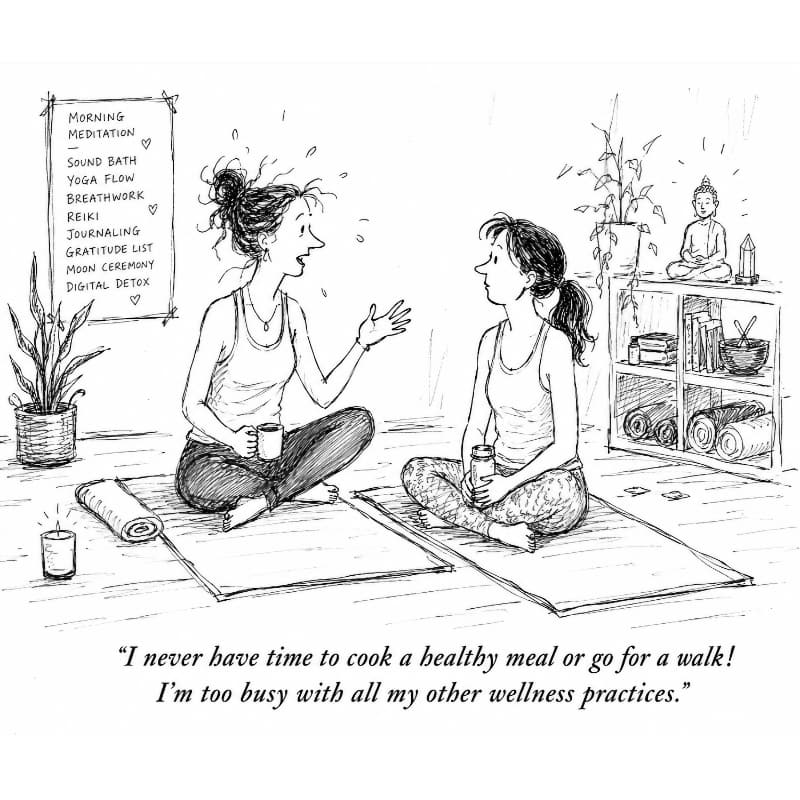
That time you spent stretching? Walking would have been a better investment. Or making a healthier dinner. Something with a much clearer return on investment, probably something basic. Or something that lifts your mood, like friends or making music.
But what if the up-front cost is just five minutes? What if it’s truly cheap and easy?
Surely those little bits help! Maybe, yes. If the opportunity cost is small, and the benefit is real, that does change the calculus. A trivial effort for even a modest benefit is decent value, or at least not a terrible one.
Those cheap-but-good unicorns are rare, though! Far from “every” little bit.
And even when a single-serving really is easy, hardly anyone ever has just one five-minute intervention. They repeat and accumulate: a posture habit here, a stretch there, a gadget, a supplement, a breathing exercise. Suddenly you have an hour-long wellness routine that could have been an earlier bedtime. Individually defensible little bits can easily add up to an indefensible whole lot of bits.
The important question isn’t just whether something works at least a little bit — that's not enough on its own. What counts is whether it’s the best use of your resources. And a lot of people in pain are running on fumes. Opportunity cost is the underestimated non-physical harm of many of the tame snake oils — not just the poor financial investment, but the poor investment of time and attention that people actually need for other things in life.