


Poop of pain: fibromyalgia follows fecal matter.
Fibromyalgia is the unexplained disease of widespread pain and fatigue — with symptoms that have now been diabolically “transplanted” from humans to mice, in a new experiment.
That intro is identical to how I started a 2021 post — but that was about blood transplants, and today’s post is about a study of fecal transplants. Fibromyalgia can be moved from humans to mice in at least two ways! Apparently fibromyalgia is “in” both the blood and poop. Blood matters, and fecal matters too. 🩸💩
(When I first started reading the new study, I got deep into déjà vu before I started to suspect I was just remembering an uncannily similar study, rather than an “illusion of memory.” Which makes me wonder how often déjà vu seems weirder than it is.)
In 2021, Goebel et al reported that one of our most common antibodies, the immunoglobulin G (IgG), an immune system workhorse, was the “active ingredient,” but it’s not just one molecule: IgG is a whole family of proteins. But whatever witch’s brew of variables goes wrong with IgG in human fibromyalgia patients, when healthy mice that get a dose of it … they start hurting.
And now this poop thing too? Just how transplantable is fibromyalgia?!
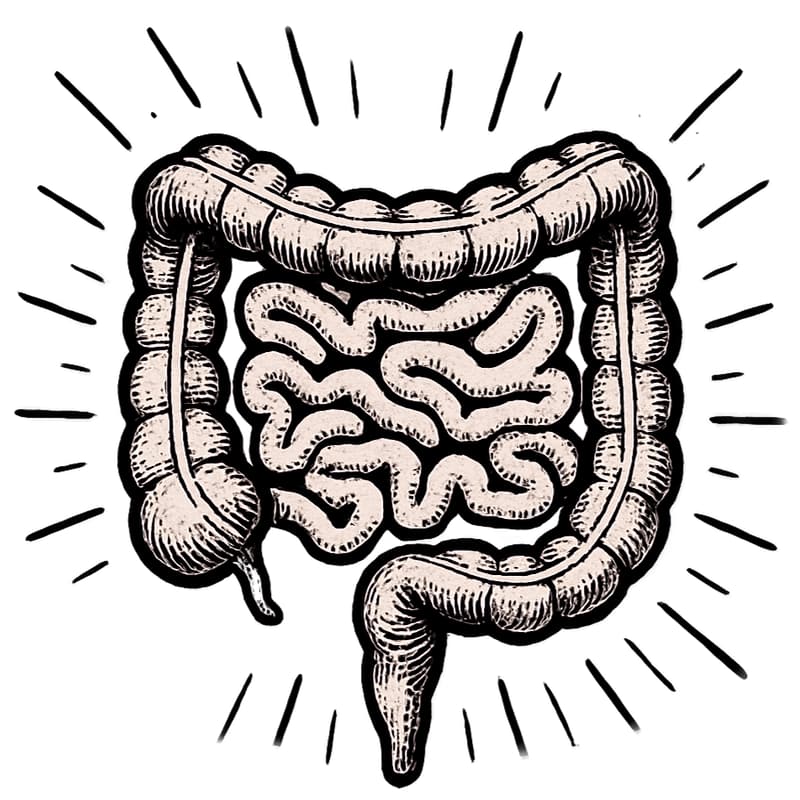
The bacteria that live in the gut excrete all kinds of molecules, like a drug dispensary, which is why they matter. This is a successful long-term relationship, an ancient symbiosis between animals and our tiniest passengers. But it’s not perfect: microbiome dysfunction is already implicated in many pathologies, and we know specifically that fibromyalgia patients have funky gut bacteria.
Cai et al have the new poop scoop, reporting that a fecal transplant can have much the same effect as the blood transplant did: healthy mice get all sensitive when they get a dose of the gut fauna of a human with the symptoms of fibromyalgia. The transplants also induced immune activation, metabolomic changes, and (this is odd) reduced skin innervation. Holy crap!
They also went an extra step and did a small pilot study to see how 14 women felt when they got fresh, healthy fecal donations. Yes, they felt better — but take that with a kilogram brick of salt, because it was an uncontrolled study, which is basically how you use science to get the results you want to see. It’s a bit of a shitshow.
But the mouse experiment was solid enough. They transplanted both healthy and unhealthy poop into germ-free female mice, raised in sterile conditions. The painful poop caused a whole smorgasbord of pain symptoms: heightened sensitivity to pressure, heat, and cold, along with signs of muscle and spontaneous pain. Importantly, none of that awfulness happened with by transplants from healthy donors.
There are a lot of ways that an altered microbiome could cause systemic health trouble. Cai et al. went looking for some, and noted an uptick in inflammatory markers and overactive microglia (brain immune cells, so “neuroinflammation”), plus altered levels of some neurotransmitters and bile acids (major ingredients in digestive juices).

This is all very intriguing, but of course that human pilot study is worthless for anything except inspiring a better one, and popping poop pills for pain is not a fully baked idea. The mouse experiment was easier to trust, but needs the same caveat I gave for the blood-transplant study:
Of course it’s “just an animal study,” and we know that “mice lie and monkeys exaggerate,” the biologist’s lament about the unreliability of animal models. Different species can be weirdly impervious to things that are nasty for others. But this is a bit different from the usual “we learned something about how animals work, but we have no idea if humans are the same.” When a well-described disease in humans can be inflicted on mice with an extremely specific procedure, there’s a good chance it’s an important finding — even if we’re not sure what to do with it yet.
Afterword about AI
I generated a draft of this post using one of the best current AI tools. Spoiler alert: it sucked. 👎🏻
I’ve worked with these large language models a fair bit now, and I’ve even trained mine to write a bit like me — a neat trick, but it’s a novelty, not a high quality simulation of my style. The draft it coughed up wasn’t within a mile of the final product. What I got was a rough structure, a few useful phrases, and a couple ideas about what to focus on — and that has value. It’s helpful, for sure. It takes care of some of the busy work for me, no doubt about it.
But then I put in hours of hard creative work to produce something far better, with many features and nuances that no AI can hope to match. There’s a LIST of things in this post that is well beyond the reach of this technology… because it cannot read my damn mind! For instance, embellishments based on relevant personal experience are vital for making content readable and relatable, but the AI not only does not know my memories, it’s also not a trick that it can learn.
I can’t see these limitations changing significantly any time soon — just like with “full” self-driving, the last step is a doozy. No matter how much AI improves, it’s never going to figure out how to tell stories about my old friend who just had a surgery for the kind of back problem I’m writing about.
And that’s why some of you pay me the big bucks! Because good writing has always been hard, personal work, and producing content like this regularly is just impossible without ordinary people who choose to be small-scale patrons of the arts. Naturally I hope PainSci members think they are getting their money’s worth, but I also hope they believe that this project is just worth supporting.