


More muscle = better recovery from surgery
In addition to “rehab” after surgery, one should prepare by being as fit as possible before surgery: “prehab,” AKA preoperative physical therapy. Prehab is one of the best evidence-based things anyone can do to prevent pain.
And prehab for surgery is also prehab for injury. So that’s a nice perk.
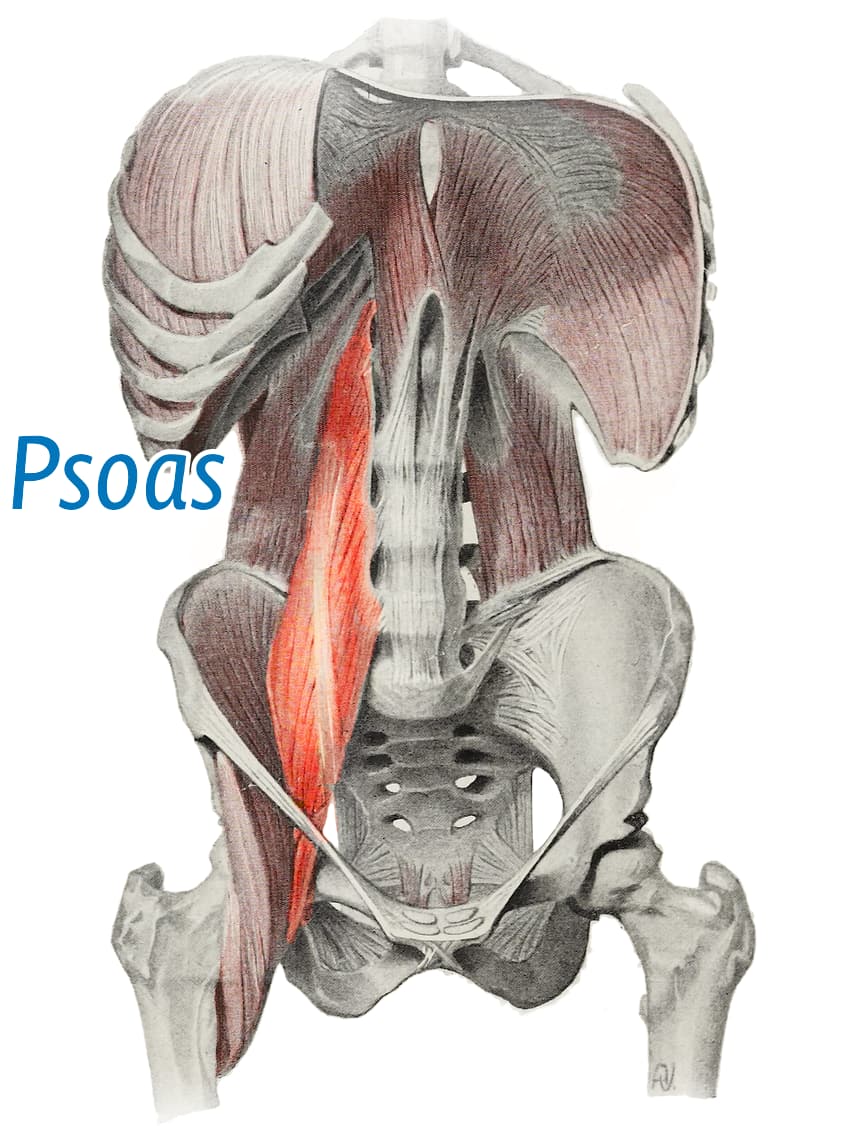
Consider this 2024 study: Hirase et al. compared recovery in spinal surgery patients with more and less spinal muscle, specifically the cross-sectional area of the psoas muscle (pronounced “so ass”). The psoas pair is a lot like the columns of muscles flanking the spine in the back, except that they are in the front, deep in the belly.
And now the cross-sectional scans from the study, showing more and less psoas…
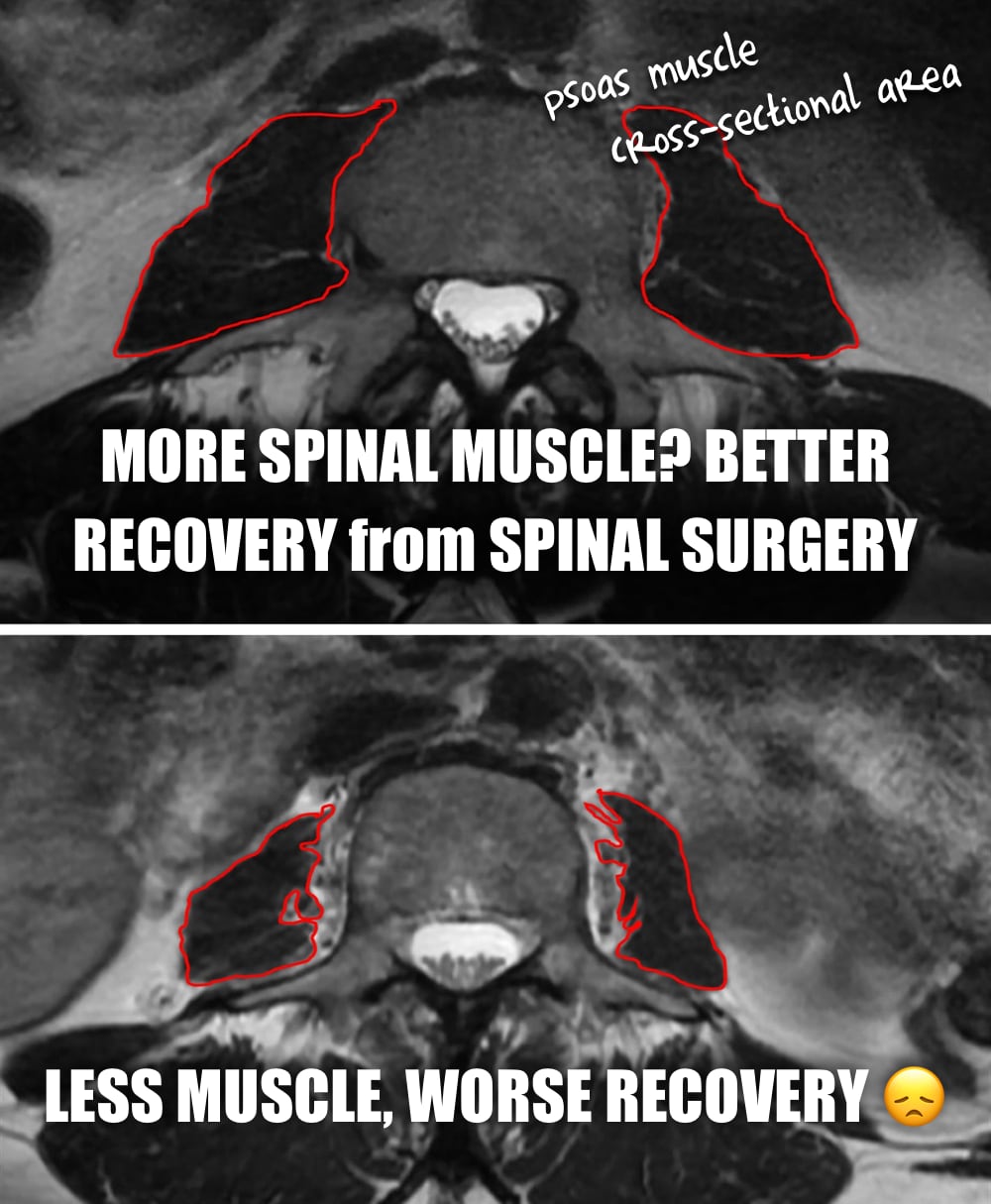
Your core muscles are not just for crunches — their size predicts how well you bounce back from spine surgery. Yet another reason to stay strong.
How much better was recovery for patients with supersized psoases? Pso much!
- about one third less time in hospital (and prehab had more effect on this than any other factor)
- almost doubled walking distance in the three days after surgery
- nearly half the adverse events
That’s good stuff! And there are quite a few other studies of prehab with similarly impressive results. This is not a subtle effect. Prehab is obviously so helpful that I’ve updated my “what works” article with this citation.
All this goodness probably applies to any spinal surgery, but in this case they studied surgical correction of “adult spinal deformity,” which is mostly scoliosis plus a few others.
This probably isn’t a core strength thing, or about the “power” and mystique of the psoas
There’s a surprising amount of silliness about the psoas in manual therapy. But even without a weird fetish for the psoas, many professionals will leap to the assumption that this study shows that it’s the psoas specifically and core strength that made the difference.
Not pso fast! It’s more likely that this is about strength in general, thanks to the substantial metabolic benefits of having more muscle anywhere at all. People don’t get thick psoas muscles from just sitting around. If you’ve got big psoases (and you cannot lie) it’s probably because you’re all kinds of healthy, and it’s the fitness that matters.
See a deep dive on how this works (members only), or just get a taste from one key citation.