


The madness of a muscle meme
This is the “your muscles look nasty without massage” meme being shared widely on social media (origin unknown):
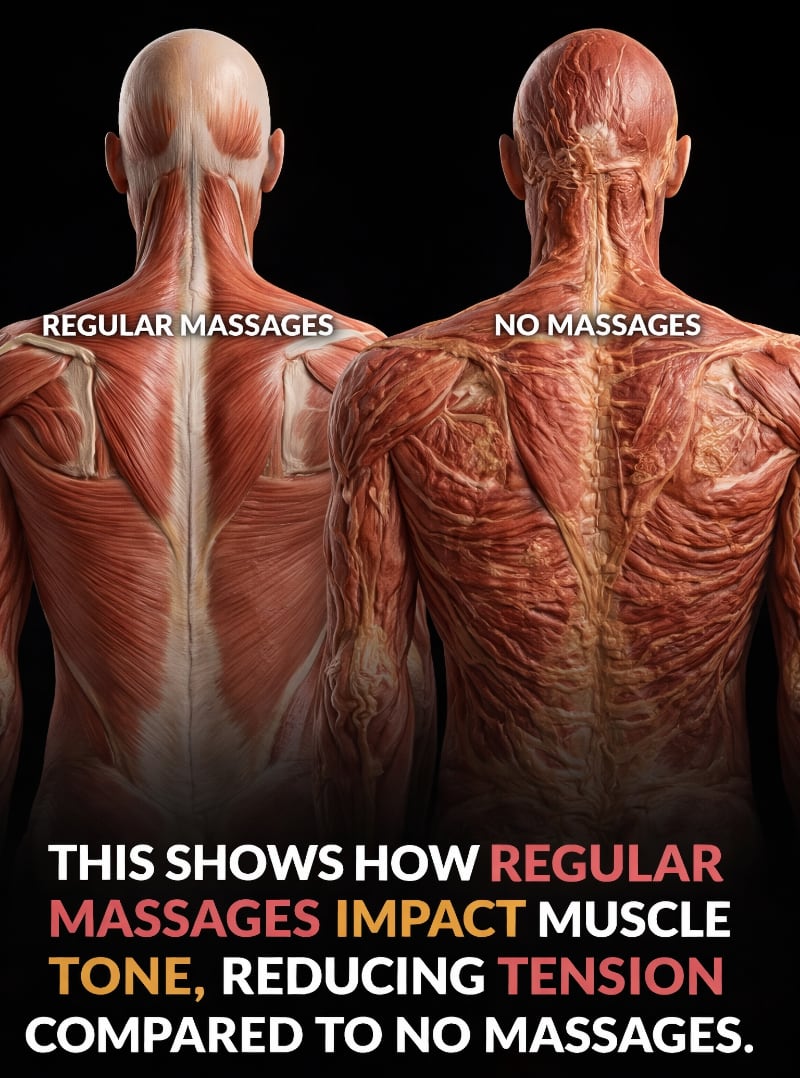
I wonder what AI prompt was used to generate this image? Make one of them look like a burn victim? 🙄
It is, of course, horrible nonsense, pure marketing/propaganda. It inflates the perceived value of magic hands, and tries to make not getting regular massage seem dangerous. It’s a flagrant visual lie that makes the profession of massage therapy look ridiculous to anyone with an ounce of sense or knowledge. Anyone who wants to promote this idea is probably not going to be moved by any criticism of it, but people who don’t have “skin in the game” (ha ha) might benefit from seeing more knowledgeable people rolling our eyes at it.
As ridiculous as this image is, though … it actually does represent the spirit of what a great many massage and manual therapists truly do believe, even if they know better than to think it literally looks like this under your skin. They might argue that it feels like that, or that it’s just an exaggeration of what it looks like on a smaller scale. The whole basis for most flavours of “fascial therapy” is the incredibly prevalent idea of soft tissue “distortions.” And this image is basically “what distortions supposedly look like.” From my guide to fascia pseudoscience:
“The idea that fascia is medically important has its most important roots in the 1990s, when physician Stephen Typaldos formulated the Fascial Distortion Model (FDM) in 1991, proposing that most musculoskeletal complaints are caused by deformations of fascia. Typaldos thought deformed fascia could be fixed by skilful force, kind of like banging the dents out of a car.”