


Perceived pill importance probably powerless to amplify placebo
In theory, expectations are the engine of placebo, and they are inflated in many ways — even by subtle cues like the colour, size, or quantity of pills. A handful of big red pills seems like it really means business compared to a couple little white ones, and supposedly that will produce a bigger, better placebo response.
This is a very useful idea, because it also amplifies placebo propaganda: if placebo is eerily powerful, then any alternative treatment can “work” just by impressing the patient. This particularly props up mind-body medicine quackery, reinforcing exaggerated claims about the power of the mind to cure illness.
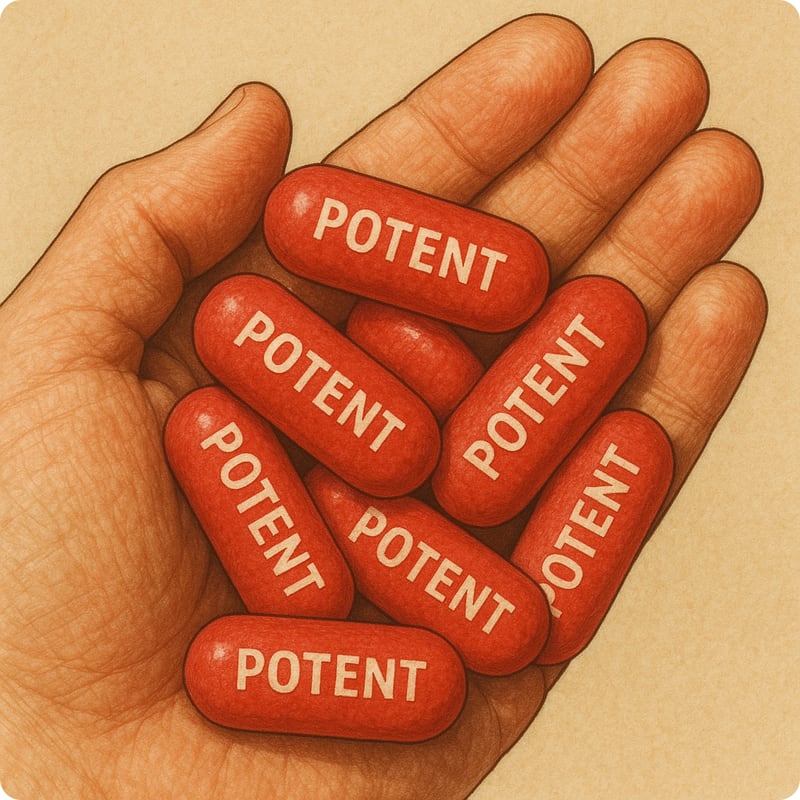
Can impressive-looking pills embiggen the placebo response?
So, is the idea true? Probably not. It’s based on flimsy, old evidence from the 1990s that has never been replicated by more rigorous trials. But it’s so well-established that it doesn’t even register as controversial. Practically everyone just seems to accept it, a placebo “fun fact” that gets trotted out whenever anyone is talking about how cool and weird placebo is.
Even I accepted it for years, despite questioning almost everything else about placebo. But while I was preoccupied with other placebo myths, Mike Hall was questioning this one for The Skeptic:
“The idea that four placebo pills are more powerful than two sounds magical — because it isn’t true.”
Like everything else in placebo research, limited evidence has been distorted and amplified for the same ideological reasons. But
“The BMJ tries to walk a middle ground. The review acknowledges that the evidence is inconsistent while still suggesting that colour might influence the effectiveness of a drug. It ends with a call for more research. And while it’s plausible that colour could change how patients perceive a treatment, the data don’t show a reliable and meaningful clinical effect. The studies that seem to support the idea are small, weak, and flawed. The more robust trials find little of interest.”
It’s worth revisiting the science that started it all, but 1996 is ancient history, so long ago that we hadn’t yet been introduced to Buffy the Vampire Slayer or Harry Potter. Is there newer evidence?
Impressively, no! In three decades, there have been just a handful of minor contributions (things like an analysis of how people feel about pill colour, rather than what effect that might have on the apparent efficacy). Maybe I missed something, but probably nothing important — certainly not the 3–6 rigorous trials we’d need to validate this idea.