


The side effects of dry needling of sore spots are probably worse than proponents realize
Two pages on PainSci cite Brady 2014: 1. The Complete Guide to Trigger Points & Myofascial Pain 2. The Complete Guide to Neck Pain & Cricks
PainSci commentary on Brady 2014: ?This page is one of thousands in the PainScience.com bibliography. It is not a general article: it is focused on a single scientific paper, and it may provide only just enough context for the summary to make sense. Links to other papers and more general information are provided wherever possible.
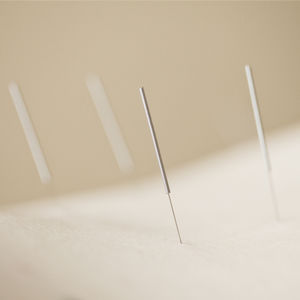
Lancing sore spots with acupuncture needles — trigger point dry needling — is a common treatment, with many critics concerned about its efficacy and safety.
This study surveyed several dozen physiotherapists trained in dry needling, and that is a huge unacknowledged weakness of the study: if you want to know about things that go wrong with treatments, you need to ask patients. The professionals delivering the service are clearly going to be biased and unaware of many problems that patients don’t report, and they might even fail to report problems they do know about. And indeed, “no significant adverse events” were reported! And that hardly seems surprising, given that they were basically asking professionals to incriminate themselves, to reveal serious consequences of their treatments. The only discussion of this limitation in the paper is this sentence: “Participants [physiotherapists] may have been reluctant to report events where negligence could be inferred, as participants were potentially identifiable.” Understatement.
The lack of acknowledgement of this problem probably indicates the bias of the researchers themselves, who clearly have a dog in this fight: they are pro-needling.
So I do not trust the results, and assume the truth is worse than what’s being reported here. And so what is being reported here? Mild problems with about 20% of all treatments, mainly bruising (7.5%) and bleeding (4.6%) and pain during and after treatment (2-3%). Some uncommon, sub-1% adverse effects included aggravation of symptoms, headache, nausea, shaking, itching, and numbness.
“Aggravation of symptoms” is one of the most important considerations from the patient perspective (and the least likely to be known/reported by practitioners). It’s one thing to risk a “side” effect, which may come with compensating benefits, and quite another to risk a direct backfire. When the symptoms you’re trying to treat get worse instead of better, that’s a much worse deal than, say, getting relief from your symptoms at the cost of some bruising and bleeding. This survey reported a rate of .88% of symptom aggravation, and I think the truth might be much worse.
original abstract †Abstracts here may not perfectly match originals, for a variety of technical and practical reasons. Some abstacts are truncated for my purposes here, if they are particularly long-winded and unhelpful. I occasionally add clarifying notes. And I make some minor corrections.
OBJECTIVES: Trigger point dry needling (TrP-DN) is commonly used to treat persons with myofascial pain, but no studies currently exist investigating its safety. The aim of this study was to determine the incidence of Adverse Events (AEs) associated with the use of TrP-DN by a sample of physiotherapists in Ireland.
METHODS: A prospective survey was undertaken consisting of two forms recording mild and significant AEs. Physiotherapists who had completed TrP-DN training with the David G Simons Academy (DGSA) were eligible to take part in the study. Data were collected over a ten-month period.
RESULTS: In the study, 39 physiotherapists participated and 1463 (19.18%) mild AEs were reported in 7629 treatments with TrP-DN. No significant AEs were reported giving an estimated upper risk rate for significant AEs of less than or equal to (≤) 0.04%. Common AEs included bruising (7.55%), bleeding (4.65%), pain during treatment (3.01%), and pain after treatment (2.19%). Uncommon AEs were aggravation of symptoms (0.88%), drowsiness (0.26%), headache (0.14%), and nausea (0.13%). Rare AEs were fatigue (0.04%), altered emotions (0.04%), shaking, itching, claustrophobia, and numbness, all 0.01%.
DISCUSSION: While mild AEs were very commonly reported in this study of TrP-DN, no significant AEs occurred. For the physiotherapists surveyed, TrP-DN appeared to be a safe treatment.

This page is part of the PainScience BIBLIOGRAPHY, which contains plain language summaries of thousands of scientific papers & others sources. It’s like a highly specialized blog. A few highlights:
- Long-Term Effects of Repeated Injections of Local Anesthetic With or Without Corticosteroid for Lumbar Spinal Stenosis: A Randomized Trial. Friedly 2017 Arch Phys Med Rehabil.
- Cannabis-based medicines for chronic neuropathic pain in adults. Ateş 2026 Cochrane Database Syst Rev.
- Effect of exercise on depression and anxiety symptoms: systematic umbrella review with meta-meta-analysis. Munro 2026 Br J Sports Med.
- Optimizing elastic band resistance training for Metabolic Syndrome components in older adults: A systematic review, meta-analysis, and meta-regression of randomized controlled trials. Saez-Berlanga 2026 Arch Phys Med Rehabil.
- Biomechanical insights into Achilles tendinopathy risk and protection in runners: a large prospective study 4HAIE. Jandacka 2026 Br J Sports Med.