


Another promising trial of acupressure for low back pain
One page on PainSci cites Hsieh 2006: The Complete Guide to Trigger Points & Myofascial Pain
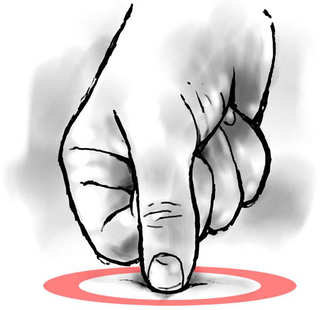
PainSci notes on Hsieh 2006:
In 2004, this research team produced promising evidence that back pain may be effectively treated with acupressure — like acupuncture, but without the needles. Two years later, in this study, they reproduced this evidence for British Medical Journal, a much more prominent journal. According to the BMJ’s superb commentary (see Frost):
It was well conducted in terms of randomisation, blinding, loss to follow-up, and analysis. The differences between the groups in standard outcome measures of disability, pain scores, and functional status are striking. The difference immediately after treatment and at six months was more than twice that reported in trials of conventional back pain interventions and of acupuncture. If these results are valid, acupressure would seem to represent an efficacious treatment for low back pain and we might need to ask why Chinese medicine clinicians use acupuncture for back pain, rather than acupressure.
But there are complex caveats, and Frost does an excellent job of explaining them. There are several good reasons to keep optimism cautious in this case. There’s no denying it’s interesting and promising, but the results definitely need to be replicated in a different cultural context.
original abstract †Abstracts here may not perfectly match originals, for a variety of technical and practical reasons. Some abstacts are truncated for my purposes here, if they are particularly long-winded and unhelpful. I occasionally add clarifying notes. And I make some minor corrections.
OBJECTIVE: To evaluate the effectiveness of acupressure in terms of disability, pain scores, and functional status.
DESIGN: Randomised controlled trial.
SETTING: Orthopaedic clinic in Kaohsiung, Taiwan.
PARTICIPANTS: 129 patients with chronic low back pain.
INTERVENTION: Acupressure or physical therapy for one month.
MAIN OUTCOME MEASURES: Self administered Chinese versions of standard outcome measures for low back pain (primary outcome: Roland and Morris disability questionnaire) at baseline, after treatment, and at six month follow-up.
RESULTS: The mean total Roland and Morris disability questionnaire score after treatment was significantly lower in the acupressure group than in the physical therapy group regardless of the difference in absolute score (- 3.8, 95% confidence interval - 5.7 to - 1.9) or mean change from the baseline (- 4.64, - 6.39 to - 2.89). Acupressure conferred an 89% (95% confidence interval 61% to 97%) reduction in significant disability compared with physical therapy. The improvement in disability score in the acupressure group compared with the physical group remained at six month follow-up. Statistically significant differences also occurred between the two groups for all six domains of the core outcome, pain visual scale, and modified Oswestry disability questionnaire after treatment and at six month follow-up.
CONCLUSIONS: Acupressure was effective in reducing low back pain in terms of disability, pain scores, and functional status. The benefit was sustained for six months.
related content
- “A randomized controlled clinical trial for low back pain treated by acupressure and physical therapy,” Hsieh et al, Prev Med, 2004.
Specifically regarding Hsieh 2006:
- “Acupressure for low back pain,” Frost et al, British Medical Journal, 2006.

This page is part of the PainScience BIBLIOGRAPHY, which contains plain language summaries of thousands of scientific papers & others sources. It’s like a highly specialized blog. A few highlights:
- Long-Term Effects of Repeated Injections of Local Anesthetic With or Without Corticosteroid for Lumbar Spinal Stenosis: A Randomized Trial. Friedly 2017 Arch Phys Med Rehabil.
- Cannabis-based medicines for chronic neuropathic pain in adults. Ateş 2026 Cochrane Database Syst Rev.
- Effect of exercise on depression and anxiety symptoms: systematic umbrella review with meta-meta-analysis. Munro 2026 Br J Sports Med.
- Optimizing elastic band resistance training for Metabolic Syndrome components in older adults: A systematic review, meta-analysis, and meta-regression of randomized controlled trials. Saez-Berlanga 2026 Arch Phys Med Rehabil.
- Biomechanical insights into Achilles tendinopathy risk and protection in runners: a large prospective study 4HAIE. Jandacka 2026 Br J Sports Med.